
If you had drawn a map of the world's most important places to build artificial intelligence a decade ago, Dubai would not have appeared on it. That has changed quickly. The Dubai AI hub narrative is no longer aspirational marketing; it reflects a deliberate, well-funded convergence of government strategy, sovereign capital, cheap energy, fast-track visas and a growing base of technical talent. For ML engineers, founders and engineering leaders deciding where to locate a team, raise a round or run inference at scale, the city has moved from a curiosity to a genuine option worth evaluating on its merits.
What makes the shift interesting is that it is not driven by a single flagship company or one breakout research lab. Instead, Dubai has approached artificial intelligence the way it approached logistics and finance in earlier decades: as an infrastructure and policy problem to be engineered top-down, then opened to private capital. The result is a dubai tech ecosystem that is unusually coordinated, where regulators, free zones, universities and investors tend to pull in the same direction. This article breaks down the concrete forces behind that momentum, the trade-offs practitioners should weigh honestly, and what it means if you are thinking about building here.
The policy engine behind the Dubai AI hub
The single biggest reason Dubai stands out is that the uae ai strategy is genuinely a national programme, not a line item. The federal government appointed a dedicated minister for artificial intelligence years before most countries had an AI strategy at all, and set long-horizon targets for embedding AI across public services, transport, healthcare administration and government operations. For a practitioner, the practical consequence is speed: procurement cycles that would take years elsewhere often move in months, and there is real appetite at senior levels of government to be an early adopter rather than a laggard.
This top-down coordination shows up in ways that matter to engineers. Regulatory sandboxes let teams pilot AI-driven products in areas like mobility and financial services with a clearer path to approval than in more fragmented markets. Data-sharing initiatives between government entities create the kind of large, structured datasets that supervised and fine-tuning workflows depend on. And because the strategy is framed around 2031 and beyond, there is a stability to the direction of travel that lets teams plan multi-year roadmaps without expecting the rug to be pulled.
The trade-off to name honestly is that a state-led ecosystem rewards alignment with government priorities. If your product maps to public-sector modernisation, smart-city infrastructure or regulated industries, the tailwind is strong. If you are building something adversarial to incumbents or dependent on permissionless experimentation, you will feel the friction of a more directed environment. Reading the strategy documents before you commit is a genuinely useful due-diligence step, not a formality.
Capital: why ai investment dubai is accelerating
The story of dubai artificial intelligence is inseparable from the pools of capital in the wider region. Sovereign wealth funds and government-backed investment vehicles have made technology, and AI specifically, a strategic allocation rather than an opportunistic one. That patient, long-duration capital changes the funding dynamics for founders: cheques can be large, time horizons are longer than a typical venture fund, and there is genuine interest in deep-infrastructure bets like compute, data centres and applied research that generalist investors often avoid.
For a founder, the practical implication is that ai investment dubai looks different from a Silicon Valley round. Strategic and sovereign investors frequently want more than equity upside; they want the company to help build local capability, hire regionally or anchor operations in the country. This can be a fair trade for non-dilutive support, favourable terms and access to government customers, but it should be negotiated with eyes open. Term sheets here are commercial documents with strategic strings, and you should model what those strings cost you in optionality later.
There is also a healthy layer of private venture activity, accelerators and family offices that have rotated aggressively into technology. The result is a funnel that spans pre-seed grants through to growth-stage infrastructure financing. If you are raising, the tactical advice is to map which type of capital fits your stage: early rounds often come from regional angels and micro-funds, while the larger, later cheques come from institutions that expect a local footprint in return.
Infrastructure, energy and the economics of compute
AI is, increasingly, an energy and real-estate business, and this is where Dubai's older advantages translate directly. Abundant, relatively cheap energy and a national push into solar generation make the marginal cost of running large training and inference workloads more attractive than in power-constrained markets. Data-centre capacity in the region has expanded rapidly, and several cloud platforms now operate in-country regions, which matters for teams with data-residency requirements or latency-sensitive applications serving the Gulf and wider region.
For an engineering leader, the calculus is concrete. If your workload is inference-heavy and serving regional users, hosting closer to them cuts latency and can simplify compliance with local data rules. If you are training large foundation models, the question becomes GPU availability and interconnect quality rather than headline energy prices; capacity has grown but you should benchmark actual accelerator availability and networking before assuming you can secure a large cluster on demand. Treat it like any other capacity-planning exercise: get quotes, run a proof-of-concept, and validate throughput rather than trusting the brochure.
The climate is worth a line of honest engineering reasoning too. Cooling costs in a hot environment are real, but purpose-built facilities are designed around this, and the combination of solar generation and modern cooling design offsets much of the penalty. The point is that the infrastructure story is credible enough to model seriously, not to dismiss on first principles.
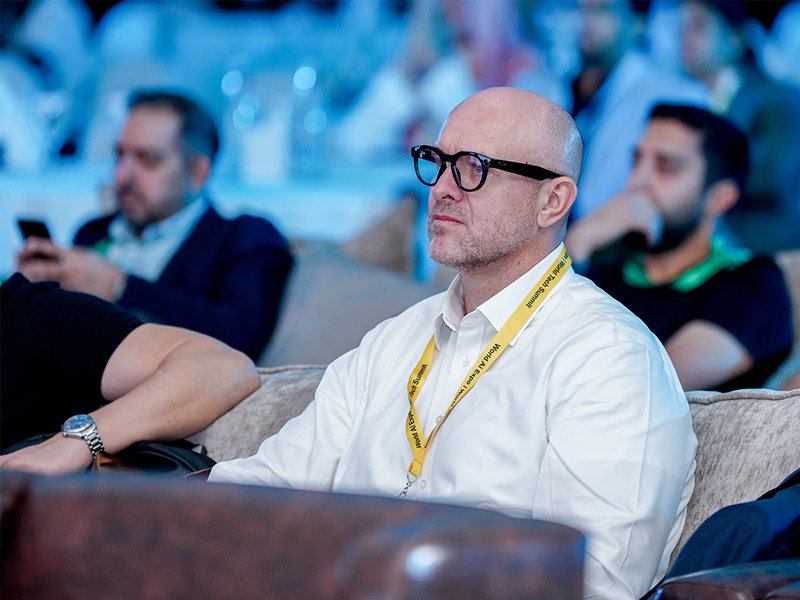
Past Speakers
Previous editions of World AI Technology Expo Dubai have brought together senior AI practitioners and leaders. Speakers below are shown for reference from previous editions; the 2027 line-up will be announced ahead of the event.
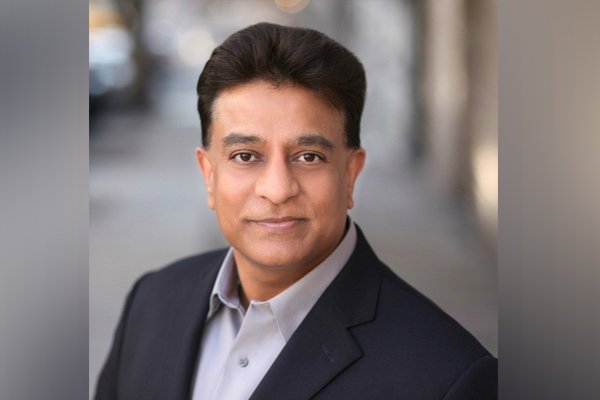
Nitin Akarte

Akshay Singh Dalal
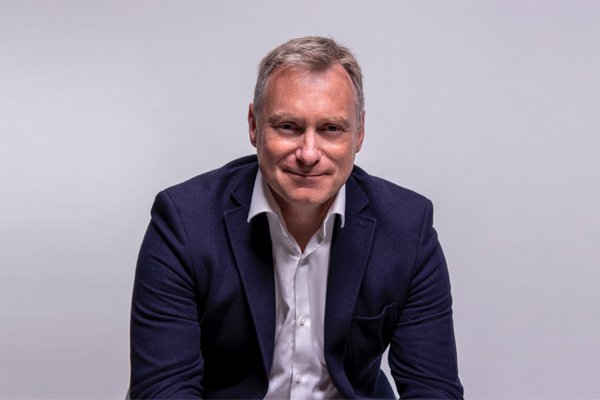
James Hunter

Abhinav Sharma
Talent, visas and building a team
No AI hub works without people, and this is historically where the region faced the most scepticism. Dubai's answer has been immigration policy as a talent-acquisition tool. Long-term residence visas aimed at specialists, researchers and founders remove one of the biggest sources of friction in relocating senior engineers, and the absence of personal income tax materially changes the take-home maths for the people you are trying to hire. For a hiring manager, that means you can often make a compelling offer without matching gross salaries from higher-cost markets.
The talent base itself is a mix: a large expatriate professional community, returning diaspora who trained abroad, and a growing pipeline from local universities investing heavily in AI and computer-science programmes, including a dedicated graduate university focused on artificial intelligence. The realistic picture in 2026 is that mid-level and senior applied-ML talent is available but competitive, while very deep research specialists still often need to be relocated. Budget for relocation and plan a hybrid team if you need frontier-level researchers.
A practical checklist when building here reads roughly like this: confirm which visa track fits each hire and its processing time; benchmark net rather than gross compensation; decide early whether you are anchoring in a free zone or on the mainland because it affects hiring and ownership; and build relationships with the local universities early if you want a graduate pipeline. Teams that treat these as first-class planning items rather than afterthoughts tend to ramp far faster.
Free zones, regulation and the practical setup
One underrated reason the dubai tech ecosystem is attractive is the free-zone model. Technology-focused free zones let foreign founders own their companies fully, simplify company formation and bundle in visa quotas, which lowers the activation energy for a small team to get legally operational. Choosing between a free zone and a mainland entity is one of the first real decisions you will make, and it hinges on whether your customers are local government and enterprises (which can favour mainland presence) or regional and global (which often favours a free zone).
On the regulatory side, the region has moved earlier than most on data-protection frameworks and is actively developing AI-specific governance. For teams handling personal or sensitive data, the practical work is the same discipline you would apply anywhere: map where data is stored and processed, understand cross-border transfer rules, and design your data pipeline so residency requirements are a configuration choice rather than a re-architecture. None of this is legal advice, and you should retain qualified local counsel, but from an engineering standpoint the frameworks are mature enough to build against confidently.
It is worth noting how much of this ecosystem is relationship-driven. Deals, hires and partnerships tend to move through in-person networks, and the calendar of large regional technology gatherings is a real part of how business gets done. Professionals working on this can meet peers, vendors and investors and go deeper at World AI Technology Expo Dubai (07-09 April 2027, Millennium Plaza Downtown Hotel, Dubai), which is the kind of venue where those introductions actually happen.
Where the applied opportunities are strongest
If you are deciding what to build, the highest-signal opportunities cluster where local demand meets available data. Government and smart-city services are the obvious one: document processing, citizen-facing assistants built on large language models, and operational optimisation for transport and utilities all have real budget behind them. Financial services in the region's international centres are investing in AI for risk, fraud detection and customer operations, and they value vendors who can meet local data-residency and governance expectations out of the box.
Two other verticals stand out. Logistics and trade, given the region's role as a global transshipment point, generate exactly the structured operational data that forecasting, routing and optimisation models thrive on. And Arabic-language AI is a genuine, under-served frontier: building foundation models and retrieval systems that handle Arabic well, including dialectal variation, is technically demanding and commercially valuable, and it is an area where regional players have a structural advantage over global generalists. If your team has strong multilingual NLP experience, this is a differentiated place to apply it.
The engineering pattern that repeats across these is retrieval-augmented systems over proprietary organisational data rather than training frontier models from scratch. Most teams here get more value from combining a capable foundation model with a well-built vector database, solid evaluation harnesses and experiment-tracking tools than from attempting to compete at the base-model layer. Right-sizing ambition to where you can win is the same discipline it is everywhere.
An honest assessment of the trade-offs
No serious evaluation is complete without the counter-arguments. The research depth in Dubai, while growing, is still thinner than in the established hubs; if your work depends on being surrounded by dozens of frontier labs and a deep bench of publishing researchers, you will feel that gap. The ecosystem is younger, so the density of experienced operators who have scaled AI companies through multiple cycles is lower, and you may find yourself learning some lessons the market has not yet accumulated for you.
There are practical costs too. Prime commercial real estate and international-standard schooling are expensive, which affects your total relocation package even with no income tax. Dependence on relocated senior talent introduces key-person and retention risk that you should plan for explicitly. And the state-directed nature of the ecosystem that makes procurement fast can also make it politically textured; understanding who the important stakeholders are is part of operating well here.
Weighed against those, the case is still strong for a specific profile: teams building applied AI for regional and emerging markets, founders who want patient strategic capital and government access, and engineering leaders who value speed of execution and favourable talent economics. Dubai is not trying to be a clone of an American research cluster, and evaluating it against that template misses the point. Judged on what it actually offers, the momentum behind the Dubai AI hub is real and, for the right team, worth acting on now rather than watching from a distance.
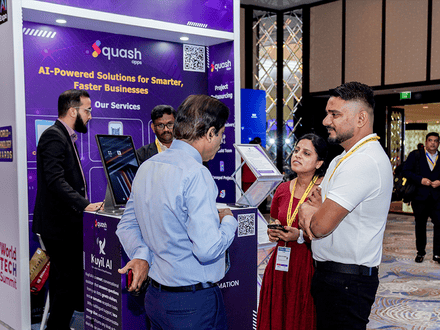
Inside the event
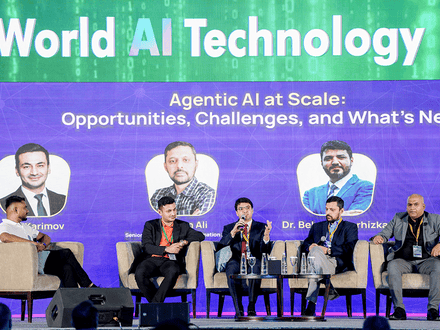
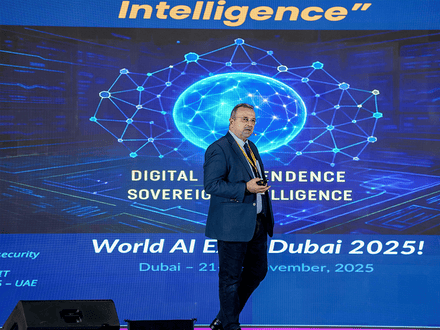
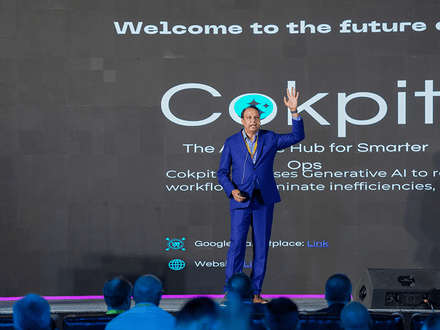
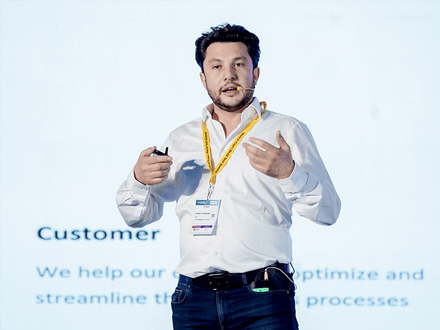
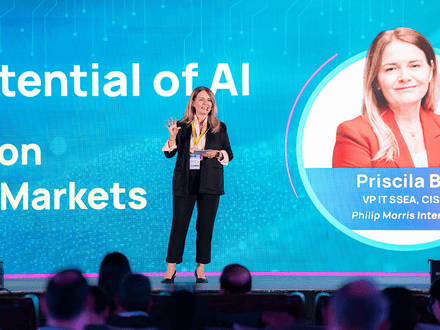
A glimpse of the atmosphere from previous editions — keynotes, the exhibition floor and the networking that defines World AI Technology Expo Dubai.
Key takeaways
- Dubai's AI momentum is state-coordinated: the UAE AI strategy aligns regulators, free zones, universities and investors, which speeds procurement and gives multi-year planning stability.
- AI investment in Dubai is dominated by patient sovereign and strategic capital that offers large, long-horizon cheques in exchange for local footprint and capability-building.
- Cheap energy, expanding data-centre capacity and in-country cloud regions make the compute and data-residency economics credible enough to model seriously.
- Long-term visas and no personal income tax let you make competitive offers on net compensation, though frontier research talent still usually needs relocating.
- The strongest applied opportunities sit in government and smart-city services, financial services, logistics, and Arabic-language AI over proprietary data.
- Honest trade-offs remain: thinner research depth, fewer scaled operators, high living costs and key-person risk, so fit depends on your team's profile.
Frequently asked questions
Dubai is emerging as an AI hub because of a deliberate national strategy, large pools of patient sovereign and strategic capital, cheap energy and growing data-centre capacity, and talent-friendly policies like long-term visas and no personal income tax. Unlike organically grown clusters, the ecosystem is coordinated top-down, so government, regulators and investors tend to move in the same direction, which speeds up procurement and adoption.
It can be, particularly if you are building applied AI for regional or emerging markets and want access to government customers and strategic capital. Free zones allow full foreign ownership and simple setup, and net compensation is competitive thanks to the tax regime. The main caveats are thinner research depth than established hubs and high living costs, so the fit depends on your product and team profile.
In practice it means faster public-sector procurement, regulatory sandboxes for piloting AI products, and government data-sharing initiatives that create usable datasets. Because the strategy is set on a long horizon, teams can plan multi-year roadmaps with reasonable confidence in the direction of travel, especially if their work aligns with public services, smart-city or regulated-industry priorities.
Capital in Dubai skews toward sovereign and strategic investors with longer time horizons and appetite for infrastructure-heavy bets. Cheques can be large and terms favourable, but investors often expect the company to hire locally or anchor operations in the country. Founders should treat this as a commercial trade and model what those strategic strings cost in future optionality.
The strongest demand sits in government and smart-city services, financial-services risk and operations, logistics and trade optimisation, and Arabic-language AI including dialect handling. Most teams get more value from retrieval-augmented systems built on foundation models and proprietary organisational data than from training base models from scratch.