Networking at a tech conference is the highest-leverage, most under-prepared part of most engineers' calendars. We will happily spend a week tuning a retrieval pipeline or benchmarking foundation models, then walk into a three-day event with a couple of thousand practitioners and no plan beyond "show up and see what happens." The result is predictable: a lanyard full of talks you half-remember, a phone full of contacts you never message, and a vague sense that the real value was in the sessions rather than the people. In reality the talks are usually recorded and available afterwards; the conversations are the one thing you can only get in the room.
The good news is that networking is not a personality trait you either have or lack. It is a system, and systems are something technical people are unusually good at building. The engineers and founders who consistently leave events with new hires, design partners, co-authors and even term sheets are rarely the loudest people in the room. They are the ones who did some unglamorous preparation, optimised for a small number of genuine conversations rather than a large number of shallow ones, and ran a boring, reliable follow-up process afterwards. This article lays out that system end to end, with concrete tech event networking tactics you can apply whether you are an introverted researcher, a first-time founder, or an engineering leader trying to hire.
Decide what you actually want before you register
The single biggest predictor of a good conference is a clear, written objective set before you arrive. "Do some networking" is not an objective; it is a wish. Pick one or two concrete outcomes and let everything else fall away. A founder might want three qualified design partners for an agent framework they are shipping. An engineering leader might want to meet eight senior candidates for a platform team. A researcher might want to find two collaborators working on the same evaluation problem. When your goal is specific, every hallway decision becomes easy: does this conversation, room or side event move me towards it or not?
Being explicit also lets you size the effort correctly. Hiring goals mean you should spend time near the recruiting and student-heavy tracks. A fundraising goal means you care about who is speaking on investment panels and which side dinners the investors attend, not the deep technical workshops. A learning-and-partnerships goal means the vendor floor and birds-of-a-feather sessions matter more than the keynote. Trying to do all of these at once is the classic mistake; you end up doing none of them well because each requires a different room and a different opening line.
Write your objective on the first line of whatever notes app you will use during the event, along with a rough target number. "Meet 5 people building production RAG systems, get 2 into a follow-up call." A number keeps you honest without turning the event into a soulless numbers game, because five real conversations is a small, humane target that rewards depth over business-card roulette.
Do your homework: agendas, attendee lists and warm intros
Most of the value of a conference is decided before you get on the plane. Study the agenda and mark the sessions where the speakers are people you genuinely want to meet, not just the topics that sound interesting. The talk is often a pretext; the real reason to attend a given session is that its speaker will be standing at the front afterwards, briefly available, and clearly signalling what they care about. A thoughtful question asked in that two-minute window after a talk is one of the most reliable ways to start a relationship on solid footing.
If the event publishes an attendee list or has a networking app, treat it like a backlog. Shortlist ten to twenty people worth meeting, note why each one matters, and where you have a genuine reason and a mutual contact, ask for a warm introduction a week or two in advance. A short message such as "I will be at the event, I have been reading your work on vector database indexing, could we grab fifteen minutes?" converts far better than any cold approach on the day. Warm intros through a shared connection convert better still, and people are usually happy to make them if you draft the forwardable blurb for them.
Finally, do the light research that makes you interesting rather than generic. Skim the recent public writing, open-source repositories or talks of your shortlist so you can reference something specific. "I saw you moved your feature store off a managed service, how did the migration go?" signals that you did the work and instantly separates you from the hundred people who opened with "So, what do you do?"
Work the hallway track, not just the sessions
Experienced attendees have a saying: the best content is in the hallway track. Once you accept that talks are recorded and conversations are not, your schedule should be built around unstructured time. Deliberately leave gaps between sessions, and do not feel guilty about ducking out of a talk you can watch later in order to continue a conversation that is going somewhere. The opportunity cost of a good conversation is almost always another talk, and the conversation wins.
Geography matters more than people expect. Coffee queues, the space just outside a popular session as it empties, and the tables near charging stations are where conversations start naturally because everyone is standing around with a legitimate reason to linger. The registration desk on the first morning and the quieter second-day afternoon are golden. By contrast, the packed evening party with loud music is where you will meet many people and remember none of them, so treat it as a place to deepen connections you already made rather than to form new ones.
One of the most practical conference networking tips is to arrive early and stay slightly late. The first thirty minutes of each day, before the crowd builds, is when people are relaxed and approachable and the room is quiet enough to actually hear each other. The same is true of the tail end of the day, when the agenda has thinned out and the people who remain are the ones who came to connect.
Learn how to start and, crucially, exit conversations
The opening line matters far less than people fear. In a venue whose entire purpose is that everyone wants to meet everyone, permission is implicit; a simple "Hi, I'm ___, what brings you here?" works fine. Better still is a specific, contextual opener tied to where you are standing: a question about the talk you both just left, or an observation about a demo on the vendor floor. Open-ended questions that invite the other person to talk about their own work are the reliable engine of any good conversation, because most people enjoy explaining what they are building and you learn where the overlap is.
The harder and more under-taught skill is the graceful exit. If you cannot leave a conversation cleanly you will subconsciously avoid starting them, so learn to close well. "It was great to meet you, I want to catch the next session, can I find you on the network afterwards?" is honest, kind, and frees both of you. Exiting well is what lets you have five good conversations instead of getting trapped in one that stopped being useful twenty minutes ago.
For introverts, and a large share of engineers are, the sustainable approach is not to imitate the extroverts. Set a modest quota, give yourself explicit recovery breaks away from the crowd, and lean on one-to-one or small-group settings where you are naturally stronger. Bringing genuine curiosity about someone else's technical problem is a far more effective strategy than trying to be charismatic, and it plays directly to how technical people are wired. Volunteering, or helping run a session, is also a quietly brilliant hack: it gives you a role and a reason to talk to everyone without any of the awkwardness of approaching cold.
Past Speakers
Previous editions of World AI Technology Expo Dubai have brought together senior AI practitioners and leaders. Speakers below are shown for reference from previous editions; the 2027 line-up will be announced ahead of the event.

Nitin Akarte
Akshay Singh Dalal

James Hunter
Abhinav Sharma
Talk like an engineer, not a billboard
Nothing kills a technical conversation faster than a rehearsed marketing pitch. The people worth meeting can smell a sales script instantly and will disengage. Instead, be specific and honest about what you are actually working on, including the parts that are hard or unsolved. Saying "we are struggling to keep evaluation reproducible as we swap models" invites the other person to compare notes and often surfaces that they have the same problem, which is the beginning of a real relationship. Polished claims that everything is working perfectly invite nothing.
Have a short, plain-language description of what you do that a non-specialist in your subfield can follow, but resist the urge to lead with your company or product. Lead with the problem. "I work on making long-running agents recover from tool failures" is a better opener than a company name, because it gives the other person a hook to react to and tells them immediately whether there is overlap. Trade specifics generously: if someone shares how they solved a thorny data-pipeline issue, share something equally concrete back rather than guarding it.
This generosity is the heart of effective business networking. The strongest professional relationships are built on having given something first, whether that is a useful reference, an introduction, a candid warning about a tool that bit you, or simply careful attention to someone else's problem. Approach the event as someone looking to be useful rather than someone looking to extract, and the extraction takes care of itself over the following months.
Capture context in the moment, or you will lose it
By the afternoon of day two you will have met dozens of people and your memory of who said what will have dissolved into a blur. The fix is a tiny, disciplined capture habit. Whenever a conversation is worth continuing, take fifteen seconds immediately afterwards to note the person's name, one thing you talked about, and one specific reason to follow up. "Priya, platform lead, migrating to a self-hosted vector store, wants to compare notes on index rebuild times, send her the benchmark thread." That single line is worth more than fifty scanned badges with no context.
Use whatever tool has the least friction for you: the event app, a notes file, or voice memos dictated on the walk to the next room. The specific tool does not matter; the discipline of capturing context while it is fresh is what separates people who build a real network from people who collect contacts they can never place. A connection request on a professional network with no memory of the conversation attached is nearly worthless three weeks later.
Do a five-minute nightly review. Each evening, go through the day's captures, flag the three to five people you genuinely want to stay in touch with, and note the promised follow-up for each. This also stops the pile from becoming so large that you never process it at all, which is the usual fate of good intentions after a busy event.
Follow up like the professional you are
Here is the uncomfortable truth: the overwhelming majority of conference connections evaporate because nobody follows up, which means a competent follow-up process is almost an unfair advantage. Send your messages within a few days, while the memory is still warm on both sides. Reference the specific thing you discussed, deliver anything you promised, and make one clear, low-friction ask, usually a short call or a pointer to something useful. Generic "great to connect, let's stay in touch" notes are noise; specific ones stand out precisely because they are rare.
Prioritise ruthlessly. Not everyone you met needs a call. Sort your captured contacts into three buckets: a small set for a real follow-up conversation, a larger set to connect with on a professional network with a personalised note, and everyone else who was pleasant but not aligned with your objective. Spend your energy on the first bucket in proportion to how well they map to the goal you wrote down on day zero. This is also the natural moment to plan where the relationship continues, whether that is a shared community, a future event, or going deeper on the work together.
Then keep a light touch over the following months. A network is not built at the event; it is merely seeded there and grown afterwards through small, periodic acts of usefulness. Sharing a relevant article, congratulating someone on a launch, or making an introduction between two people you met keeps you present without being needy. For those working seriously on applied AI, spaces like the World AI Technology Expo Dubai (07-09 April 2027, Millennium Plaza Downtown Hotel, Dubai) are useful precisely because they gather peers, vendors and investors in one place, giving these seeded relationships a natural venue to deepen in person a year on.
Run a short retrospective so next time is better
Engineers instinctively run retrospectives on incidents but almost never on their own conferences, which is a waste of hard-won data. A week or two after the event, spend twenty minutes reviewing against the objective you set. Did you hit your target number of real conversations? Which rooms and side events produced the good ones, and which were a waste of a day? Did your openers work, and where did you get stuck? The answers are specific to you and compound quickly across events.
Pay particular attention to the mechanics that failed, because those are the cheapest things to fix. If you lost context on half your contacts, your capture habit needs tightening. If you had good conversations but sent no follow-ups, block the follow-up time in your calendar before the next event rather than hoping to find it afterwards. If you spent the whole time in talks and met nobody, next time pre-book meetings so the hallway track is not left to chance.
Treat your presence at events as a skill you are deliberately improving rather than a lottery you occasionally win. The practitioners who seem to know everyone did not get there through charisma or luck; they attended with intent, followed up without fail, and refined the process a little each time. Do the same for a handful of events and you will have built something no recording or transcript can give you: a network of people who know your work, trust your judgement, and pick up when you call.
Inside the event
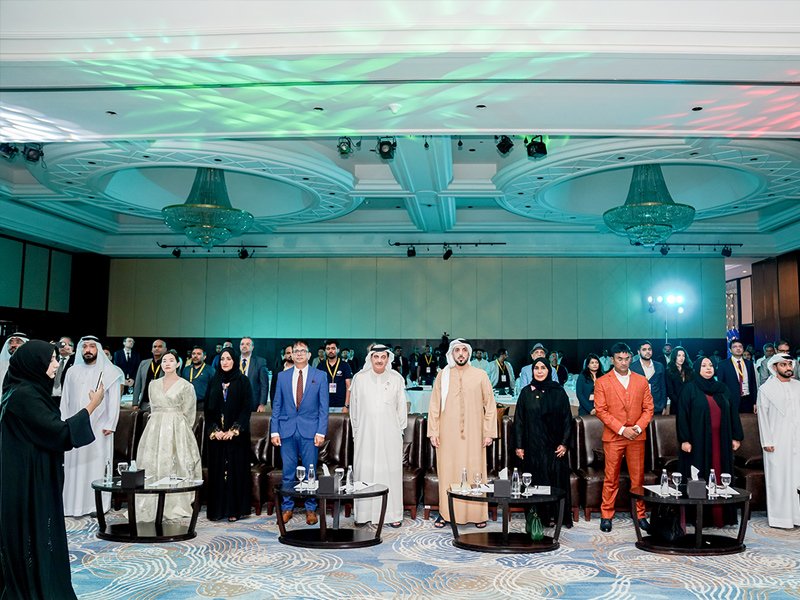
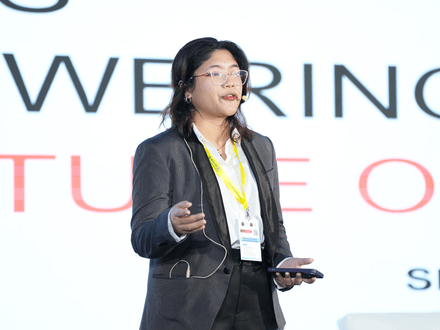
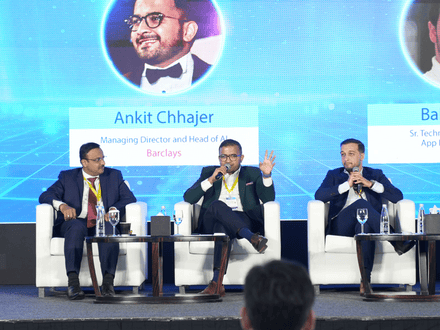
A glimpse of the atmosphere from previous editions — keynotes, the exhibition floor and the networking that defines World AI Technology Expo Dubai.




Key takeaways
- Write one or two concrete objectives before you register, with a target number of real conversations, so every hallway decision becomes easy.
- Most value is decided before the event: study the agenda for the people, not just the topics, and arrange warm introductions in advance.
- Optimise for a few genuine conversations over many shallow ones, and prioritise unstructured hallway time over sitting in recorded talks.
- Learn to exit conversations gracefully; it is what lets you have five good ones instead of getting trapped in one.
- Lead with the problem you are working on, not a pitch, and be generous with specifics — useful people attract useful people.
- The network is built in the follow-up: capture context in the moment, message within days with a specific ask, and run a retrospective afterwards.
Frequently asked questions
Do not try to imitate extroverts. Set a modest quota of a few meaningful conversations per day, schedule explicit recovery breaks away from the crowd, and favour one-to-one or small-group settings over loud parties. Leading with genuine curiosity about someone's technical problem is more effective than trying to be charismatic, and volunteering or helping run a session gives you a natural reason to talk to people.
The opener matters less than you think because everyone is there to meet people. A simple "Hi, I'm ___, what brings you here?" works, but a specific contextual line works better: ask about the talk you both just left or reference something the person recently built or wrote. Open-ended questions that let the other person describe their own work are the most reliable way to find overlap.
Within a few days, while the conversation is still fresh for both of you. Reference the specific thing you discussed, deliver anything you promised, and make one clear, low-friction ask such as a short call. Generic "great to connect" messages get ignored; specific, personalised ones stand out because most people never follow up at all.
For most professionals the networking is more valuable, because talks are usually recorded and available afterwards while conversations only happen in the room. Build your schedule around unstructured hallway time and side events, and do not feel guilty skipping a session you can watch later to continue a promising conversation.
Aim for depth, not volume. A humane and effective target is around five genuine conversations per day with people who map to your objective, rather than dozens of badge scans you cannot later place. Quality connections that you follow up on are worth far more than a large contact list you never message.