
Most people leave a big event with a tote bag, a dead phone and a vague sense that they should have talked to more people. To genuinely get value from an AI conference you have to treat it as a project with a goal, a plan and a follow-up phase, not as three days of passive attendance. The programme, the hallway and the expo floor each reward a different tactic, and the professionals who walk away with a hired candidate, a de-risked architecture decision or a signed pilot are almost always the ones who decided in advance what a good outcome looked like.
This guide is written for practitioners and decision-makers, ML and AI engineers, data scientists, engineering leaders and founders, who want a repeatable approach rather than generic ai conference tips. We will cover how to set a concrete objective, build a session plan that survives contact with reality, make conference networking feel less transactional, run honest due diligence on vendors, take notes you will actually reuse, and convert all of it into shipped work once you are back at your desk. The reasoning applies whether you are attending tech conferences several times a year or picking one flagship event to justify the travel budget.
Decide what a good outcome looks like before you book
Value is impossible to measure if you never defined it, so start by writing down the one or two outcomes that would make the trip clearly worth the money and the time away from delivery. Be specific and testable. "Learn about agents" is not an objective; "come back able to argue for or against putting an agent framework into our support triage flow, with two named people I can ask follow-up questions" is. A founder might target three qualified investor conversations; an engineering lead might target a defensible answer to whether to self-host a foundation model or stay on a managed API.
Different roles should optimise for different things, and trying to do everything is how you end up doing nothing well. Individual contributors usually get the most from deep technical sessions and unstructured hallway time with peers solving the same problem. Leaders often get more from a smaller number of high-quality conversations about hiring, build-versus-buy and roadmap risk than from any talk. Founders are frequently there for the expo floor and the after-hours events, not the main stage at all.
Once the objective is written, sanity-check the event against it. Read the actual agenda and speaker list rather than the marketing copy, and look for depth in your specific area, whether that is retrieval systems, evaluation, MLOps or applied safety. A conference that is perfect for a first-year data scientist can be a waste for a staff engineer, and vice versa. If the programme does not obviously serve your objective, a different event or a targeted workshop may be the better spend.
Build a session plan, then deliberately leave gaps
A day or two before, go through the schedule and tag talks as must-attend, backup or skip. Prioritise sessions that are hard to replicate later: live demos, deep architectural walkthroughs, post-mortems of production failures, and anything with a specific practitioner sharing real numbers and trade-offs. Deprioritise broad keynotes and vendor-flavoured overviews, which are usually recorded and can be watched at 1.5x speed on the flight home. The scarce resource at a conference is not information, it is access to people, so spend your live hours on what you cannot get from a blog post.
Resist the urge to fill every slot. Some of the highest-value moments come from an unplanned corridor conversation after a talk, a queue for coffee next to someone wrestling with the same evaluation problem, or a speaker you catch for five minutes as they step off stage. Leaving two or three deliberate gaps per day gives you room to follow those threads instead of rushing to the next room. A useful heuristic is to book no more than about 60 per cent of your available time.
Have a rule for walking out. If a session is not delivering within ten minutes, leave quietly and switch to your backup or use the time for a conversation. Nobody remembers who left a talk; you will remember the meeting you missed because you felt obligated to stay. Keep the plan on your phone, but also note which few sessions you would genuinely regret skipping, because those are the ones to protect when the day inevitably runs late.
Make conference networking specific, not transactional
The phrase conference networking makes most engineers wince because it conjures business-card roulette and hollow small talk. The fix is to make it specific. Instead of trying to meet as many people as possible, decide what kinds of conversation would move your objective forward: someone who has run a retrieval-augmented system at scale, a hiring manager in your domain, a founder solving an adjacent problem, or a practitioner who has already made the build-versus-buy call you are facing. Then go where those people are, which is usually the hallway, the workshops and the smaller birds-of-a-feather sessions rather than the main stage.
Lead with a real question rather than a pitch. "How are you handling evaluation for non-deterministic outputs?" or "What broke when you moved that agent into production?" opens a genuine exchange and immediately signals you are a peer, not a salesperson. Offer something back, even if it is just how your team approached the same issue; reciprocity is what turns a two-minute chat into a relationship. Ask before you photograph a slide, and respect that people are there to learn too.
Capture context, not just contacts. When you meet someone worth staying in touch with, jot down one line about what you actually discussed and one concrete reason to follow up, then send that follow-up within a few days while it is still fresh. A message that says "you mentioned you cut latency by caching embeddings, I would love to hear more" lands far better than a generic connection request. This single habit, more than any other, is what makes the difference between a stack of forgotten names and a network you can call on months later.
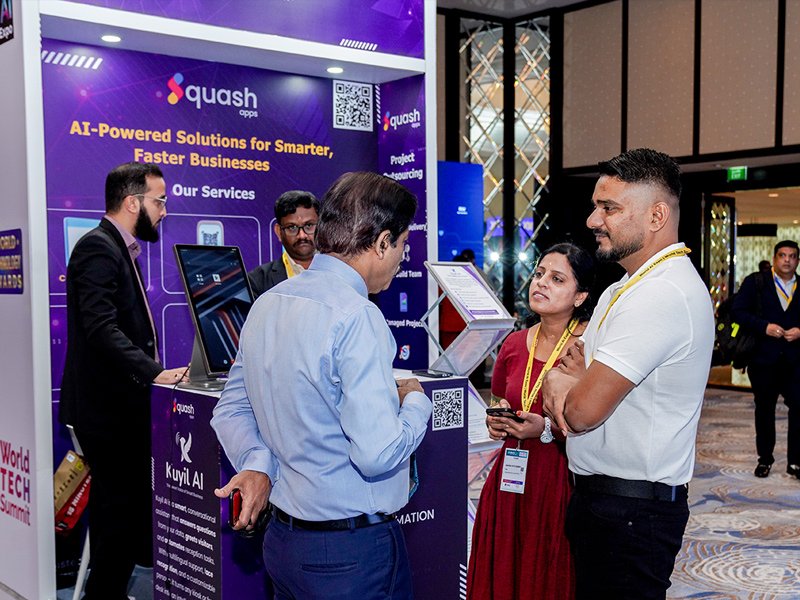
Past Speakers
Previous editions of World AI Technology Expo Dubai have brought together senior AI practitioners and leaders. Speakers below are shown for reference from previous editions; the 2027 line-up will be announced ahead of the event.

Nitin Akarte

Akshay Singh Dalal

James Hunter
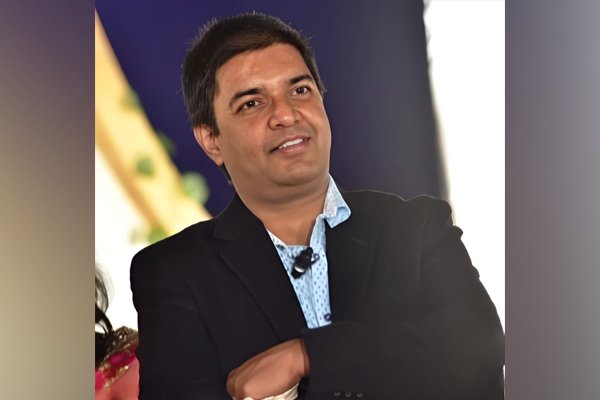
Abhinav Sharma
Work the expo floor like a technical buyer
The expo floor is where a lot of hidden value sits, but only if you approach it as a technical buyer rather than a badge-scanning tourist. Before you go in, list the two or three categories you actually care about, for example vector databases, experiment-tracking tools, evaluation and observability platforms, or inference infrastructure, and skip the rest. This keeps you from being pulled into demos that have nothing to do with your roadmap and preserves energy for real conversations.
Ask booth staff the questions a vendor's marketing site cannot answer. Push on where the product breaks, what happens at your data volume, how pricing behaves as usage scales, what the migration path off looks like, and whether there is real support for self-hosting or data residency if you need it. Ask to see the failure cases, not just the happy path, and try to get past the booth staff to an engineer who can talk specifics. A vendor confident in their product will engage; one that deflects is telling you something useful.
Treat every claim as a hypothesis to verify later, not a fact. Write down the specific promises made, the numbers quoted, and the name of the person who made them, so you can hold the follow-up conversation to that standard. The goal on the floor is not to decide anything, it is to shortlist two or three options worth a proper proof-of-concept back home, where you can test them against your own data and constraints instead of a curated demo.
Take notes your future self will actually use
Raw transcription is a waste of a live event, because the recording or the slides will cover the facts. Instead, capture the things that do not survive: the trade-off a speaker admitted under questioning, the reason they rejected an approach you were considering, the number that surprised you, and the idea that maps directly onto a problem your team has right now. A good note is one you can act on, so tag anything that implies a task with a clear marker.
Structure notes around decisions and actions rather than topics. A simple format that holds up is one line for what you heard, one line for why it matters to your work, and one line for what you will do about it. If nothing goes in the second and third lines, you probably did not need the note. This forces you to process ideas in the moment rather than deferring all the thinking to a someday review that never happens.
Do a short daily synthesis, ideally the same evening while it is fresh. Ten minutes to skim the day's notes, star the three things that matter most and flag any follow-ups turns a sprawling pile into something usable. By the end of the event you want a single shortlist of decisions, experiments and people, not forty pages you will never reopen. This is the unglamorous habit that separates people who make the most of a conference from those who merely attend one.
Manage your energy so you last all three days
Conferences are physically and cognitively demanding, and the most valuable hours are often the informal evening ones, so managing energy is a genuine strategy rather than a soft concern. Trying to attend every session, every social event and every late-night gathering guarantees you will be foggy for the conversations that matter most. Decide in advance which evenings you will invest in and protect some recovery time, because a sharp, present ninety minutes beats a distracted five hours.
Handle the basics deliberately: hydrate, eat properly rather than grazing on pastries, and build in short breaks to step outside and let ideas settle. Batch your work commitments so you are not half-attending the event and half-firefighting from your inbox; set expectations with your team before you leave that responses will be slower. If your objective needs you sharp for investor or hiring conversations, treat sleep the night before as part of the preparation, not an optional extra.
Protect a small amount of quiet processing time each day. The insights from a talk often only click when you have space to connect them to your own context, and that space rarely appears if you are sprinting between rooms from morning to midnight. Even a single twenty-minute walk to think about what you have learned can be worth more than another session.
Turn the trip into shipped outcomes
The real return on a conference is realised in the two weeks after it, not during it, and this is where most of the value leaks away. Within a couple of days, sit down with your synthesised shortlist and convert it into concrete artefacts: follow-up messages sent, a ranked list of vendors to run a proof-of-concept against, one or two experiments scoped as actual tickets, and a short written summary for colleagues who did not attend. If you cannot point to items like these, the trip was tourism.
Share what you learned in a way your team can use. A crisp internal write-up, or a fifteen-minute session covering the three ideas worth acting on and the two you have decided to ignore, multiplies the value across everyone who stayed behind and helps justify the next trip. Being explicit about what you are not going to pursue is as useful as the recommendations, because it saves the team from chasing every shiny idea you brought home.
Close the loop against the objective you wrote at the start. Did you come back able to make the decision, fill the gap or find the people you set out to? If yes, capture what worked so you can repeat it. If not, be honest about why, whether it was the wrong event, a plan that was too crowded, or too little follow-up, and adjust before the next one. If you are working on exactly these problems and want to go deeper, events like World AI Technology Expo Dubai (07-09 April 2027, Millennium Plaza Downtown Hotel, Dubai) are built for meeting peers, vendors and investors in one place, which makes the objective-driven approach above easier to execute. Treating each conference as an experiment you learn from is what compounds the value over a career of attending tech conferences.
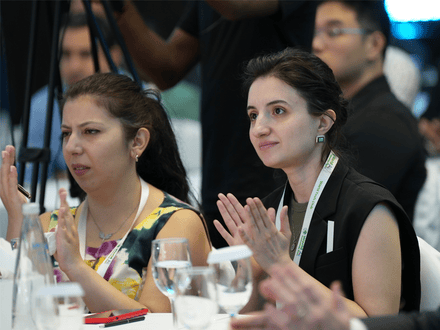
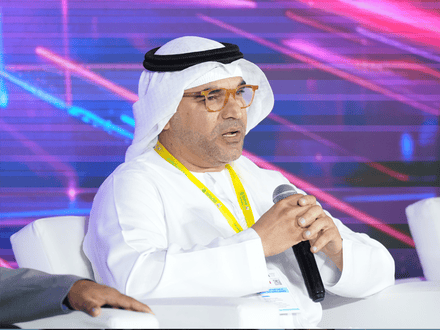
Inside the event
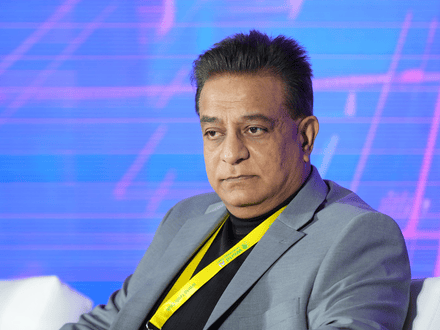
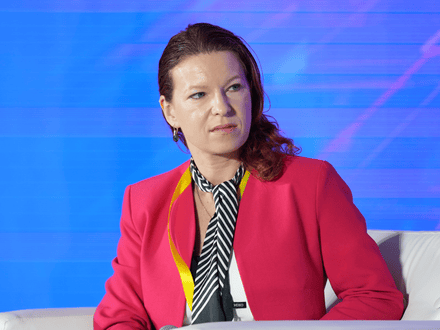
A glimpse of the atmosphere from previous editions — keynotes, the exhibition floor and the networking that defines World AI Technology Expo Dubai.


Key takeaways
- Write down one or two testable outcomes before you book; value you cannot define, you cannot capture.
- Spend scarce live hours on people and hard-to-replicate sessions, and skip the recorded keynotes you can watch later.
- Make networking specific: lead with a real technical question, offer something back, and follow up within a few days with concrete context.
- Work the expo floor as a technical buyer, pushing on failure cases, scaling and migration paths rather than the demo happy path.
- Take action-oriented notes and synthesise them daily so you leave with a shortlist of decisions, not pages you never reopen.
- The return is realised in the fortnight after: turn notes into follow-ups, proofs-of-concept, scoped experiments and an internal write-up.
Frequently asked questions
Play to structured formats rather than open receptions: workshops, birds-of-a-feather sessions and post-talk questions give you a natural reason to speak and a shared topic to anchor on. Set a small, achievable target such as three real conversations a day, and lead with a specific technical question so the exchange has direction. Quality of connection matters far more than volume, so a handful of genuine conversations you follow up on beats working the whole room.
Attend the talks that are hard to replicate later, such as live demos, production post-mortems and deep architectural walkthroughs with real numbers, and skip broad keynotes that are usually recorded. Treat the rest of your time as networking, because access to people is the scarce resource an event provides. A good balance is to protect a few must-see sessions and leave deliberate gaps for the hallway conversations that often prove most valuable.
Approach it as a technical buyer with a shortlist of categories you actually care about, and ask questions the marketing site cannot answer: where the product breaks, how it behaves at your data volume, how pricing scales and what the migration path looks like. Ask to see failure cases and try to reach an engineer rather than only booth staff. Do not decide anything on the floor; your goal is to shortlist two or three options to test against your own data in a proof-of-concept.
Within a few days, send short, specific messages that reference exactly what you discussed and give a concrete reason to continue, which lands far better than a generic connection request. Turn your notes into a ranked vendor shortlist, one or two scoped experiments and a brief internal summary for colleagues. Following up while the context is fresh is the single habit that most reliably converts a conference into lasting value.
Book no more than roughly 60 per cent of your available time so you have room for unplanned conversations, which are often the most valuable part of the event. Tag sessions as must-attend, backup or skip, and give yourself permission to walk out of anything that is not delivering within about ten minutes. Protecting a little quiet time each day to process what you have learned also helps the insights actually stick.