
Learning how to pitch your AI startup to investors is now a distinct skill from the general fundraising craft, because the people writing cheques have become far more sophisticated about what actually creates durable value in machine learning products. Five years ago, gesturing at a demo and a rising loss curve was enough to open a term sheet. Today the investor across the table has probably already funded three companies in your space, has a technical partner who can read your evaluation harness, and will ask within the first ten minutes whether your core capability is something a well-resourced team could rebuild in a weekend by wrapping a foundation model. If you cannot answer that crisply, the meeting is effectively over regardless of how polished your slides are.
This article is written for founders and technical leaders who are preparing an AI startup pitch and want to understand what happens on the other side of the table. We will treat the pitch not as a performance but as a compression of your company's real substance: the problem you have chosen, the data and workflow advantages you are compounding, the unit economics of inference, and the evidence that customers change their behaviour because of what you built. Raising funding for AI is ultimately about convincing a rational sceptic that your edge widens rather than erodes over time. The mechanics of the deck matter, but they matter far less than the reasoning you can defend under pressure.
Understand what AI investors are really underwriting
When someone in AI venture capital evaluates your company, they are not underwriting your model architecture. Models are commoditising quickly; the capability that felt magical last quarter is a baseline feature this quarter, often available through a general-purpose API. What experienced investors underwrite is the system around the model: proprietary or hard-to-assemble data, a workflow you own end to end, distribution into a market that is painful to reach, and a feedback loop that makes your product measurably better the more it is used. Your job in the pitch is to make that system legible.
A useful exercise before you build a single slide is to write down the honest answer to one question: if a capable competitor copied your product exactly tonight, what would they still be missing tomorrow? If the answer is 'nothing durable', you have a feature, not a company, and no amount of narrative will hide that from a technical partner. If the answer is 'the two years of labelled interaction data from a workflow they cannot easily access', you have something worth funding. Everything in your pitch should ladder up to that defensible core.
This reframing also changes how you talk about foundation models. Depending on a third-party model is not a weakness in itself; nearly everyone does it. The weakness is depending on it in a way that gives you no accumulating advantage. Show that the general model is a substrate you build leverage on top of, through fine-tuning on data others lack, orchestration that encodes hard-won domain logic, or an evaluation and guardrail layer specific to a regulated workflow.
Lead with the problem and the wedge, not the technology
The most common failure in an AI startup pitch is opening with the technology. Founders who have spent months on retrieval pipelines and an agent framework want to talk about how the system works, and they bury the reason anyone should care three slides deep. Investors decide very early whether a problem is real, expensive and urgent. Spend your first minutes there: who has this pain, how are they solving it today with duct tape and manual labour, and why is the cost of the status quo large enough to justify a new vendor.
Your wedge, the narrow initial use case where you are ten times better rather than incrementally better, deserves more airtime than your long-term vision. A sharp wedge signals that you understand go-to-market realities: you will win a specific buyer with a specific painful task, then expand. Vague horizontal ambition, 'we are building the AI platform for all knowledge work', reads as a lack of focus and usually predicts a long, unproductive sales cycle. Concrete beats grand.
Frame the technology as the means, not the message. A strong sequence is: here is the expensive problem, here is the specific workflow we insert ourselves into, here is why existing tools and generic models fail at it, and only then, here is what we built and why it is hard to replicate. The technical depth still comes out, but it lands as evidence for a business claim rather than as an academic tour.
Prove the moat: data, distribution and workflow
Defensibility is the question that separates companies that raise from companies that stall. Because model weights and prompts are not durable moats, you need to point to something that compounds. The three most credible sources are proprietary data that is genuinely hard to reproduce, distribution advantages that lower your cost of acquiring the next customer, and deep workflow integration that raises switching costs. Name which of these you have, and be specific about how it grows with scale.
Be honest about data moats, because investors have learned to discount them. Simply having a lot of data is not a moat if a competitor can buy or scrape something equivalent. A real data advantage usually comes from a proprietary loop: your product generates interaction data, human corrections or outcome labels that no one outside your workflow can obtain, and that data measurably improves the product in a way customers feel. If you can show that your error rate on a core task dropped as usage grew, you are demonstrating a flywheel rather than asserting one.
Workflow depth is underrated as a moat and easier to build than a pure data advantage. When your product becomes the place where a team does the work, holds its context, and stores its history, ripping you out becomes organisationally expensive even if a technically similar alternative appears. Show the integration surface: the systems you connect to, the tasks that now run through you daily, and the internal processes that have reorganised around your product. That stickiness is often more convincing than any claim about model quality.

Past Speakers
Previous editions of World AI Technology Expo Dubai have brought together senior AI practitioners and leaders. Speakers below are shown for reference from previous editions; the 2027 line-up will be announced ahead of the event.

Nitin Akarte

Akshay Singh Dalal

James Hunter

Abhinav Sharma
Get the unit economics of inference right
AI companies have a cost structure that traditional software investors are still learning to price, and a founder who understands it well stands out immediately. Inference is a real marginal cost that scales with usage, unlike the near-zero marginal cost of classic software. If your gross margins are thin because every active user triggers expensive model calls, that will surface in diligence, so bring it up first and show you have a plan. Investors respect founders who volunteer the uncomfortable numbers.
Walk through your cost per query or per task, how it has trended, and the levers you have to bring it down: routing simpler requests to smaller models, caching, distillation of a large model into a cheaper specialised one, batching, and moving from per-token pricing toward owned or fine-tuned models as volume justifies it. The trajectory matters as much as the current figure. A business at forty per cent gross margin today with a credible path to seventy is fundable; one at forty per cent with no plan is not.
Tie this to pricing. If you charge per seat while your costs are per token, a few power users can make your best customers unprofitable. Show that your pricing model is aligned with your cost model, or that you are deliberately absorbing cost now to build the data flywheel and know exactly when that inverts. This kind of reasoning tells an investor you will not be surprised by your own income statement at scale.
Show traction that survives scrutiny
Traction is the most persuasive slide you have, but only if it is the right traction. In AI, vanity signups and free-tier experimentation are abundant and nearly meaningless, because curiosity drives a lot of top-of-funnel that never converts to value. What investors want is evidence of retained, paying usage tied to a real outcome. Depth of engagement from a handful of accounts that clearly depend on you beats a large number of dormant logos.
Choose metrics that reflect genuine dependence: the share of users still active after several weeks, the frequency and volume of core actions, expansion within existing accounts, and where possible a quantified outcome the customer attributes to you, such as hours saved or throughput gained. If you have paying customers, cohort retention curves that flatten rather than decay tell the story better than a single headline growth rate. Investors read the shape of the curve, not just the endpoint.
Prepare for the reliability question, because AI products fail in ways demos hide. Be ready to discuss how often your system produces wrong or unusable outputs, how you measure that, and what happens when it does. A founder who can talk calmly about failure rates, human-in-the-loop fallbacks and how they set customer expectations signals operational maturity. One who insists the system just works invites deeper, more sceptical probing.
Build a pitch deck that maps to how investors read
Your investor pitch deck should follow the order in which a partner forms conviction, not the order in which you built the company. A dependable spine is: the problem and who feels it, your specific wedge and insight, the product and a crisp demo, why it is defensible, traction and what it proves, unit economics and business model, market and expansion path, team and why you specifically, and finally the raise with a concrete use of funds. Each slide should make one point that a distracted reader gets from the headline alone.
Keep the deck short and let depth live in an appendix. Ten to fifteen core slides is plenty; put the detailed evaluation methodology, cohort tables, architecture diagram and cost breakdowns in backup slides you pull up when a technical partner asks. This structure respects the investor's time in the meeting while proving you have the rigour when it is demanded. Nothing builds confidence faster than answering a hard question by flipping to a slide that already anticipated it.
Treat the live demo as a claim you must be able to defend, not a highlight reel. Show the product doing the real, unglamorous task on a realistic input, including how it handles an ambiguous or adversarial case. Investors have seen enough cherry-picked demos to discount them heavily, so a demo that voluntarily shows a hard case and a graceful failure mode is far more credible than a flawless one on a soft example.
Prepare for technical due diligence and the hard questions
Once a partner is interested, an AI venture capital firm will often bring in a technical reviewer, and this is where thin pitches collapse. Expect questions about your evaluation methodology: how do you know the product is good, what does your test set look like, how do you catch regressions when you change a model or prompt, and how do you measure quality on tasks without a clean ground truth. Have a real answer. A serious evaluation harness, even a modest one, is one of the strongest signals that you are an engineering organisation rather than a demo.
You will also be asked about dependency risk. What happens to your product and margins if your underlying model provider raises prices, deprecates a version, or changes terms? Investors are wary of companies whose entire value proposition can be altered by a vendor's roadmap. Show that you have abstracted your model layer, tested alternatives, and can migrate without rewriting your product, or explain why your accumulated data and tuning make you resilient even if the substrate shifts.
This is also the phase where the surrounding ecosystem earns its keep, and events like World AI Technology Expo Dubai (07-09 April 2027, Millennium Plaza Downtown Hotel, Dubai) are useful precisely because they put founders in the same room as the vendors, peers and investors who ask these questions for a living, letting you pressure-test your answers before they cost you a term sheet. Beyond the pitch itself, the founders who raise well tend to be the ones who have already had these hard conversations informally, refined their reasoning against real scepticism, and walked into the partner meeting having heard every objection before.
Inside the event
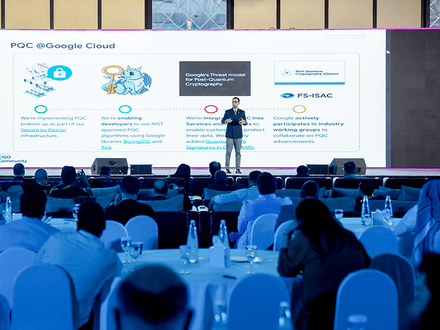
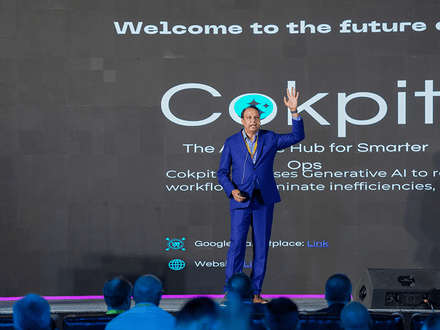
A glimpse of the atmosphere from previous editions — keynotes, the exhibition floor and the networking that defines World AI Technology Expo Dubai.




Key takeaways
- Investors underwrite the system around the model, proprietary data, workflow depth and distribution, not the model architecture itself, so make your defensible core legible.
- Answer the copy-tonight question honestly: if a competitor cloned your product, what durable advantage would they still lack tomorrow?
- Lead with an expensive, urgent problem and a sharp wedge; treat the technology as evidence for a business claim, not the headline.
- Know your inference cost per task and its trajectory, and align pricing with your cost model before diligence exposes thin margins.
- Show retained, paying, outcome-linked usage rather than vanity signups, and be ready to discuss failure rates and reliability calmly.
- Bring a real evaluation harness and a model-dependency mitigation plan; technical due diligence is where weak AI pitches fall apart.
Frequently asked questions
They look for durable defensibility beyond the model itself, usually proprietary data loops, deep workflow integration or distribution advantages that compound with scale. They also scrutinise unit economics, because inference is a real marginal cost, and they want retained, paying usage rather than curiosity-driven signups. Above all they want evidence your edge widens over time rather than erodes.
AI fundraising adds scrutiny around inference costs, model-provider dependency and defensibility, since capabilities commoditise fast and margins are affected by per-token costs. Investors often run technical due diligence on your evaluation methodology and failure rates. You must show a compounding data or workflow advantage, not just a working demo built on a foundation model.
Aim for ten to fifteen core slides that each make one clear point, with detailed material in an appendix. Keep architecture diagrams, cohort retention tables, evaluation methodology and cost breakdowns in backup slides you surface when a technical partner asks. This respects the investor's time while proving you have depth when it is demanded.
Depending on a foundation model is normal; the risk is depending on it without any accumulating advantage. Show that the general model is a substrate you build leverage on top of through proprietary fine-tuning data, domain-specific orchestration, or an evaluation and guardrail layer. Demonstrate that your product measurably improves with usage in a way competitors cannot easily copy.
Expect questions on how you evaluate quality, catch regressions when models or prompts change, and measure tasks without clean ground truth. You will also be asked about model-provider dependency risk, gross margins and how you handle failure cases. A real evaluation harness and a credible migration plan are among the strongest signals you can give.