Exhibiting at an AI expo is one of the few marketing motions that puts your product, your engineers and your buyers in the same room within a compressed window of a few days. For technical teams building on foundation models, agent frameworks or vector databases, that concentration matters more than it does in most industries, because AI purchases are rarely impulse buys. They are evaluated by sceptical practitioners who want to see latency numbers, ask about data handling, and poke at edge cases before they will champion you internally. A well-run booth lets you compress a sales cycle that might otherwise sprawl across months of asynchronous email into a single high-bandwidth conversation.
The catch is that a booth is expensive and easy to waste. Floor space, travel, hardware for live demos and staff time add up quickly, and plenty of companies leave with a fishbowl of business cards and nothing to show for it a quarter later. The difference between a booth that grows the business and one that drains it is almost never the size of the stand; it is the quality of preparation, the specificity of the demo, and the discipline of follow-up. This article treats tech expo exhibiting as an engineering problem with clear inputs, outputs and metrics, and walks through how to make the numbers work.
Why an AI expo is different from a generic trade show
General business events reward broad reach and brand impressions. AI events reward depth. The people walking your aisle are disproportionately technical: engineers scoping a build-versus-buy decision, data scientists comparing retrieval strategies, and engineering leaders trying to work out whether your tooling will survive contact with their production stack. They are allergic to vague claims. A slide that says you 'leverage cutting-edge AI' will lose them; a live trace showing how your system handles a malformed input, or a candid answer about where your model struggles, will earn a second conversation.
This changes what you should optimise for. At a consumer or generalist show, footfall is the headline metric. At an AI expo, the currency is qualified technical conversations, because a single credible conversation with the right architect can unlock a six-figure deal or a design partnership. That means you can win with a modest footprint if your demo is sharp and your staff can actually answer hard questions. It also means the failure modes are specific: staffing your booth with people who cannot go deep is the fastest way to burn credibility with exactly the audience you came for.
The other structural difference is the buying committee. Enterprise AI decisions typically involve a practitioner who evaluates, a leader who approves budget, and often a security or data governance stakeholder who can veto. An expo is one of the rare settings where you might meet two of those three roles in the same visit. Planning your booth to serve all of them, rather than only the engineer, is a large part of what separates b2b exhibiting that converts from exhibiting that merely entertains.
Decide what you are actually there to achieve
Before you book space, write down the one or two outcomes that would make the event worth it. The honest options are narrower than most teams admit: sourcing net-new qualified pipeline, accelerating deals already in flight, recruiting scarce engineering talent, finding design partners for an unreleased feature, or raising your profile with investors and prospective hires. Each of these implies a different booth, a different demo and a different definition of success. A recruiting-led presence wants to showcase interesting technical problems and the people solving them; a pipeline-led presence wants a tight qualification script and a way to capture intent.
Trying to achieve all of these at once usually means achieving none of them well. If your primary goal is lead generation at events, then everything, from the headline on your banner to the questions your staff ask, should funnel towards identifying and capturing buyers with real intent. If your goal is design partnerships, you are looking for a much smaller number of deep conversations and should resist the temptation to measure yourself on badge scans. Pick the primary objective, make it explicit to the whole team, and let it drive the trade-offs.
Set a target number before you go and make it concrete: for example, a specific count of qualified conversations per day, or a number of design-partner intros. Vague ambitions like 'raise awareness' cannot be measured and will not survive the post-event budget review. A number you can point at, even an imperfect one, is what protects your ability to exhibit again next year.
Design a demo engineers will actually respect
The centre of gravity for any AI booth is the demo, and the most common mistake is showing a polished happy path that everyone already assumes works. Technical visitors have seen impressive cherry-picked outputs; what earns their trust is watching your system behave under stress. Show it handling an ambiguous prompt, recovering from a tool call that fails, or gracefully degrading when a retrieval step returns nothing useful. Honesty about limits reads as confidence, not weakness, to this crowd.
Make the demo interactive and fast. Let visitors type their own input rather than watching a scripted reel, because the moment they see the system respond to their example, the conversation shifts from scepticism to 'how would this fit my stack'. Pre-load a few realistic scenarios drawn from the industries most represented at the show so you can meet different visitors where they are. Keep a strict eye on latency and have an offline or cached fallback ready, because conference wifi is unreliable and a stalled demo in front of a prospect is worse than no demo at all.
Instrument the demo to support the conversation, not just to look good. Have the underlying traces, token usage or evaluation metrics one click away so that when a data scientist asks how you measure quality, you can show a real answer rather than a marketing number. The teams that convert best treat their booth demo as a live technical artefact, tested and rehearsed like a production release, complete with a runbook for when something breaks.
Past Speakers
Previous editions of World AI Technology Expo Dubai have brought together senior AI practitioners and leaders. Speakers below are shown for reference from previous editions; the 2027 line-up will be announced ahead of the event.

Nitin Akarte

Akshay Singh Dalal

James Hunter
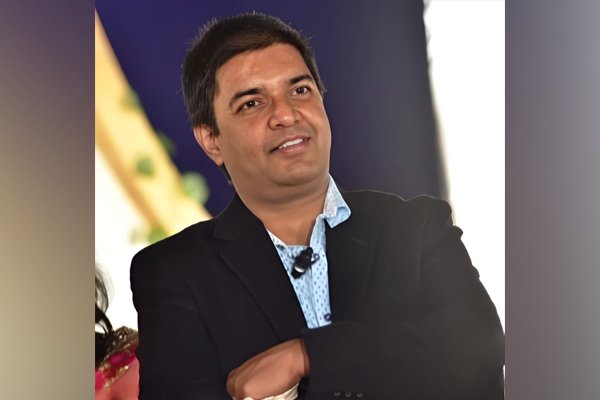
Abhinav Sharma
Staff the booth like it is a product launch
Who stands in the booth matters more than almost anything else. Bring at least one person who can answer architecture questions without deferring, because the highest-value visitors will probe your system design within the first two minutes. A common and effective pattern is to pair a commercial person, who qualifies and captures next steps, with an engineer who can go deep on demand. The commercial person keeps things moving; the engineer establishes credibility.
Rehearse a lightweight qualification flow so the team is consistent. A workable approach is a short arc: an open question about what the visitor is building, a listen for whether they have a real problem and budget authority, a targeted slice of the demo that maps to their problem, and a clear next step captured on the spot. Agree in advance on what makes someone qualified versus merely curious, so that your notes distinguish a serious buyer from a student collecting swag. Ambiguous notes written at pace are nearly worthless a week later.
Protect your people from burnout. Booth duty is physically and mentally draining, and quality of conversation collapses when staff are tired. Rotate in shifts, keep the roster small enough that everyone stays sharp, and give the engineers time off the floor to attend a talk or two so they come back energised and informed about what visitors are hearing elsewhere at the event. Events like the World AI Technology Expo Dubai (07-09 April 2027, Millennium Plaza Downtown Hotel, Dubai) are also where your team can meet peers, vendors and investors between shifts, so build a little slack into the schedule for those hallway conversations.
Turn conversations into a measurable pipeline
The whole exercise lives or dies on capture and follow-up. Decide before the event exactly what data you will record for each meaningful conversation: who they are, what they are building, the specific problem discussed, the agreed next step, and a simple qualification tier. Capture it digitally in the moment rather than trusting memory or a stack of cards, because human recall of dozens of similar conversations decays within days. A shared form or a lightweight scan-and-annotate workflow beats an elaborate system nobody uses under pressure.
Follow up fast and specifically. A generic 'great to meet you' email sent a week later is close to worthless; a note sent within forty-eight hours that references the exact problem the person described, and offers the concrete next step you agreed on, is what converts a booth chat into a scheduled call. Personalisation at scale is hard, which is precisely why so few exhibitors do it, and why the ones who do stand out. Draft the templates before you travel so follow-up is a fill-in-the-blanks task, not a from-scratch effort while everyone is jet-lagged.
Route leads to owners immediately. Every qualified conversation should have a named person responsible for the next step within a day of the event ending. Deals go cold in the gap between the show floor and the CRM, and that gap is entirely within your control. The discipline of same-week routing is often the single biggest lever on whether tech expo exhibiting produces a return.
Measure exhibitor ROI honestly
To know whether exhibiting worked, you need to have counted the full cost and the full return. On the cost side, include floor space, stand build, travel and accommodation, demo hardware, shipping, staff time valued at something realistic, and the opportunity cost of pulling engineers off product work for a week. On the return side, track influenced pipeline, closed deals traced back to the event, design partners signed, and hires sourced. Exhibitor ROI only means something when both sides of that ledger are complete and honest.
Because AI sales cycles are long, resist judging the event too early. A booth that generates twenty serious conversations may show almost no closed revenue for two or three quarters, then convert several of them at once. Set up attribution so you can still connect a deal that closes months later back to the conversation that started at the booth, otherwise you will systematically undercount your return and talk yourself out of a channel that is actually working. A simple tag on the lead source, maintained through the pipeline, is usually enough.
Report the result in a form your finance stakeholders can act on. A short post-event write-up with cost, qualified conversation count, pipeline generated and cost per qualified conversation gives you a baseline to compare against next year and against other channels. Over two or three events you will develop a reliable model of what a given show is worth to you, which turns exhibiting from a leap of faith into a repeatable, tunable investment.
Common failure modes and how to avoid them
The most frequent failure is treating the booth as a branding exercise with no capture mechanism, so conversations evaporate the moment the visitor walks away. The fix is unglamorous but decisive: a disciplined capture-and-follow-up process, agreed and rehearsed before you arrive. The second common failure is an over-produced demo that never fails on stage and therefore convinces no one, because sophisticated visitors assume anything that smooth has been rigged. Showing real behaviour, including graceful handling of failure, beats a flawless reel.
A third failure is staffing for coverage rather than competence: filling the booth with whoever was available rather than people who can answer hard questions and qualify well. It is better to have a smaller stand staffed by two excellent people than a large one manned by five who cannot go deep. A fourth is spreading effort across every possible objective so nothing is done well; pick a primary goal and let it govern your choices.
Finally, many teams underinvest in the days immediately after the event, when the entire return is actually realised. The energy spent on the booth build should be at least matched by the energy spent on same-week follow-up and routing. If you only have capacity to do one of the two well, do the follow-up, because a mediocre booth with excellent follow-through will out-earn a spectacular booth with none.
Inside the event
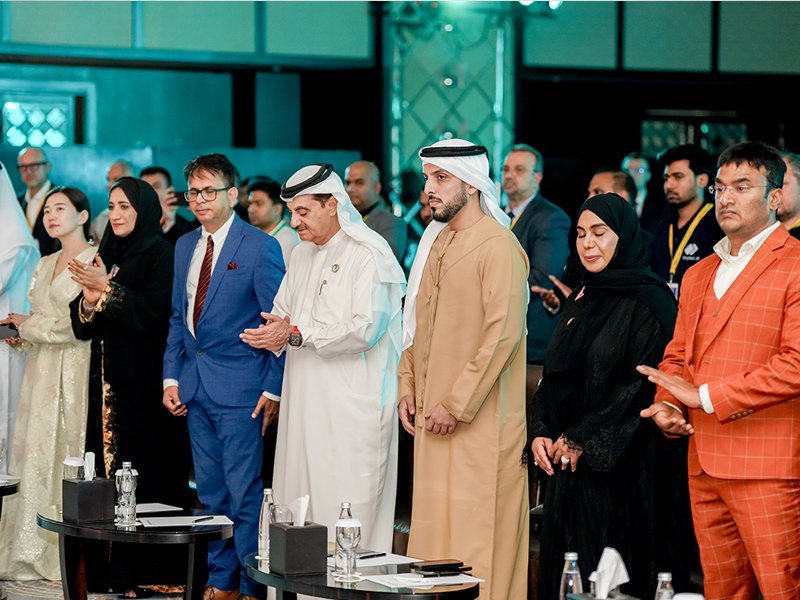
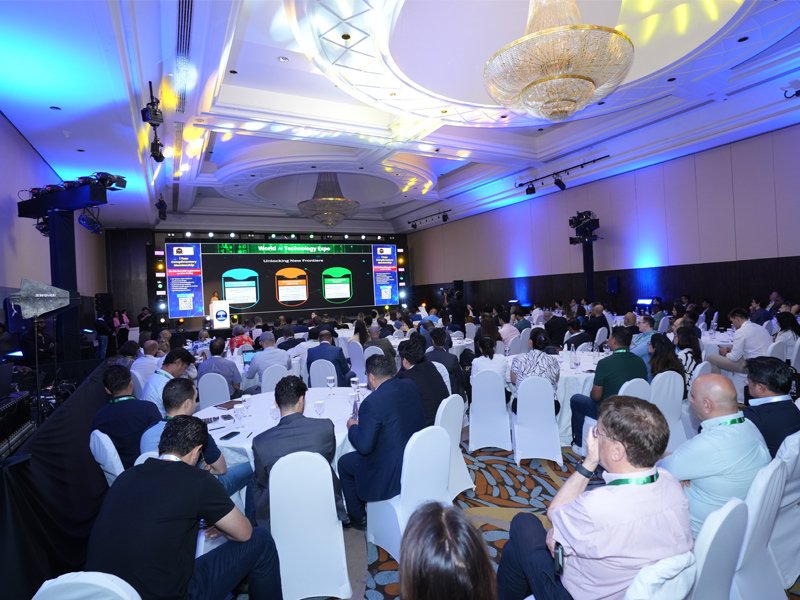
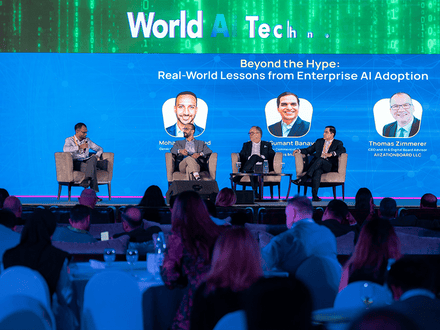
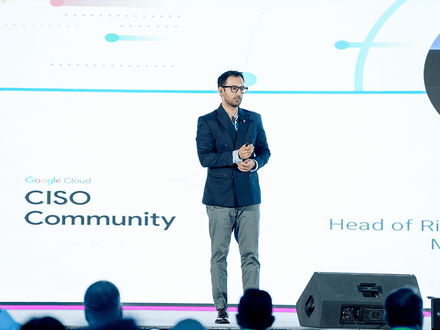
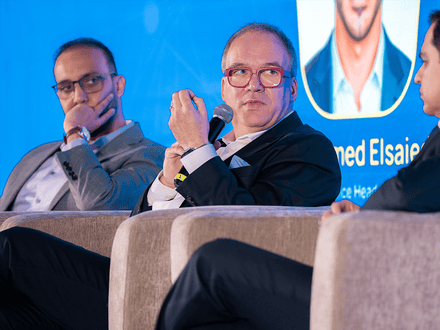
A glimpse of the atmosphere from previous editions — keynotes, the exhibition floor and the networking that defines World AI Technology Expo Dubai.


Key takeaways
- The value of exhibiting at an AI expo comes from compressing a long, technical sales cycle into a few days of high-bandwidth conversations with the right people.
- Pick one primary objective (pipeline, deals in flight, recruiting, design partners or profile) and let it drive every decision about booth, demo and staffing.
- Design a demo that shows real behaviour under stress, including graceful failure, because technical buyers distrust cherry-picked happy paths.
- Staff with at least one person who can answer architecture questions on demand, paired with someone who qualifies and captures next steps.
- Capture conversation details digitally in the moment and follow up within forty-eight hours with specific, personalised next steps.
- Measure exhibitor ROI with a complete cost ledger and long-window attribution, since AI deals often close two or three quarters after the event.
Frequently asked questions
It can be, if you go with a clear objective and a modest, well-staffed booth rather than a large one. Small teams often win more from a sharp interactive demo and two people who can answer deep technical questions than from expensive floor space. The main risk is opportunity cost, so make sure the event's audience genuinely overlaps with your buyers before committing.
Add up the full cost, including floor space, travel, demo hardware and staff time, then track qualified conversations, influenced pipeline and closed deals attributed back to the event. Because AI sales cycles are long, use a lead-source tag that survives through the pipeline so deals closing months later still count. Report cost per qualified conversation as a baseline you can compare across events.
A good AI demo is interactive, fast and honest. Let visitors enter their own input, show how the system handles ambiguity or a failed step, and keep the underlying traces or evaluation metrics one click away. Have a cached or offline fallback ready, because conference connectivity is unreliable and a stalled demo undermines credibility.
Within forty-eight hours, while the conversation is still fresh for both sides. Reference the specific problem the person described and offer the concrete next step you agreed at the booth, rather than a generic thank-you. Draft your follow-up templates before you travel so the task is fast to execute when you get back.
Enough to keep at least two capable people on the floor at all times without exhausting anyone, which usually means a small rotating roster rather than a crowd. Prioritise competence over headcount: one engineer who can answer architecture questions plus one person who qualifies and captures next steps is a strong core. Give staff scheduled breaks so conversation quality stays high.