The hardest part of building an AI company is rarely the model. It is finding the two or three people who will sit beside you at 2am when a fine-tuning run has just corrupted its checkpoints and your largest customer wants a demo in the morning. Learning how to find co-founders and talent for AI startup work is, in practice, the single highest-leverage skill an early founder can develop, and it is also the one most people improvise their way through. Capital is more abundant than it has ever been; genuine machine-learning judgement, distribution and trust are not. If you get the people question right, almost everything else becomes recoverable. If you get it wrong, no amount of GPU credit will save you.
This article is a working playbook rather than a motivational essay. It covers how to decide whether you even need a co-founder, where to actually meet strong technical people, how to run AI startup hiring when you are competing with deep-pocketed labs, and how to turn loose conversations into durable startup partnerships. The emphasis throughout is on concrete mechanics, honest trade-offs and the engineering and commercial reasoning behind each move, because the people who thrive in this market treat recruiting and partnering with the same rigour they bring to a system-design review.
Decide what kind of co-founder the company actually needs
Before you try to find a technical co-founder, get honest about the gap you are filling. A solo technical founder usually needs someone who can own commercial reality: pricing, pipeline, hiring and the unglamorous operational spine. A commercial founder usually needs a partner who can own the model, the data pipeline and the architecture end to end. The failure mode is two people with the same skill set who simply like each other, because that leaves a permanent blind spot exactly where the business is most exposed.
Be specific about the seniority and stage of the technical partner too. Building an applied product on top of foundation models is a very different job from training or heavily adapting your own. The former rewards a pragmatic full-stack engineer who is comfortable orchestrating large language models, retrieval over vector databases and evaluation harnesses. The latter demands someone with real research and infrastructure depth who has felt the pain of distributed training and data curation. Hiring for the wrong one is expensive and slow to unwind.
There is also a legitimate case for no co-founder at all. If you can articulate the technical vision, ship a credible prototype and describe your first three hires precisely, you may be better off staying solo and recruiting senior employees with meaningful equity rather than forcing a fifty-fifty marriage under time pressure. A co-founder is the most expensive and least reversible decision you will make, so treat the null option as respectable, not a failure.
Where to actually meet strong AI people
The best AI talent is rarely browsing job boards. They are shipping open-source tooling, answering hard questions in technical communities, publishing thoughtful write-ups on evaluation or agent design, and turning up at events where the conversation is substantive rather than promotional. Your job is to be present in those places long before you need to hire, contributing something useful so that when you do reach out you are a familiar name rather than a cold recruiter.
Concretely, that means maintaining a short list of the repositories and communities where your problem space lives, and engaging as a peer: filing a good bug report, sharing a benchmark you ran, or writing up a failure you debugged. It means attending focused meetups and sector conferences rather than only large generalist ones. Founders working on exactly these questions can meet peers, potential co-founders, vendors and investors and go deeper on the ecosystem at the World AI Technology Expo Dubai (07-09 April 2027, Millennium Plaza Downtown Hotel, Dubai), which is the kind of venue where a hallway conversation turns into a hire or a partnership more often than any inbound application will.
Do not underestimate second-degree referrals. The strongest introductions come from engineers who have already worked with the person and will vouch for how they behave under pressure. Ask every good person you meet the same question: who is the most impressive AI engineer or researcher you have worked with, and why. Keep a running list, and revisit it every quarter rather than only when a role opens.
Test for real machine-learning judgement, not vocabulary
AI attracts an unusual amount of confident hand-waving, so your evaluation has to separate people who can recite the current model landscape from people who can make good decisions with incomplete information. The most reliable signal is a working session on a realistic problem: give the candidate a messy dataset or an ambiguous product requirement and watch how they scope it, what they choose to measure, and how they reason about the trade-off between a quick prompt-engineered baseline and a heavier fine-tuned or trained approach.
Pay close attention to how they think about evaluation, because this is where inexperienced practitioners fall apart. Someone strong will immediately ask how you will know the system is working, will worry about data leakage and distribution shift, and will treat an offline metric as a hypothesis rather than a verdict. Someone weaker will jump straight to model choice and demos. In applied AI, the person who obsesses over the eval harness and the feedback loop is usually worth more than the person who has memorised architecture trivia.
Finally, probe for production instincts. Ask how they would keep latency and cost sane at scale, how they would handle a model that regresses silently after a provider updates it, and how they would design guardrails around an agent framework that can take real actions. Founders who can operate the whole loop, from data to deployment to monitoring, are rare, and interviews that only test whiteboard algorithms will systematically miss them.
Past Speakers
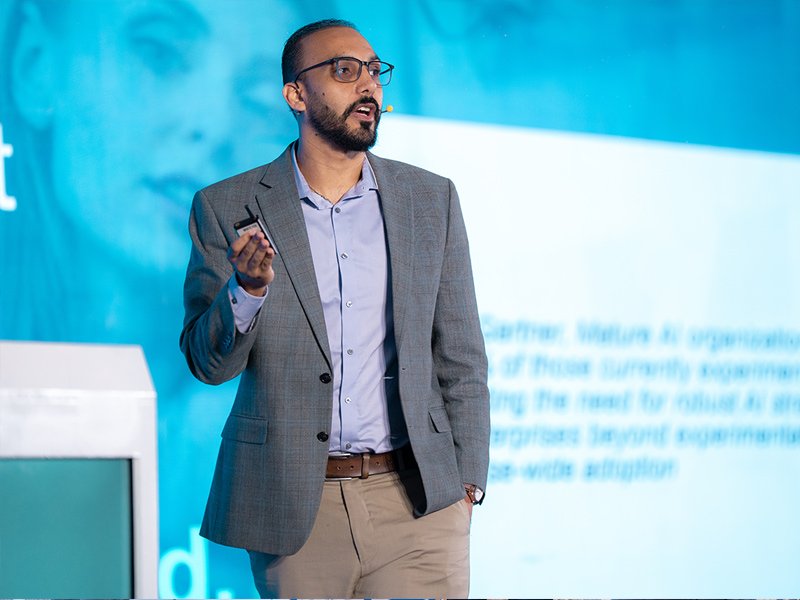
Previous editions of World AI Technology Expo Dubai have brought together senior AI practitioners and leaders. Speakers below are shown for reference from previous editions; the 2027 line-up will be announced ahead of the event.

Nitin Akarte

Akshay Singh Dalal

James Hunter

Abhinav Sharma
Run AI startup hiring when you cannot outbid the labs
You will lose a straight cash bidding war against large, well-funded organisations, so do not try to win one. Compete instead on the things they structurally cannot offer: ownership of an entire problem, direct contact with users, the ability to ship in days rather than quarters, and equity that could matter. Strong engineers frequently leave comfortable roles because they are bored of being a small cog, and that motivation is your most durable advantage in AI startup hiring.
Make the process fast and respectful, because speed is itself a signal of how the company operates. Compress interviews into days, not weeks; give candidates a real problem to chew on rather than a series of gatekeeping puzzles; and be transparent about runway, ownership and the genuine risks. Serious people are more attracted by honesty about hard trade-offs than by inflated promises, and the ones who are scared off by candour were never going to thrive in an early-stage environment anyway.
Design compensation for the reality that early equity is illiquid and uncertain. Be generous and clear about the grant, explain the vesting mechanics plainly, and where cash is tight, consider structured advisory arrangements or fractional engagements as a low-risk way to work together before committing. On anything touching equity, employment terms or immigration, bring in a qualified professional to paper it correctly; this article is not a substitute for that advice.
Build partnerships that move the roadmap, not the slide deck
Startup partnerships are seductive because they feel like progress without the cost of building. Most produce a press-friendly announcement and nothing else. The ones that matter change your roadmap: a data-sharing arrangement that unlocks a capability you could not build alone, a distribution deal that puts your product in front of the right buyers, or an infrastructure relationship that meaningfully lowers your cost of serving models. Before entering any partnership, write down the single concrete outcome you expect and the date by which you will judge it.
Pick partners whose incentives are genuinely aligned with yours over the relevant horizon. A large platform partner may be enthusiastic today and competitive tomorrow once your category proves valuable, so be clear-eyed about dependency. Avoid architecting your product so that a single external relationship, whether a model provider or a channel partner, can hold your business hostage. Keep an abstraction layer between your core system and any third party you cannot fully control, so that switching remains an engineering task rather than an existential one.
Treat early partnerships as experiments with a defined scope. Start with a small, time-boxed pilot that has explicit success criteria, and resist the pull to sign sprawling exclusive terms before you have evidence. The best partnerships tend to grow from a narrow, verifiable win rather than from a grand framework agreement signed with optimism and no data.
Attract inbound instead of chasing everyone
The founders who hire well and find great partners usually build a gravitational pull rather than relying solely on outbound effort. That pull comes from doing genuinely interesting work in public: writing clearly about a hard problem you solved, releasing a small useful tool, sharing a candid post-mortem of an approach that failed. Good AI people are drawn to teams that are visibly thinking well, because they want colleagues who will sharpen them.
This is also the cheapest recruiting channel you have. A single well-argued technical write-up that circulates in the right community can generate more qualified inbound than months of cold outreach, and it pre-qualifies people because they arrive already understanding and caring about your problem. The same content builds credibility with potential partners and investors, who increasingly evaluate teams by the quality of their public reasoning rather than by pitch polish alone.
Consistency beats intensity here. A steady cadence of small, honest, specific artefacts compounds into a reputation, whereas a single viral moment fades. Decide on a sustainable rhythm, whether that is one substantive piece a month or a running log of what you are learning, and protect it even when the roadmap is loud.
Structure the relationship so it survives disagreement
Once you have found the right co-founder or senior hire, the durability of the relationship depends on structures agreed while everyone is still calm. Vesting with a cliff protects the company and the individual from a mismatch that only becomes visible after a few months of real work. Clear ownership of decision domains, so that one person has the final call on technical architecture and another on commercial strategy, prevents the slow paralysis that kills more startups than any competitor does.
Build an explicit rhythm for surfacing disagreement before it calcifies. A regular, honest conversation about what is not working, held when nothing is on fire, is worth more than any offsite. Founders who can disagree sharply about a modelling decision and still trust each other afterwards are far more resilient than founders who avoid conflict to preserve a fragile peace. Practise that muscle early, on small things, so it is available when the stakes are high.
Finally, write things down. Founder agreements, role boundaries, equity splits and the conditions under which someone can leave should be explicit and reviewed by a suitably qualified professional. The point is not distrust; it is that clear, boring documentation removes the ambiguity that later curdles into resentment. The relationships that survive are the ones where expectations were made legible while goodwill was still abundant.
Inside the event
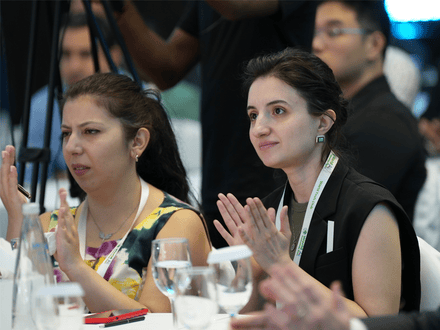
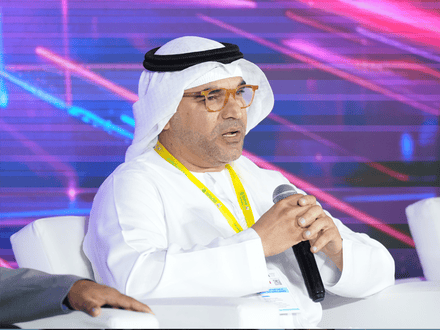
A glimpse of the atmosphere from previous editions — keynotes, the exhibition floor and the networking that defines World AI Technology Expo Dubai.


Key takeaways
- Choose a co-founder for the gap in the company, not for comfort or similarity, and treat staying solo as a legitimate option rather than a failure.
- The strongest AI talent is found in open-source work, technical communities and focused events long before a role opens, not on job boards.
- Test for evaluation instincts and production judgement, not vocabulary; the person who obsesses over the eval harness usually outperforms the trivia expert.
- You cannot outbid large labs on cash, so compete on ownership, speed, transparency and meaningful equity.
- Judge every partnership by one concrete roadmap outcome and a date, and keep an abstraction layer between your core system and any third party.
- Agree vesting, decision domains and written founder terms while goodwill is high, and have a qualified professional paper anything touching equity or employment.
Frequently asked questions
Start from the specific technical gap you need filled, then spend time where strong engineers already are: open-source projects, technical communities and focused AI events. Contribute something useful before you pitch, use referrals to find people others have vouched for, and test any candidate on a realistic problem to judge their machine-learning and production instincts rather than their vocabulary.
Compete on what large organisations cannot offer: ownership of a whole problem, direct user contact, shipping speed and meaningful equity. Run a fast, transparent hiring process, be honest about runway and risk, and use fractional or advisory arrangements as a low-commitment way to work together before making a full offer.
Not always. If you can articulate the technical vision, build a credible prototype and name your first hires precisely, you may be better staying solo and recruiting senior employees with strong equity. A co-founder is the most expensive and least reversible early decision, so only take one on when it fills a genuine, permanent gap.
A partnership is worth it when it changes your roadmap rather than just your slide deck: unlocking data, distribution or lower serving costs you could not achieve alone. Define one concrete expected outcome and a date to judge it, start with a small time-boxed pilot, and keep an abstraction layer so you never depend existentially on a single external party.
Give them a messy, realistic problem and watch how they scope it, what they choose to measure, and how they reason about evaluation, data leakage and cost at scale. Strong practitioners treat metrics as hypotheses and worry about how a system behaves in production, while weaker ones jump straight to model choice and demos.