Every serious practitioner eventually hits the same wall: the number of AI conferences to attend now vastly exceeds the number any single person, or even a well-funded team, can realistically absorb. There are academic gatherings heavy on peer-reviewed research, sprawling industry expos built around the show floor, tight practitioner meetups on a single topic like retrieval or evaluation, and executive summits aimed at strategy rather than code. They all promise to keep you current, and they all cost the same three scarce resources: money, travel time and, most expensively, your focused attention. Choosing well is a skill in its own right, and the people who treat it as a deliberate decision rather than a reflex tend to get dramatically more out of the same budget.
This article is a working framework for choosing tech conferences in a year when the signal-to-noise ratio has arguably never been worse. Instead of ranking events, it gives you a repeatable way to decide which of the best AI conferences 2026 has to offer are worth it for your specific role, stage and goals. We will look at defining your objective before you look at a single agenda, reading a programme critically, weighing the true cost, distinguishing research-grade from vendor-grade content, and measuring whether an event actually paid off. Whether you are an ML engineer trying to sharpen a narrow skill, a founder hunting for design partners, or an engineering leader deciding where to send a team, the aim is the same: a conference calendar that earns its place.
Start with the outcome you are buying, not the agenda
The most common mistake is browsing event listings before you have decided what you actually want. Agendas are designed to look compelling; almost any of them will generate a vague sense that you should be there. Reverse the order. Write down, in one sentence, the concrete outcome you are trying to buy: deepen a specific technical skill, hire, be hired, find design partners, close a round, scout vendors, refresh a strategic worldview, or simply recharge your motivation by being around sharp people. Each of these implies a very different kind of event.
These outcomes are not equally served by the same venue. If your goal is technical depth on, say, evaluation of agent systems or scaling vector databases, a focused practitioner workshop of a few hundred people will beat a twenty-thousand-person expo every time, because you can actually corner the speaker afterwards. If your goal is commercial, a large exhibition with a dense concentration of vendors, buyers and investors in one hall is far more efficient than a research symposium. And if you are an engineering leader looking for a strategic read on where foundation models are heading, an executive-track summit with senior operators will serve you better than a poster session full of gradient derivations.
Be honest about mixed motives, too. Many trips genuinely serve two goals — learning and business development — and that is fine, but rank them. When the schedule forces a conflict between a workshop you wanted and a dinner with a potential customer, knowing your primary outcome in advance turns an agonising choice into an obvious one.
Match the event type to your role and career stage
AI events fall into rough archetypes, and each rewards a different profile. Academic and research conferences are where new methods surface first, but they assume you can read a paper and want to; they are ideal for researchers, applied scientists and engineers building on the frontier, and often frustrating for people who just want production patterns. Large industry expos trade depth for breadth and serendipity — they are strong for commercial goals, ecosystem scanning and meeting a lot of people quickly. Practitioner conferences and single-topic summits sit in between: applied, hands-on and usually the best value for a working engineer who wants to level up a specific capability.
Your career stage changes the maths. Early-career engineers benefit disproportionately from breadth and from the sheer number of people they meet, so a couple of larger events plus one deep workshop is a sensible mix. Senior individual contributors get more from narrow, high-density technical rooms where the median attendee is as experienced as they are. Founders and CTOs are often buying access and context rather than content, which means the hallway track, the curated dinners and the investor presence matter more than any individual talk.
One practical filter: ask who else will be in the room, not just who is on stage. A brilliant keynote is available on video within a week. What you cannot get remotely is the specific density of peers, buyers or collaborators the event assembles. If you cannot describe the typical attendee, you do not yet know enough to commit.
Read the programme like an engineer, not a tourist
Once an event clears your goal and archetype filters, interrogate the actual programme. Skim the session titles and count how many you would genuinely block time for. A useful rule of thumb: if fewer than four or five sessions across the whole schedule are unmissable for you, the event is probably too broad or too shallow for your needs, however famous it is. Depth beats star power. A lesser-known summit with eight sessions squarely on your problem is worth more than a marquee event where only the opening keynote is relevant.
Scrutinise the speaker mix for a tell-tale ratio: how many talks are delivered by people who build and operate systems versus people whose job is to sell them. Vendor-led talks are not worthless — sometimes the people shipping a platform give the most concrete detail — but a programme dominated by sponsored slots tends to stay at the level of capabilities and demos rather than trade-offs, failure modes and hard-won operational lessons. Look for words like 'lessons from production', 'what didn't work', 'evaluation', 'cost' and 'at scale' in session descriptions; these signal the substance that actually transfers back to your own work.
Finally, check whether the format supports the outcome you are buying. Hands-on workshops and small-group sessions justify travel in a way that a wall of one-way keynotes rarely does, because the latter is increasingly indistinguishable from watching a recording at 1.5x. If the schedule is nearly all broadcast and little interaction, ask what specifically you gain by being physically present.
Past Speakers
Previous editions of World AI Technology Expo Dubai have brought together senior AI practitioners and leaders. Speakers below are shown for reference from previous editions; the 2027 line-up will be announced ahead of the event.
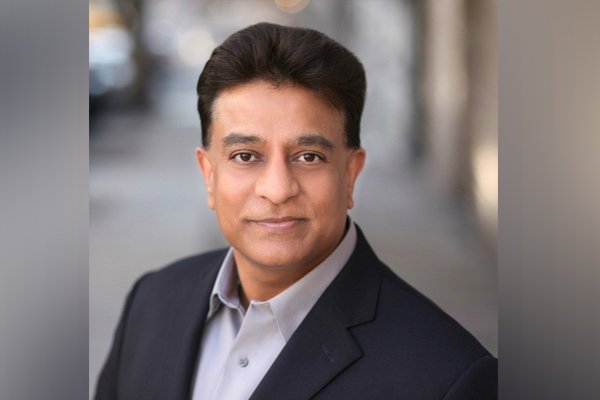
Nitin Akarte

Akshay Singh Dalal

James Hunter
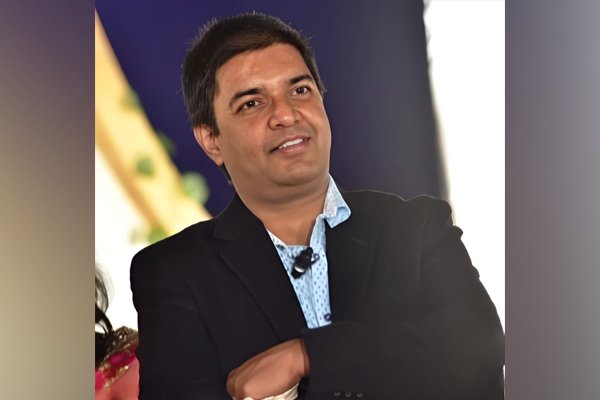
Abhinav Sharma
Count the full cost, not just the ticket
Ticket price is the least interesting number in the decision. The real cost of attending is the ticket plus travel and accommodation plus, crucially, the loaded value of the days you and any colleagues are out of the office. For a mid-level engineer, three days away plus travel can easily represent a working week of lost delivery time once you count preparation and recovery. That framing changes which events look expensive. A pricey local summit with no flights may be far cheaper in true terms than a 'free' event across the world.
Set a rough annual conference budget in both money and days, then treat it like any other constrained resource. A common healthy pattern for an individual is one or two larger events a year for breadth and networking, plus one or two focused workshops for depth — beyond that, marginal returns fall off fast and the disruption to deep work mounts. For teams, resist sending everyone to the same event; you get far more coverage by spreading attendance across complementary conferences and having each person write up what they learned.
Watch for the hidden multipliers that improve the maths. Co-locating a trip with existing customers, partners or candidates in the same city can turn a single conference into several high-value meetings. Speaking or running a workshop yourself often waives the ticket, sharpens your own thinking and generates inbound conversations you would never get as an attendee. And shoulder events — the unofficial dinners, meetups and side sessions that cluster around a big conference — are frequently where the real value hides, sometimes without requiring the main ticket at all.
Separate research-grade signal from vendor-grade noise
The field moves fast enough that a lot of conference content is effectively marketing dressed as insight. Learning to tell the difference quickly is one of the highest-leverage skills in choosing where to spend your time. Research-grade content makes falsifiable claims, shows its evaluation methodology, and is candid about limitations and cost. Vendor-grade content tends to lead with capability demos, avoids discussing where the approach breaks, and quietly assumes you will adopt a particular platform, agent framework or managed service.
Neither is inherently bad, but they serve different purposes and you should choose deliberately. If you are trying to understand whether a technique — retrieval-augmented generation over a new index type, a particular fine-tuning approach, an evaluation harness for agents — genuinely works, weight your time towards sessions that show numbers, ablations and honest failure analysis. If you are scouting the vendor landscape to shortlist tools, then the demo-heavy expo floor is exactly the right place, provided you go in with a scoring rubric rather than a willingness to be dazzled.
A practical guard against noise: for any exciting claim you hear, ask what the baseline was, what it cost to run, and what happens at the tail of the distribution. Talks that can answer those three questions on the spot are worth following up; talks that deflect them are entertainment. The same three questions, incidentally, make you a much more useful audience member and tend to start the conversations worth having in the corridor afterwards.
Weigh location, timing and the ecosystem around the event
Where and when an event sits in the calendar matters more than it first appears. A conference held in a city that is itself an emerging hub for AI activity gives you a denser surrounding ecosystem — local teams, meetups and potential hires or partners you can meet on the margins of the main programme. That surrounding context can be worth as much as the sessions, especially for founders and leaders trying to build presence in a new market rather than just consume content.
Regional balance is worth building into an annual plan. Anchoring your year around events in different parts of the world exposes you to different priorities, regulatory climates and commercial dynamics, which is genuinely useful given how differently AI adoption is unfolding across markets. As one example of this wider-ecosystem effect, professionals working on applied AI can meet peers, vendors and investors and go deeper at World AI Technology Expo Dubai (07-09 April 2027, Millennium Plaza Downtown Hotel, Dubai), which sits within a fast-growing regional scene where a single trip can double as market discovery.
Timing also interacts with your own roadmap. Attending a major event right before you kick off a new project can seed it with fresh ideas and contacts, whereas the same trip mid-crunch is pure disruption. Look at your delivery calendar first and slot conferences into the natural gaps, rather than accepting whenever the organisers happen to schedule them.
Decide, then measure whether it paid off
Turn all of the above into a lightweight decision you can actually apply. For each candidate on your shortlist, score it on a handful of axes: relevance to your primary goal, technical depth, quality and density of the people attending, true total cost, and timing fit with your roadmap. You do not need a spreadsheet with weighted formulas — a quick high/medium/low across those five dimensions is usually enough to separate the clear yeses from the maybes, and it forces you to articulate why an event with a great reputation might still be wrong for you this year.
The step almost everyone skips is measuring outcomes afterwards. Before you go, write down what would make the trip a success — three techniques you can apply, two hires or partners identified, one strategic question answered — and review it a fortnight later against what actually happened. Over a couple of years this builds a private, honest track record of which kinds of events convert for you, which is far more valuable than any published ranking of the top AI conferences because it is calibrated to your own goals and working style.
Feed that record back into next year's plan. Drop the archetypes that consistently underdeliver for you, double down on the formats that reliably produce follow-through, and be ruthless about the fear of missing out — the biggest, buzziest event is not automatically the right one, and a disciplined 'no' protects the time that makes your 'yes' worthwhile. Treated this way, choosing which AI events to attend stops being a source of anxiety and becomes a small, compounding advantage.
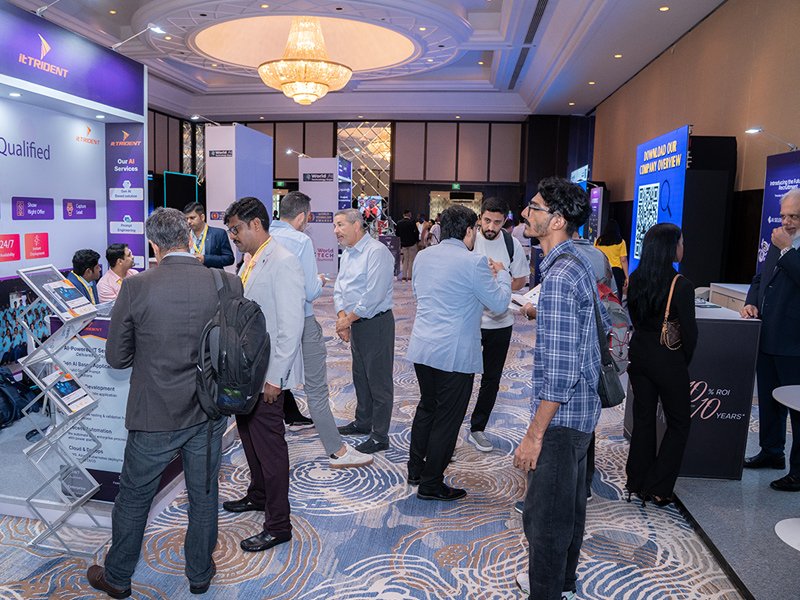
Inside the event
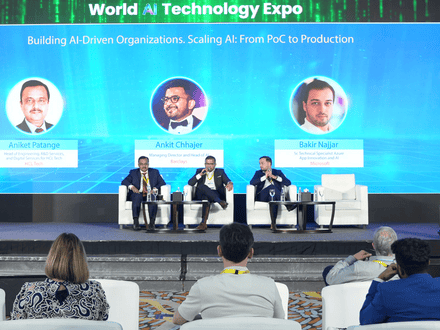
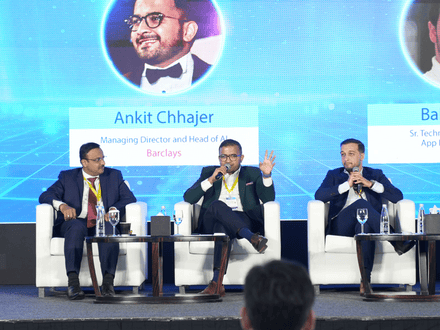
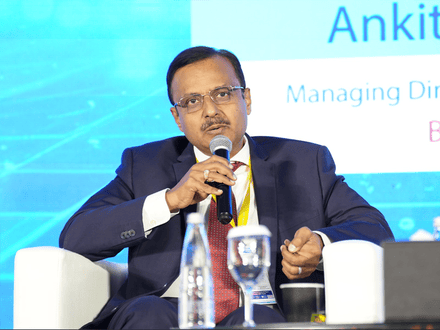
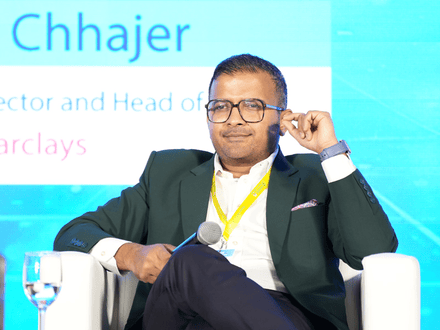
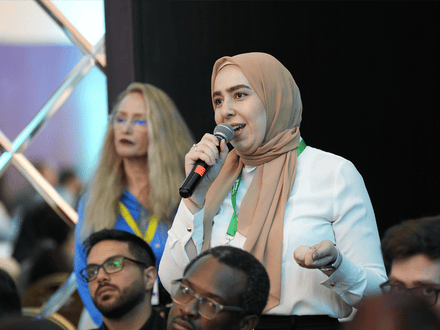
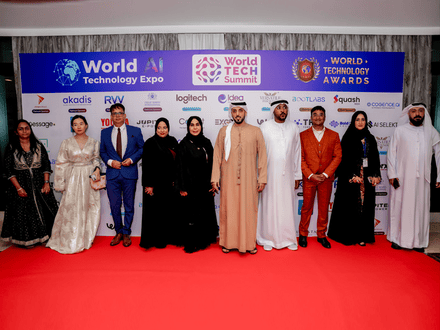
A glimpse of the atmosphere from previous editions — keynotes, the exhibition floor and the networking that defines World AI Technology Expo Dubai.
Key takeaways
- Decide the concrete outcome you are buying — skill, hiring, partners, funding or strategy — before you look at a single agenda, because each goal points to a different type of event.
- Match the event archetype to your role and stage: research conferences for frontier work, large expos for commercial breadth, focused workshops for hands-on depth.
- Read programmes critically: count how many sessions are genuinely unmissable and watch the ratio of builder-led to vendor-led talks.
- The true cost is the ticket plus travel plus the loaded value of days out of the office — budget conferences in both money and days.
- Learn to separate research-grade content (claims, evaluations, honest limitations) from vendor-grade demos, and choose your time accordingly.
- Write down success criteria before each trip and review them afterwards to build a personal track record of which events actually convert.
Frequently asked questions
For most individual practitioners, one or two larger events for breadth and networking plus one or two focused workshops for depth is a healthy annual mix. Beyond that, marginal returns fall off quickly and the disruption to deep work grows. Teams get better coverage by spreading attendance across complementary events rather than sending everyone to the same one.
Count the full cost, not just the ticket: add travel, accommodation and the loaded value of the working days you and any colleagues lose. Then weigh that against a clear primary goal and the number of sessions you would genuinely block time for. If fewer than four or five sessions are unmissable for you, the event is probably too broad or shallow to justify the true cost.
Research and academic conferences surface new methods first and reward people who read papers, making them ideal for researchers and frontier engineers. Large industry expos trade depth for breadth and serendipity, and are strong for commercial goals, vendor scouting and meeting many people quickly. Practitioner workshops sit in between and usually offer the best value for a working engineer sharpening a specific skill.
Substantive sessions make falsifiable claims, show their evaluation methodology, and are candid about limitations and cost, often using phrases like 'lessons from production' or 'what didn't work'. Vendor-grade talks lead with capability demos and avoid discussing where the approach breaks. For any exciting claim, ask what the baseline was, what it cost to run, and what happens at the tail — good sessions can answer on the spot.
Yes, more than it first appears. An event in an emerging AI hub gives you a denser surrounding ecosystem of local teams, meetups and potential hires or partners to meet on the margins of the programme. Building regional balance into your annual plan also exposes you to different priorities and commercial dynamics, which is valuable given how differently AI adoption is unfolding across markets.