
Almost every engineering leader now has a mandate to upskill their team in AI, but very few have a plan that survives contact with reality. The typical response is a scattergun of one-off webinars, a shared folder of prompt tips, and a hope that the keen engineers will drag everyone else along. That approach produces a handful of enthusiasts and a long tail of colleagues who quietly opt out. Genuine capability is built the way any other engineering skill is built: with a clear map of what people need to know, deliberate practice on real work, and feedback loops that make progress visible.
This playbook treats ai training for teams as a programme, not an event. It assumes you are not trying to turn data scientists into researchers, but trying to make a mixed group of engineers, analysts, product managers and leaders productive and safe with modern AI tools. The emphasis throughout is on practical decisions: what to teach first, how to structure practice, how to handle the awkward gap between a working demo and a reliable system, and how to know whether any of it is actually paying off. You can adapt the sequencing to your own context, but the underlying logic, from literacy to fluency to production competence, holds across most organisations.
Start with a skills map, not a curriculum
The first mistake teams make is buying a course before they understand the gap they are trying to close. A far better starting point is a lightweight skills map: a grid of the roles on your team against the capabilities each role actually needs. A backend engineer integrating a foundation model needs to understand context windows, latency, cost per token, and failure modes far more than they need to understand transformer internals. A product manager needs to reason about what is feasible, what is unreliable, and where the risks sit. A data analyst may need retrieval, prompting discipline and evaluation more than model training.
Assess honestly against that map. A short, practical diagnostic works better than self-rated surveys, which tend to be wildly optimistic or falsely modest. Give people a small realistic task, such as building a prompt that reliably extracts structured fields from messy text, or spotting why a retrieval pipeline returns irrelevant results, and watch where they get stuck. The point is not to grade individuals but to see the shape of the gap: is it foundational ai literacy, tool fluency, or the harder engineering discipline of shipping something reliable?
Out of that exercise you get three or four distinct tracks rather than one monolithic programme. Treat the map as a living document. As tooling shifts, and it shifts every few months, the capabilities that matter drift with it, and a map you revisit quarterly keeps your corporate ai upskilling aligned with what the team is genuinely being asked to build.
Build a shared baseline of AI literacy first
Before any role-specific depth, everyone benefits from a common baseline. AI literacy here means a working mental model of what these systems are and are not: that large language models generate plausible text rather than retrieve verified facts, that they are non-deterministic, that they carry the biases of their training data, and that confident-sounding output can be entirely wrong. People who internalise this stop treating the model as an oracle and start treating it as a capable but fallible collaborator that needs checking.
Keep the baseline concrete and short. A half-day session that walks through hallucination, context windows, prompting basics, the difference between a raw model and a system built around one, and the obvious data-handling boundaries will do more than a week of abstract theory. The goal is a shared vocabulary so that when someone says retrieval, evaluation, or agent, the whole team means the same thing. This shared language is what makes later collaboration possible.
Crucially, extend this baseline beyond engineering. Leaders, sales, operations and support staff who understand the technology's limits make better decisions about where to apply it and set more realistic expectations with customers. A team ai skills programme that only touches engineers leaves the rest of the organisation making promises the technology cannot keep.
Anchor learning to real work, not toy exercises
Skills transfer poorly from contrived tutorials. The single most effective structure is to pick a genuine, low-stakes internal problem and have people learn by building a solution to it. An internal document search assistant, a tool that drafts first-pass responses to routine tickets, or a pipeline that summarises meeting notes are all good candidates: real enough to matter, safe enough to get wrong.
Structure this as a guided build rather than a free-for-all. Pair a more confident person with one or two who are learning, give them a fixed timebox of a week or two, and require a working demo at the end. The constraint forces engagement with the messy realities that tutorials hide: rate limits, inconsistent output formats, retrieval that returns the wrong chunks, and prompts that work on five examples and fail on the sixth. These frustrations are the actual curriculum.
Rotate the problems so people see breadth. Someone who has built a retrieval pipeline, wired up an agent framework to call internal tools, and set up a basic evaluation harness has a far more durable skill set than someone who has done one deep project. Aim for several small, complete builds rather than one large unfinished one, because completing something end to end is where the most learning is concentrated.
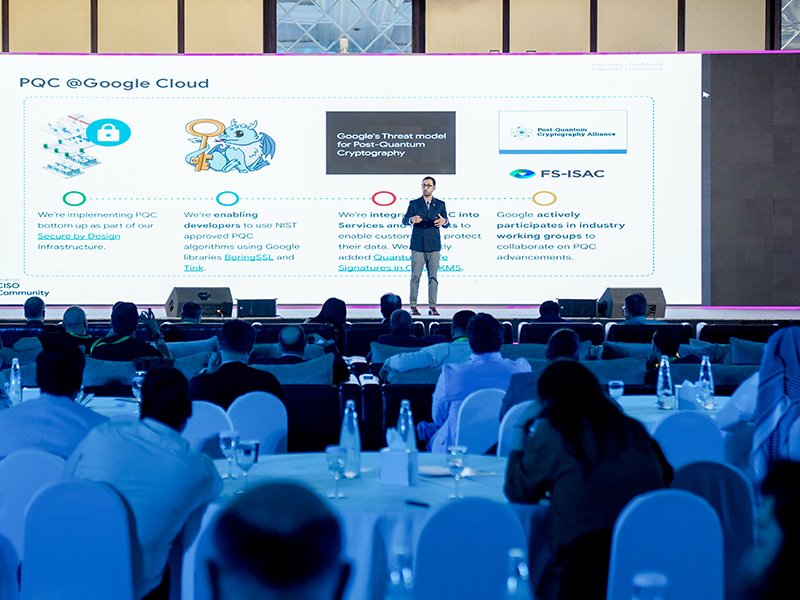
Past Speakers
Previous editions of World AI Technology Expo Dubai have brought together senior AI practitioners and leaders. Speakers below are shown for reference from previous editions; the 2027 line-up will be announced ahead of the event.

Nitin Akarte

Akshay Singh Dalal

James Hunter

Abhinav Sharma
Give the team a safe sandbox and clear guardrails
People will not experiment if they are afraid of leaking data, running up an unbounded bill, or breaking something in production. Remove those fears deliberately. Provision a sandbox environment with access to hosted models through cloud platforms, sensible spending caps, and a clear, written policy on what data may and may not be sent to external services. Ambiguity here is the enemy of learning; people either freeze or take reckless shortcuts.
Standardise the toolkit enough to reduce friction without over-constraining exploration. A shared setup that includes access to a couple of foundation models, a vector database for retrieval experiments, and an experiment-tracking tool for comparing approaches means people spend their time learning rather than fighting environment setup. Provide starter templates so a new project begins from a working skeleton rather than a blank page.
Write the guardrails as enabling rules, not prohibitions. Instead of a long list of banned actions, describe the safe path: use this sandbox, these approved services, this way of handling anything sensitive, and here is who to ask when unsure. Clear boundaries paradoxically increase experimentation, because people know exactly how far they can go without checking first.
Teach evaluation as a first-class discipline
The hardest and most neglected skill in applied AI is knowing whether a system actually works. Anyone can produce an impressive demo; far fewer can tell you how often it fails, on which inputs, and whether last week's change made things better or worse. Teaching evaluation is what separates a team that plays with AI from one that ships it. Make it a core part of every build, not an afterthought.
Start simple and concrete. Have people assemble a small set of representative test cases with known good outputs, then measure how their system performs against that set as they iterate. Introduce the idea of using a model to help grade another model's output, while being clear about its limits, and show how to combine automated checks with periodic human review. The habit you are building is: never claim it works, measure whether it works.
This discipline also reframes how the team talks about progress. Instead of subjective impressions, discussions become grounded in evidence: this change lifted accuracy on the test set from roughly seven in ten to nine in ten, but doubled latency, so is the trade worth it? That is the kind of engineering conversation you want, and it only happens once evaluation is a shared, expected practice rather than a specialist's hobby.
Bridge the gap from prototype to production
A working prototype is perhaps a fifth of the journey to something you can rely on. Teams that stop at the demo repeatedly ship fragile systems that embarrass them the first time a real user does something unexpected. Make the prototype-to-production gap explicit in your training, because it is where most of the genuine engineering lives and where naive optimism does the most damage.
Concretely, this means teaching the operational concerns that surround the model: handling non-deterministic output gracefully, managing latency and cost at scale, adding retries and fallbacks for when a call fails, logging inputs and outputs so failures can be diagnosed, and monitoring for the slow drift in quality that happens as usage patterns change. It also means designing for the human in the loop, so that when the system is uncertain, a person can catch it before a mistake reaches a customer.
Frame reliability as a spectrum matched to stakes. An internal brainstorming aid can tolerate frequent imperfection; a system that touches customers or money cannot. Teaching your team to reason about where a given use case sits on that spectrum, and to invest in robustness accordingly, is more valuable than any single technique, because it is the judgement that prevents both over-engineering and reckless deployment.
Make upskilling continuous and visible
The field moves too quickly for a one-off programme to hold its value. Capabilities that felt cutting-edge a year ago are now table stakes, and approaches that were painful are now trivial. Build a rhythm that keeps the team current: a regular internal session where someone demonstrates something they have learned, a shared channel for useful findings, and dedicated time, even a few hours a fortnight, that is explicitly protected for learning rather than delivery.
Make progress visible so that upskilling is recognised as real work rather than a distraction from it. Lightweight internal recognition for people who build reusable tools, share knowledge, or mentor others aligns incentives properly. When the culture rewards only shipping features, learning quietly gets deprioritised the moment deadlines tighten, which is precisely when the investment matters most. External stimulus helps too; sending a few people to a serious gathering such as World AI Technology Expo Dubai, running 07 to 09 April 2027 at the Millennium Plaza Downtown Hotel, Dubai, lets them meet peers, vendors and investors and bring back a wider sense of where the field is heading.
Finally, close the loop by connecting learning back to outcomes. Track a handful of honest indicators: how many people can now independently ship an AI-backed feature, how much faster common tasks have become, how many internal tools have emerged from the programme. You are not looking for vanity metrics but for evidence that capability is compounding, so that when you review the skills map next quarter, the gaps you found at the start have genuinely closed.
Inside the event
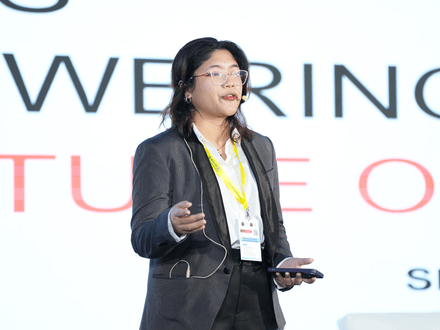
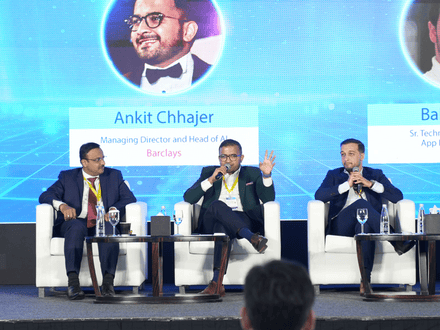
A glimpse of the atmosphere from previous editions — keynotes, the exhibition floor and the networking that defines World AI Technology Expo Dubai.




Key takeaways
- Begin with a role-by-role skills map and an honest practical diagnostic, not by buying a course.
- Establish a shared baseline of AI literacy across the whole organisation before role-specific depth.
- Anchor all learning to real, low-stakes internal projects with a working demo required at the end.
- Provide a safe sandbox with spending caps and clear data guardrails so people experiment without fear.
- Treat evaluation and the prototype-to-production gap as first-class engineering disciplines.
- Make upskilling continuous and visible, with protected time and metrics that show capability compounding.
Frequently asked questions
Expect a shared literacy baseline within a few weeks, basic tool fluency within a couple of months of hands-on projects, and reliable production competence over six to twelve months of sustained practice. The variable is not the material but how much real project time you protect. Treating it as continuous rather than a one-off course is what makes the capability durable.
Use external material for the foundational, stable concepts, and build internal, project-based learning for everything specific to your systems and data. Off-the-shelf courses rarely cover the messy realities of your own retrieval pipelines, guardrails and production constraints. The most effective corporate ai upskilling blends a bought baseline with guided internal builds on real problems.
Evaluation is consistently the most neglected skill. Many teams can produce an impressive demo but cannot say how often it fails or whether a change improved things. Teaching people to assemble test cases and measure performance systematically is what separates teams that play with AI from those that ship it reliably.
Focus non-technical staff on AI literacy rather than building: a clear mental model of what the technology can and cannot do, its limits and risks, and where it is appropriate to apply. This lets leaders, sales and operations set realistic expectations and make better decisions. Keep it concrete and tied to their actual workflows rather than abstract theory.
Track honest capability indicators rather than course completions: how many people can independently ship an AI-backed feature, how much faster common tasks have become, and how many useful internal tools have emerged. Revisit your skills map each quarter to check that the gaps you identified at the start are genuinely closing.