The most valuable in-demand AI skills for 2026 are no longer about training models from scratch. The centre of gravity has shifted towards building reliable systems on top of foundation models, measuring whether those systems actually work, and shipping them into production without breaking budgets, latency targets or user trust. If you learned your craft on tabular data and hand-tuned gradient-boosted trees, the good news is that most of your instincts still transfer; the discipline of framing a problem, guarding against leakage and validating honestly is exactly what most teams building with large language models are missing. The bad news is that the surface area has grown, and the gap between someone who can call an API and someone who can operate an AI system in production has never been wider.
This article is a practitioner's map of that surface area. Rather than list buzzwords, it walks through the concrete capabilities that hiring managers, founders and engineering leaders are paying a premium for going into 2026, why each one matters, and how to build it. The framing is deliberately opinionated: the ai job market has flooded with people who can demo a prototype, so the differentiated skills are the ones that turn a demo into something dependable. Treat what follows as a checklist you can honestly grade yourself against, whether you are an ML engineer deepening your stack, a data scientist repositioning, or a leader deciding where to invest your team's learning budget.
Why the definition of AI skills changed for 2026
For most of the last decade, being good at machine learning meant being good at modelling: feature engineering, architecture choices, loss functions and the patience to babysit training runs. That skill set still matters at the frontier, but a small number of labs now do the expensive pre-training and everyone else composes on top. The result is that the median AI job has moved up the stack. The question is rarely "can you train a classifier" and increasingly "can you take a capable general model and make it do one narrow thing reliably, cheaply and safely."
This reframing explains why the ai skills 2026 conversation looks different from 2021. The scarce ability is systems thinking around probabilistic components: designing retrieval, prompting, tool use, caching and fallbacks so that an inherently non-deterministic model behaves predictably enough for a real workflow. It is closer to distributed-systems engineering than to statistics, which is why strong backend engineers who learn the AI layer are suddenly very employable, and why pure notebook-bound data scientists who never ship are finding the market harder.
The practical implication for your learning plan: do not abandon fundamentals, but stop treating model training as the finish line. The differentiated, future ai skills sit in the layers around the model, and that is where the rest of this article concentrates.
Foundation model fluency and prompt engineering as an engineering discipline
The baseline expectation in 2026 is genuine fluency with foundation models: understanding context windows, tokenisation, the cost and latency trade-offs of larger versus smaller models, when to reach for structured output modes, and how to decompose a task so a model can actually do it. Prompt engineering has matured from folklore into an engineering discipline. That means version-controlled prompts, systematic comparison of variants, and treating a prompt as a spec that lives in your repository, not a string someone pasted into a chat window.
The trade-off worth internalising is capability versus control. Larger models are more capable but slower and more expensive; smaller models are cheaper and faster but need more scaffolding to stay on task. A skilled practitioner routinely routes easy cases to a small model and escalates only hard cases, rather than paying frontier prices for every request. Knowing how to make that routing decision, and how to measure whether it degrades quality, is worth more than knowing any single clever prompt.
A concrete way to build this: take one real task, write three prompt strategies for it (zero-shot with a tight instruction, few-shot with curated examples, and a decomposed multi-step version), then measure them against a fixed test set on quality, cost and latency. The habit of never trusting a prompt you have not measured is the single most transferable thing you can learn here.
Retrieval, context engineering and vector databases
Most useful applications need to ground a model in private or current data, and retrieval remains the workhorse for that. The in-demand skill is not just "embed some documents and do a similarity search" but the harder craft of context engineering: chunking strategies that respect document structure, hybrid retrieval that combines keyword and semantic search, re-ranking to push the best evidence into limited context, and metadata filtering so the model sees the right slice of a large corpus.
Vector databases are now standard infrastructure, and the interesting decisions are operational rather than conceptual. How do you keep an index fresh as source data changes? How do you evaluate retrieval quality independently of generation quality, so you can tell whether a bad answer came from bad evidence or bad reasoning? Teams that skip retrieval evaluation ship systems that fail silently, then blame the model. Being the person who separates those two failure modes makes you disproportionately useful.
The judgement call here is how much to retrieve versus how much to fine-tune or fit in a long context. Long context windows tempt people to stuff everything in, but that inflates cost and can bury the relevant passage. A pragmatic default is retrieve narrowly, rank hard, and only widen the window when evaluation shows you are missing information the model needs.
Agentic systems and orchestration
The most hyped and most misunderstood area of the ai job market is agents: systems where a model plans, calls tools, observes results and iterates towards a goal. The genuine skill is not wiring up an agent framework to make an impressive demo; it is building agents that fail safely. Autonomous loops amplify small error rates into large ones, so the valuable engineer is the one who constrains the action space, adds validation between steps, sets sensible stopping conditions and designs for human oversight on consequential actions.
Practically, this means treating each tool the agent can call as a hardened API with clear inputs, permissions and audit logging, and treating the agent's plan as something you can inspect and replay. The trade-off is autonomy versus reliability: more freedom lets the system handle more cases but makes behaviour harder to predict. Mature teams start with tightly scoped, semi-autonomous workflows and widen autonomy only as evaluation earns the trust. Many practitioners refining exactly these patterns compare notes with peers, vendors and investors at events like World AI Technology Expo Dubai (07-09 April 2027, Millennium Plaza Downtown Hotel, Dubai), where a lot of the hard-won operational lessons get shared openly.
If you want to stand out, learn to answer the boring questions: what happens when a tool call times out, when the model loops, when it hallucinates an argument, when a step costs ten times the budget? Engineers who have thought through failure modes are the ones companies actually trust to ship agents.

Past Speakers
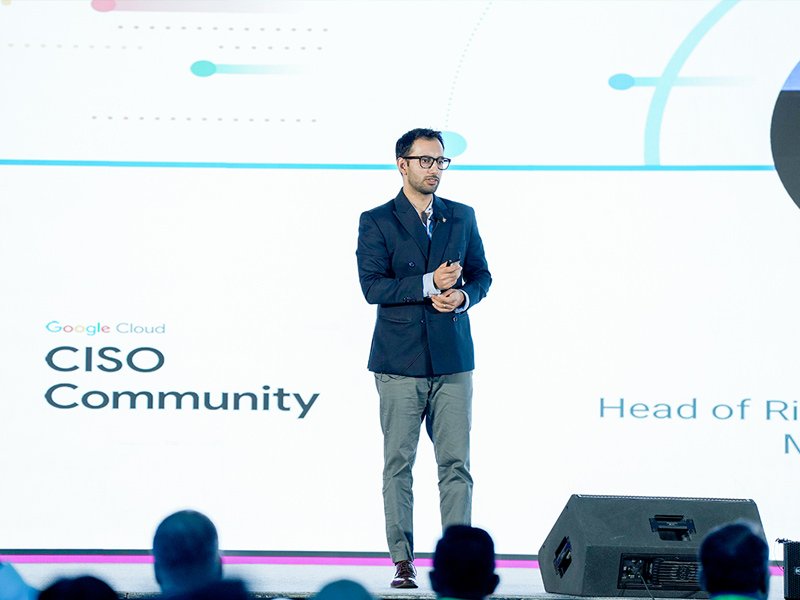
Previous editions of World AI Technology Expo Dubai have brought together senior AI practitioners and leaders. Speakers below are shown for reference from previous editions; the 2027 line-up will be announced ahead of the event.

Nitin Akarte

Akshay Singh Dalal

James Hunter

Abhinav Sharma
Evaluation, observability and the reliability layer
If there is one skill that separates senior AI practitioners from the crowd in 2026, it is evaluation. Because model outputs are probabilistic and open-ended, you cannot rely on a single accuracy number. The craft involves building representative test sets from real usage, defining task-specific metrics, using model-graded evaluation carefully (and knowing its biases), and running regression suites so a prompt or model change cannot silently degrade quality. Without this, every change is a gamble.
Observability is the runtime companion to evaluation. In production you need to trace individual requests end to end, capture inputs, retrieved context, intermediate steps and outputs, and monitor cost, latency and failure rates as first-class metrics. Experiment-tracking tools and tracing platforms exist for this, but tools do not create the discipline; the skill is deciding what to log, how to sample, and how to turn production traces back into new evaluation cases.
A simple maturity test for any team: can you confidently answer "is the system better or worse than last week, and how do you know?" If the answer is a shrug, the reliability layer is missing, and building it is one of the highest-leverage machine learning skills you can offer right now.
Fine-tuning, optimisation and cost-aware deployment
Fine-tuning has become a targeted tool rather than a default. The skill is knowing when it pays off, typically for consistent formatting, a specific tone, a narrow domain or to make a small model match a larger one on a bounded task, and when retrieval or better prompting would achieve the same result for less effort. Parameter-efficient techniques have lowered the cost of adaptation, but the real work is curating a high-quality dataset and, crucially, an evaluation set that proves the fine-tune helped.
Alongside adaptation sits optimisation for production: quantisation, distillation, caching of repeated computations, batching, and choosing between hosted APIs and self-hosted open-weight models. These are classic engineering trade-offs of cost, latency, control and privacy. A team processing sensitive data or huge volumes may justify self-hosting; a team shipping a first product almost never should. Being able to reason through that decision with real numbers is a scarce, valued capability.
The through-line is cost discipline. Many AI features are quietly unprofitable because nobody measured the per-request economics. The engineer who instruments cost per successful outcome, then drives it down through model routing, caching and prompt trimming without hurting quality, delivers value that leadership immediately understands.
AI governance, safety and responsible deployment
As AI systems touch more real decisions, the ability to deploy them responsibly has moved from a compliance afterthought to a core engineering skill. This is not about legal interpretation, which sits with qualified professionals, but about the technical practices that make responsible use possible: guardrails against prompt injection and data exfiltration, controls on what an agent is permitted to do, red-teaming for misuse, handling of personal and sensitive data, and clear human-in-the-loop checkpoints for high-stakes actions.
The practical work includes threat modelling for AI-specific attacks, building input and output filtering, keeping audit trails, and designing systems that degrade gracefully and communicate uncertainty rather than confidently asserting wrong answers. Teams increasingly expect at least one engineer who treats these as design requirements from day one, not patches added after an incident.
For leaders, the governance skill is organisational: establishing lightweight review for new AI features, deciding which use cases are appropriate at all, and setting expectations about accuracy and oversight with the people who depend on the output. Getting this right is a competitive advantage, because it lets a team move fast on the many low-risk use cases while treating the few high-risk ones with the seriousness they deserve.
Durable fundamentals and how to build these skills
Beneath the specialised layers sit fundamentals that will not go stale. Solid software engineering, data handling and pipelines, an understanding of probability and where models fail, and the product sense to choose problems worth solving all compound over time. Communication is quietly one of the most in-demand AI skills of all: the ability to explain to non-technical stakeholders what a system can and cannot do, and to set honest expectations, prevents most of the disappointment that sinks AI projects.
The most effective way to build any of this is to ship one real, end-to-end system rather than collect certificates. Pick a narrow problem, add retrieval, put it behind an interface, build an evaluation set, instrument cost and latency, and iterate until it is genuinely reliable. You will touch almost every skill in this article, and you will have something concrete to talk about. Depth on one full stack beats shallow familiarity with a dozen tools.
Finally, budget for continuous learning without chasing every release. Read a small number of primary sources, rebuild interesting techniques yourself, and re-evaluate your stack a couple of times a year. The specific tools of 2026 will change; the underlying skills of grounding, evaluating, orchestrating and deploying probabilistic systems responsibly will keep paying off for years.
Inside the event
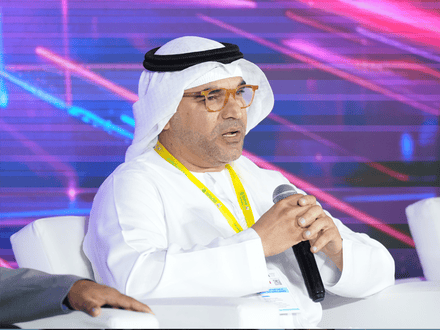
A glimpse of the atmosphere from previous editions — keynotes, the exhibition floor and the networking that defines World AI Technology Expo Dubai.





Key takeaways
- The centre of AI work has moved up the stack: composing reliable systems on foundation models now matters more than training models from scratch.
- Evaluation and observability are the skills that most separate senior practitioners from prototype-builders in the 2026 job market.
- Retrieval and context engineering, not just embeddings, decide whether grounded applications actually work; evaluate retrieval separately from generation.
- Agentic systems reward engineers who design for safe failure, constrained action and human oversight rather than impressive but fragile demos.
- Cost-aware deployment, model routing and knowing when to fine-tune versus retrieve turn AI features from unprofitable to sustainable.
- Responsible deployment and durable fundamentals, including clear communication with stakeholders, compound in value as tools keep changing.
Frequently asked questions
The highest-demand skills are building reliable systems on top of foundation models: prompt and context engineering, retrieval with vector databases, evaluation and observability, agentic orchestration, and cost-aware deployment. Responsible deployment and strong software fundamentals underpin all of them. Training models from scratch is now a niche skill for a small number of teams.
You still need fundamentals. Understanding probability, data handling, validation and where models fail is exactly what most teams building with large language models lack. The difference is that these fundamentals now serve system-building and evaluation rather than training from scratch, so pair them with skills in retrieval, orchestration and production deployment.
Yes, but only as an engineering discipline rather than folklore. Valuable prompt engineering means version-controlled, tested prompts measured against fixed evaluation sets on quality, cost and latency. Knowing how to decompose tasks and route them to appropriately sized models matters far more than any single clever prompt.
Ship one real, end-to-end system and be able to prove it is reliable. Build an evaluation set, instrument cost and latency, and design for safe failure, then talk concretely about the trade-offs you made. Depth on a full production stack, plus clear communication with non-technical stakeholders, beats a long list of tools you have only touched.
Start with retrieval and better prompting, and reach for fine-tuning only when you need consistent formatting, a specific tone, a narrow domain, or to make a small model match a larger one on a bounded task. Fine-tuning's real cost is curating quality training and evaluation data, so justify it with measured improvement rather than defaulting to it.