A strong AI portfolio is now the single most persuasive artefact in a technical hiring process, often outweighing a polished CV or a stack of certificates. The reason is simple: anyone can list "experience with large language models" or "proficient in deep learning" on a profile, but only a portfolio proves you can take an ambiguous problem, make defensible design decisions, and ship something that works. Hiring managers reviewing dozens of applicants are not reading for keywords; they are hunting for evidence of judgement. Your job is to make that evidence impossible to miss.
The mistake most people make is treating a portfolio as a trophy cabinet: a pile of notebooks, a fine-tuned model that scored well on a public benchmark, a tutorial reimplemented with the dataset swapped out. That signals that you can follow instructions, which is table stakes. What separates candidates who get interviews is a body of work that reads like the output of a competent engineer or scientist who understands trade-offs, cares about correctness, and can explain why they did what they did. This guide walks through how to choose the right projects, build them to a professional standard, and present your work so that a busy reviewer reaches the same conclusion within ninety seconds.
Decide what your portfolio needs to prove
Before you write a line of code, work backwards from the role you want. An AI portfolio is an argument, and the claim you are making changes depending on the job. An applied machine learning engineer needs to demonstrate that they can move a model from a notebook into something that serves predictions reliably. A research-leaning scientist needs to show rigour: clean experimental design, honest baselines, and an understanding of why a method works. A founder or product-minded engineer needs to prove they can connect a model to a real user need and a plausible business case. Trying to satisfy all three with the same project produces mush.
Pick two or three claims you want a reviewer to believe about you, and treat every project as a piece of supporting evidence. If you want to be hired to build retrieval-augmented systems, your machine learning portfolio should include at least one project where retrieval quality is measured, not assumed. If you are targeting data science roles, your data science portfolio should foreground problem framing, feature reasoning, and the link between a metric and a decision someone would actually make. Write these claims down. They become the filter for what to build and, just as importantly, what to leave out.
A useful discipline here is the anti-goal: decide what you are deliberately not trying to prove. You do not need to show breadth across every subfield. Three deep, well-executed projects beat ten shallow ones, because depth is what reveals judgement and shallow work actively raises doubts about the rest.
Choose projects that signal judgement, not tutorials
The best ai projects for portfolio use are the ones that force you to make decisions a tutorial would make for you. When you follow a walkthrough, someone has already chosen the dataset, the architecture, the evaluation metric and the hyperparameters. All the interesting engineering has been removed. Reviewers recognise these instantly, and they count against you because they suggest you have never had to decide anything under uncertainty.
Instead, start from a problem and let it dictate the technical choices. Good sources of problems include a workflow that annoys you personally, a public dataset that nobody has framed in an interesting way, a domain you understand better than most engineers, or an inefficiency in an existing open process. The signal you want to emit is: I found a real problem, I scoped it sensibly, and I chose tools deliberately. A project that uses a smaller model because latency mattered, or that skips fine-tuning because prompting with a foundation model was sufficient, tells a reviewer far more than one that reaches for the largest possible model by default.
Aim for a spread that shows range within your target role. A strong trio might be: one end-to-end applied project that a user could actually touch; one project with genuine depth in a single technique, where you can discuss the internals confidently; and one smaller, sharp piece that demonstrates a specific skill such as evaluation design, data cleaning at scale, or building an agent framework around a constrained task. Together these let a reviewer triangulate your abilities rather than guess.
Build to a standard someone would actually maintain
A portfolio project is judged partly on the model and largely on the engineering around it. This is the area where most candidates quietly lose. Code should be organised into modules rather than a single sprawling notebook, with a clear separation between data processing, training or inference logic, and any serving layer. Dependencies should be pinned and reproducible. A reviewer who clones your repository should be able to get it running by following your README, and if they cannot, they will assume your work does not run at all.
Treat reproducibility as a first-class feature. Fix random seeds, record the exact configuration that produced a result, and use an experiment-tracking tool or even a simple logged table so that your reported numbers are traceable. If your project involves retrieval or memory, be explicit about what goes into your vector database and how you chunked and embedded it, because those choices dominate real-world quality. When you deploy anything, prefer a small, cheap footprint on a cloud platform over an elaborate architecture you cannot afford to keep running; a live demo that still works six months later is worth more than an ambitious one that has gone dark.
Handle the unglamorous parts visibly. Show input validation, error handling for malformed responses from a model, sensible timeouts and fallbacks, and a note on cost and latency. These details are exactly what production work consists of, and demonstrating that you think about them is one of the fastest ways to read as senior. A reviewer who sees a graceful failure path will trust everything else you have built.

Past Speakers
Previous editions of World AI Technology Expo Dubai have brought together senior AI practitioners and leaders. Speakers below are shown for reference from previous editions; the 2027 line-up will be announced ahead of the event.

Nitin Akarte

Akshay Singh Dalal

James Hunter

Abhinav Sharma
Make evaluation the centrepiece
Nothing separates a professional AI portfolio from a hobbyist one more sharply than evaluation. Amateurs show that their system produces plausible output on a handful of cherry-picked examples. Professionals define what good means, build a way to measure it, and report the result honestly, including where the system fails. If you do only one thing to raise the quality of your portfolio, make it this.
For predictive models, that means choosing a metric that reflects the actual decision, comparing against a real baseline rather than a strawman, and being explicit about the data split so there is no leakage. For generative and language systems, where correctness is fuzzier, build a small evaluation set with clear criteria and use a mix of automated checks and structured human review, or a carefully validated model-as-judge approach with its own sanity checks. The specific method matters less than the fact that you took the question seriously and can defend your choices.
Crucially, report your failures. A section that says "here is where this breaks and here is why" is disarmingly credible. It shows you have actually stress-tested your own work and that you will not oversell a system in production. Interviewers frequently probe exactly this, and candidates who have already done the analysis walk into the conversation with the upper hand.
Write it up so a busy reviewer gets it in ninety seconds
Most reviewers will spend far less time on your work than you spent building it, so the way you showcase ai work is not a formality, it is half the outcome. Every project needs a README that answers, near the top, four questions: what problem does this solve, what did you build, what were the results, and what would you do differently. A reviewer should reach the core of your contribution before they have to scroll.
Lead with an artefact they can experience quickly. A short screen recording, an annotated architecture diagram, or a hosted demo lets someone grasp the shape of the work without reading code. Follow it with a concise narrative of the interesting decisions and their trade-offs. Avoid the two failure modes: the empty repository with three lines of description, and the wall of text that buries the point. The tone you want is that of an engineer explaining a system to a respected colleague who is short on time.
Consolidate everything behind a single clean landing point, whether that is a personal site or a well-organised profile that links to each project. Consistency signals care. When your write-ups, code and demos all reflect the same professional standard, the cumulative effect is a candidate who is obviously ready to do the work.
Show the business and product reasoning
Technical excellence gets you shortlisted; commercial reasoning gets you hired, especially for senior, founder or leadership roles. A model that improves a metric is only valuable if that metric maps to something an organisation cares about, and demonstrating that you understand the link sets you apart from candidates who treat AI as an end in itself. For at least one project, articulate who would use it, what it would save or earn, and why the approach you chose is proportionate to the value at stake.
This is also where you show restraint, which is a senior trait. Explain the cheaper alternative you rejected and why, or the point at which additional accuracy stopped being worth the cost. Reasoning about when not to use a heavier method, or when a simple heuristic beats a learned model, reassures leaders that you will not burn budget chasing marginal gains. Frame trade-offs in terms a non-specialist stakeholder would recognise: reliability, cost, speed, and risk of being wrong.
If you want to pressure-test this thinking against the market, it helps to talk to people building real systems. Communities and industry gatherings such as World AI Technology Expo Dubai (07-09 April 2027, Millennium Plaza Downtown Hotel, Dubai) put practitioners, vendors and investors in the same room, and a portfolio is a far better conversation starter than a business card. Feedback from people who ship and fund this work will sharpen both your projects and the way you talk about them.
Keep it alive and let it open conversations
A portfolio is not a monument you finish once; it is a living signal of how you think, and stale work quietly undermines you. The field moves quickly, so revisit your projects periodically: refresh a dependency, retire a demo that no longer reflects your standard, and add a short note when you learn something that changes how you would approach an old problem. A repository with recent, thoughtful commits reads as someone who is still growing.
Use the portfolio actively rather than waiting for it to be discovered. Reference specific projects in applications and tailor which ones you surface to each role. When you write publicly about a decision you made or a failure you diagnosed, link back to the work; the write-up and the code reinforce each other and compound your visibility over time. The goal is for a reviewer, a hiring manager or a potential co-founder to encounter your reasoning before they ever speak to you.
Finally, treat every project as an interview rehearsal. The strongest candidates can walk through any item in their portfolio and explain the alternatives they weighed, the bugs they hit, and what they would change with hindsight. If you built the work honestly and documented your decisions along the way, that conversation is easy, because you are simply narrating something you genuinely did. That authenticity, more than any single model or metric, is what ultimately gets you hired.
Inside the event
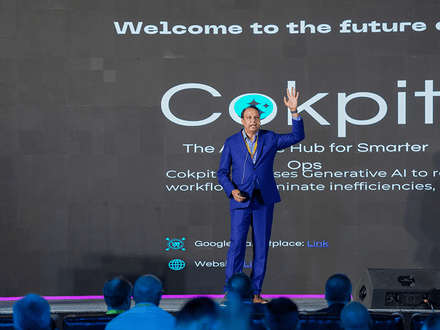
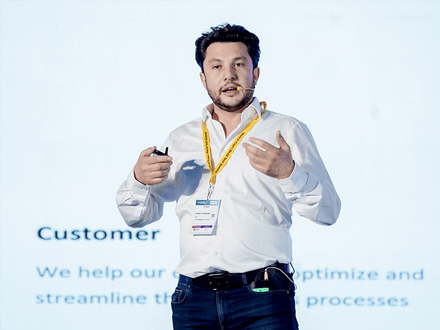
A glimpse of the atmosphere from previous editions — keynotes, the exhibition floor and the networking that defines World AI Technology Expo Dubai.




Key takeaways
- Treat your AI portfolio as an argument: decide the two or three claims about your abilities you want each project to prove.
- Depth beats breadth. Three well-executed, deeply understood projects outperform ten shallow tutorial reimplementations.
- Choose problems that force real decisions, so your work signals judgement rather than the ability to follow a walkthrough.
- Make evaluation the centrepiece: define what good means, compare against honest baselines, and report where your system fails.
- Engineering hygiene, reproducibility and a live, still-working demo often matter more to reviewers than the model itself.
- Add business and product reasoning, and keep the portfolio maintained so it reads as the work of someone still growing.
Frequently asked questions
Three strong projects are usually enough, and better than ten weak ones. Aim for one end-to-end applied project a user can touch, one project with genuine technical depth you can discuss confidently, and one sharp piece showing a specific skill such as evaluation design. Depth demonstrates judgement, whereas a long list of shallow projects raises doubts about all of them.
Evidence of judgement and honest evaluation. Standout projects start from a real problem, make deliberate trade-offs about models and cost, and measure quality against a proper baseline rather than cherry-picked examples. A visible section on where the system fails and what you would change is disarmingly credible and is exactly what interviewers probe.
Avoid straight tutorial reimplementations, because they show you can follow instructions but not that you can make decisions under uncertainty. If you start from a tutorial, extend it meaningfully: change the problem framing, add rigorous evaluation, deploy it, or apply it to a domain you understand well. Reviewers recognise unmodified walkthroughs instantly and count them against you.
At least one project should be deployed or demonstrable through a short recording or hosted demo, because serving a model reliably is a distinct skill from training one. A live demo that still works months later signals professionalism. Keep the footprint small and cheap so you can afford to keep it running rather than letting it go dark.
Assume a reviewer spends under two minutes per project. Put the problem, what you built, the results and what you would change near the top of each README, and lead with something quick to experience such as a demo or architecture diagram. Consolidate everything behind one clean, consistent landing point that links to each project.