
If you are already shipping production code, the move from software engineer to AI work is shorter than most online roadmaps make it look. You are not starting from zero. You understand version control, testing, deployment, latency budgets, on-call pain and the difference between a demo and a system people depend on. Those instincts are exactly what most AI projects are missing right now. The gap you actually need to close is narrower and more specific: how machine learning models behave probabilistically, how to reason about data quality, and how to evaluate systems whose outputs are not deterministic. Treat the switch to machine learning as a lateral extension of skills you already have, not a full career reset, and you will move far faster.
This guide is written for practising developers, tech leads and founders who want a career change to AI that is grounded in engineering reality rather than course-selling hype. We will cover which of your existing skills transfer directly, what to actually learn (and what to skip), how to build a portfolio that signals competence, and how to position yourself for the roles that are genuinely hiring in 2026. The emphasis throughout is on the fastest defensible path: enough theory to make good decisions, and enough hands-on building to prove you can ship AI features that survive contact with real users and real data.
Know which AI role you are actually aiming for
"AI" is not one job, and conflating the variants is the most common reason a career change to AI stalls. There are at least four distinct destinations, each with a different skill weighting. Research-oriented ML roles demand deep mathematics and novel modelling, and usually a postgraduate background; these are the slowest to reach and the smallest in number. Applied ML engineering focuses on training, fine-tuning and deploying models on real data pipelines. AI product or platform engineering builds applications on top of existing foundation models — retrieval systems, agents, orchestration, evaluation harnesses. And ML infrastructure engineering keeps GPUs, serving layers and data platforms running at scale.
For most software developers moving to AI, the highest-leverage targets are AI product engineering and ML infrastructure, because they lean hardest on skills you already own: API design, distributed systems, observability, cost control and reliability. The demand for people who can turn a probabilistic model into a dependable product has grown much faster than the supply, precisely because it needs strong engineering rather than a research pedigree.
Pick a target before you pick a course. If you want to build features on large language models, you do not need to be able to derive backpropagation by hand. If you want to train custom models, you do. Choosing the destination first prevents you from spending six months on maths you will never use, or skipping the foundations a training role genuinely requires.
Audit the skills that already transfer
Before learning anything new, take stock of what carries over untouched. Software engineering discipline is a moat in AI, where a lot of code is written by people who have never maintained a system in production. Your comfort with clean interfaces, dependency management, containerisation, CI/CD, testing and monitoring transfers completely. So does systems thinking: understanding tail latency, back-pressure, retries and idempotency matters enormously when you are calling models that are slow, occasionally fail and cost money per request.
Data-handling fundamentals transfer too. If you have worked with databases, streaming, schemas and ETL, you already understand most of what makes a data pipeline reliable — and data quality, not model choice, is what determines whether an AI system works. API integration skill is directly reusable, since much modern AI development is orchestrating calls to hosted models, vector databases and tools.
What does not transfer, and where you should concentrate your effort, is the probabilistic mindset. Deterministic software either works or has a bug. Model-based systems are statistical: the same input can yield different outputs, correctness is a distribution rather than a boolean, and 'good enough' is measured on datasets, not asserted in unit tests. Internalising this shift — that you are engineering around uncertainty — is the single biggest mental adjustment when you learn AI as a developer.
Build the minimum theoretical foundation, then stop
You need enough theory to make sound decisions and debug strange behaviour, not enough to publish. A pragmatic core looks like this: the intuition behind supervised learning (training, validation, test splits, overfitting, the bias-variance trade-off); how gradient-based optimisation works at a conceptual level; the basics of how transformer-based models represent and predict tokens; and the evaluation metrics that matter for your problem type, from precision and recall to ranking and calibration.
For the linear algebra, probability and statistics underneath, aim for working fluency rather than mastery. You should be comfortable with vectors and embeddings, dot products and cosine similarity, distributions and expectation, and what a loss function is doing. That is genuinely enough to be effective in applied and product roles. Resist the pull of endless theory courses; they feel like progress while quietly delaying the point where you build something real.
A useful rule: learn theory reactively. When a system misbehaves — hallucinations, poor retrieval, unstable fine-tuning, drift over time — go and understand the specific concept that explains it. Theory anchored to a real problem sticks; theory learned in the abstract mostly evaporates. This reactive approach also keeps you shipping, which is what actually builds employable competence.
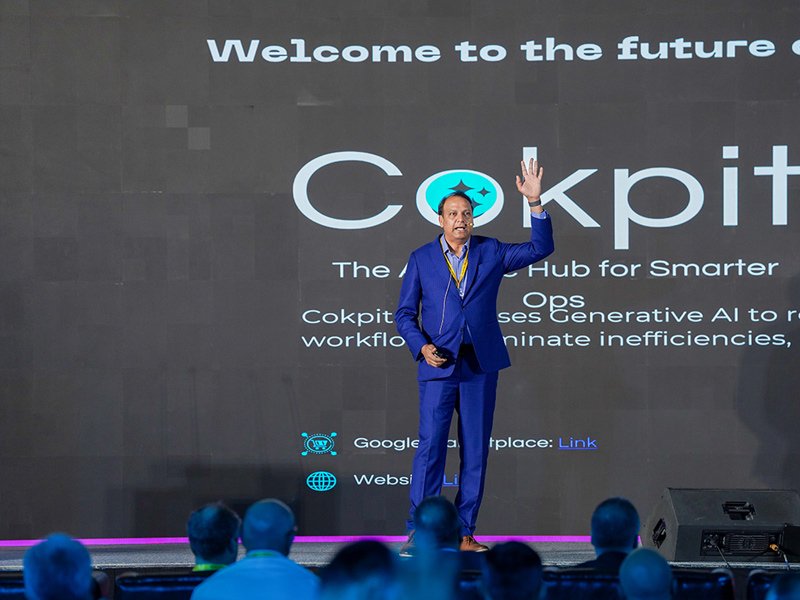
Past Speakers
Previous editions of World AI Technology Expo Dubai have brought together senior AI practitioners and leaders. Speakers below are shown for reference from previous editions; the 2027 line-up will be announced ahead of the event.

Nitin Akarte

Akshay Singh Dalal

James Hunter

Abhinav Sharma
Learn the modern AI engineering stack by shipping
The practical stack for AI application work in 2026 is learnable in weeks if you build rather than watch. Get fluent calling foundation models through their APIs, and understand the levers that control behaviour: prompting patterns, structured output, function or tool calling, temperature and context management. Learn retrieval-augmented generation properly — chunking strategies, embeddings, a vector database, and why naive retrieval so often returns plausible but wrong context. Then learn to build a simple agent with an agent framework, so you understand tool use, planning loops and where they break.
On the operational side, adopt experiment-tracking tools early, even for small projects, so you build the habit of measuring rather than guessing. Learn to run and serve open-weight foundation models on cloud platforms or your own hardware, including quantisation and the basics of GPU memory, because self-hosting is often where cost and privacy requirements push teams. Understand token costs and latency as first-class design constraints; an AI feature that is correct but too slow or too expensive is not shippable.
The fastest way through all of this is one non-trivial project taken end to end: ingest real data, retrieve over it, generate responses, evaluate the quality, deploy it behind an API, and add monitoring. You will learn more from making one such system reliable than from ten tutorials. Communities and events help here too — spending time around practitioners at gatherings like World AI Technology Expo Dubai (07-09 April 2027, Millennium Plaza Downtown Hotel, Dubai), where engineers, vendors and investors compare what is actually working in production, can compress months of trial and error into a few focused conversations.
Treat evaluation as the skill that sets you apart
The competency that most separates a strong AI engineer from someone who wired up a model is evaluation. Because outputs are non-deterministic, you cannot rely on conventional assertions. You need to build datasets that represent real usage, define what 'good' means for your task, and measure it repeatedly as you change prompts, models and retrieval. Teams that lack this discipline ship confidently, then discover in production that quality quietly regressed.
Learn the practical toolkit: curated evaluation sets, human review workflows, automated scoring including using a model to grade outputs against a rubric, and regression suites that run before every change. Learn to distinguish offline evaluation (against fixed datasets) from online evaluation (real traffic, guardrails, and gradual rollouts). This is directly analogous to testing in software engineering, which is why it comes naturally to developers once they see the parallel — and why your background is an advantage.
Framing your value around reliability and evaluation is also smart positioning. Many organisations have proven a prototype and are now stuck making it trustworthy enough to deploy. An engineer who can say 'I will make this measurable, safe to change and dependable' is solving their actual bottleneck, which is far more compelling than another person who can call a model.
Build a portfolio that proves you can ship
For a career change to AI, a focused portfolio beats a stack of certificates. Two or three deep projects that solve a plausible real problem will outperform a dozen shallow tutorials. Aim for projects that demonstrate the full lifecycle: a clear problem, real or realistic data, a working system deployed somewhere reachable, an evaluation harness showing you measured quality, and a short write-up of the trade-offs you made and what you would improve.
Lean into your existing domain. If you spent years in payments, logistics, healthcare-adjacent software or developer tooling, build AI projects in that domain — you understand the workflows, the failure costs and the data, which is exactly the context most pure-ML people lack. This domain-plus-AI combination is one of the strongest positions in the market and a far more credible story than a generic chatbot.
Write about the work publicly, even briefly. A concise post explaining how you handled retrieval quality, cut token costs, or built an evaluation loop signals judgement in a way a repository alone cannot. Hiring managers for AI roles are trying to filter for people who understand production reality; visible reasoning about trade-offs is the strongest signal you can send that your switch to machine learning is grounded rather than aspirational.
Position and time your move deliberately
The lowest-risk path from software developer to AI is often internal. If your current employer is building AI features, volunteer for them. You keep your salary and context while gaining real production experience on someone else's infrastructure — experience that is worth more on your CV than any course. Many successful transitions happen this way, with people quietly becoming their team's AI person before ever changing jobs.
When you do go external, calibrate your titling and expectations. You are not competing for research scientist roles; you are competing as an engineer who can build and operate AI systems, and your years of shipping software are an asset, not something to hide. Translate your experience into the language of the target role: reliability, systems design, data pipelines, cost and latency, evaluation. Avoid overstating model-training depth you do not have — strong teams test for it quickly, and honesty about where you are strong builds more trust.
Finally, expect the ground to keep moving. Tools and best practices in this field change on a scale of months, so the durable skill is not any single framework but the ability to learn AI as a developer continuously — reading, building small experiments and updating your mental models. The people who thrive treat that constant change as the job, not an obstacle to it. Your engineering habit of learning new systems under deadline is, once again, exactly the muscle this requires.
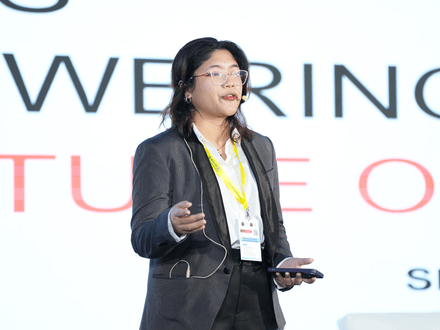
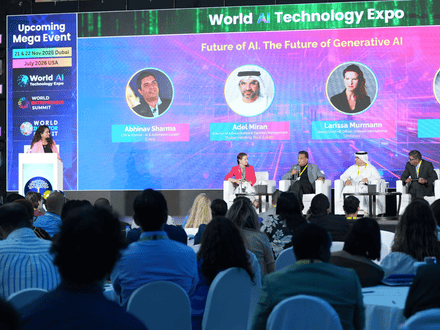
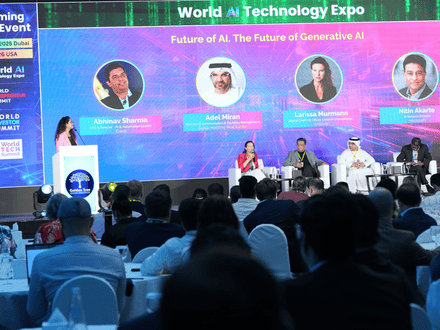
Inside the event
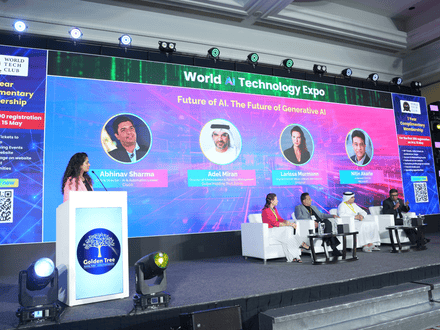
A glimpse of the atmosphere from previous editions — keynotes, the exhibition floor and the networking that defines World AI Technology Expo Dubai.


Key takeaways
- Moving from software engineer to AI is a lateral extension, not a reset — most of your engineering discipline transfers directly, so focus your learning on the narrow gap.
- Pick a specific target role (AI product engineering, ML infrastructure, applied ML or research) before choosing what to study, so you learn only the theory that role actually needs.
- The biggest mindset shift is from deterministic to probabilistic systems, where correctness is a distribution measured on datasets rather than a boolean asserted in tests.
- Learn theory reactively and learn the stack by shipping one end-to-end project — ingest, retrieve, generate, evaluate, deploy and monitor — rather than stacking tutorials.
- Evaluation is the skill that most sets you apart; teams are stuck turning prototypes into reliable products, and that is exactly where an engineer's testing instinct shines.
- The lowest-risk transition is often internal: volunteer for AI work at your current employer to gain production experience while keeping your salary and domain context.
Frequently asked questions
No, not for most applied and product-focused AI roles. Working fluency in linear algebra, probability and statistics is enough to be effective when you are building on foundation models. A postgraduate background mainly matters for research-scientist positions that involve novel modelling, which are a small fraction of the jobs actually hiring.
If you are already a competent engineer and target applied or product AI roles, a focused three to six months of building is usually enough to become employable. The timeline is driven far more by how much you ship end to end than by hours of courses watched. Deeper training-oriented or research roles take considerably longer.
Evaluation. Because model outputs are non-deterministic, the engineers who can define quality, build datasets, and measure it as a system changes are the ones who turn prototypes into dependable products. This is directly analogous to software testing, which is why developers pick it up quickly and why it sets them apart.
For most people making a career change to AI, building on existing foundation models is the faster, higher-demand path and uses your engineering strengths directly. Learn training and fine-tuning only if your target role requires custom models. You can always add that depth later once you are already working in the field.
Very. Combining deep knowledge of a domain — its workflows, data and failure costs — with AI engineering is one of the strongest and most defensible positions in the market. It is exactly the context that generalist machine learning practitioners usually lack, so build your portfolio projects in the domain you already know.