
Getting a model into production is the easy part. Keeping it there without watching your cloud bill spiral is the real engineering challenge, and it is where most teams quietly lose margin. The instinct to reduce AI inference cost usually arrives the month after launch, when a promising prototype has become a line item that grows with every new user. The uncomfortable truth is that inference, not training, dominates the lifetime cost of most deployed systems: you train a model once, but you serve it millions of times. That asymmetry means small per-request inefficiencies compound into enormous recurring spend, and it also means the levers for savings are almost entirely on the serving side.
The good news is that AI model cost optimisation is highly tractable once you treat it as a first-class engineering discipline rather than an afterthought. Most production workloads carry two or three times more cost than they need to, buried in oversized models, redundant calls, idle accelerators and pricing tiers nobody revisited. This article walks through the practical levers that consistently move the needle, from measuring cost per request before you optimise anything, to right-sizing models, caching aggressively, batching intelligently, quantising weights and choosing a serving architecture that matches your actual traffic. None of it requires exotic research; it requires discipline, measurement and a willingness to trade a little accuracy or latency where users will never notice.
Measure cost per request before you optimise anything
You cannot reduce what you cannot see, and cost is the most commonly unmeasured dimension of a production AI system. Before touching a single model, instrument every inference path so you know the marginal cost of a request: tokens consumed, accelerator-seconds used, network egress, and any downstream calls to vector databases or retrieval layers. Attribute that cost to a feature, a customer tier and a code path. Teams are routinely shocked to discover that a single rarely-used feature, or one enterprise account with pathological usage, accounts for a disproportionate share of the bill.
Build a simple unit-economics model early. Express spend as cost per thousand requests or cost per active user per month, not as an opaque monthly cloud invoice. This framing turns an abstract finance problem into an engineering target that you can optimise against and regression-test. It also tells you where optimisation is worth the effort: shaving 40% off a code path that represents 2% of spend is a waste of a sprint, while a 15% saving on your dominant path funds itself immediately.
Tie this instrumentation into your existing observability and experiment-tracking tools so cost sits alongside latency and quality metrics on the same dashboard. When cost, accuracy and p95 latency are visible together, every optimisation decision becomes an explicit trade-off you can reason about rather than a guess. That single dashboard is the foundation everything else in this article builds on.
Right-size the model to the task
The largest and most immediate savings almost always come from using a smaller model. Teams default to the biggest, most capable foundation model for every request because it is the safest choice during development, then never revisit that decision. Yet a large fraction of production traffic is simple: classification, extraction, routing, short summaries and templated responses that a model a fraction of the size can handle at a fraction of the cost and latency.
Adopt a tiered approach. Segment your traffic by difficulty and route each segment to the smallest model that meets your quality bar for that task. Simple, high-volume calls go to a small, cheap model; genuinely hard reasoning goes to a larger one. To find that quality bar rigorously, build an evaluation set from real production traffic and measure whether a smaller model's outputs are actually worse in ways users care about — frequently they are not, and the perceived quality gap is an illusion that evaporates under measurement.
For narrow, high-volume tasks, consider fine-tuning or distilling a compact model on your own data. A small model specialised on your domain will often beat a giant general-purpose one on your specific task, while costing an order of magnitude less to serve. The upfront investment in data and training pays back quickly on any path with meaningful volume, and the resulting model is cheaper, faster and easier to run on modest hardware.
Cache aggressively at every layer
Caching is the highest return-on-effort tactic in llm cost reduction because the cheapest inference is the one you never run. Start with exact-match caching: identical inputs should never be recomputed. For anything with repeated or templated prompts — system instructions, retrieval context, boilerplate — this alone can remove a large slice of traffic. Many serving stacks and providers also support prompt or prefix caching, where a shared, unchanging prefix is processed once and reused across requests, cutting both cost and time-to-first-token for long, stable contexts.
Go further with semantic caching, where near-duplicate queries are matched by embedding similarity rather than exact string equality. A support assistant, for instance, receives thousands of rephrasings of the same handful of questions; serving a cached answer for a semantically equivalent query is dramatically cheaper than a fresh generation. The trade-off is correctness: set a conservative similarity threshold, and never semantically cache anything personalised or time-sensitive where a stale answer could mislead.
Cache derived artefacts too, not just final responses. Embeddings, retrieval results and intermediate tool outputs are all expensive to recompute and often stable across requests. A well-designed cache hierarchy — exact match, prefix, semantic and artefact caches layered together — routinely removes a substantial portion of raw inference volume before any request reaches an accelerator.

Past Speakers
Previous editions of World AI Technology Expo Dubai have brought together senior AI practitioners and leaders. Speakers below are shown for reference from previous editions; the 2027 line-up will be announced ahead of the event.

Nitin Akarte

Akshay Singh Dalal

James Hunter

Abhinav Sharma
Batch, quantise and squeeze the serving layer
Once you have minimised how many requests reach the model, make each one cheaper to compute. Continuous or dynamic batching, supported by modern serving frameworks, groups concurrent requests so the accelerator processes many sequences per pass. This dramatically improves throughput and therefore lowers model serving cost per request, because the expensive hardware spends more of its time doing useful work rather than waiting. The trade-off is a small, tunable increase in latency, which is usually invisible for asynchronous or batch workloads and acceptable for many interactive ones.
Quantisation is the other big lever for efficient ai inference. Serving weights at lower numerical precision reduces memory footprint and increases speed, often letting you fit a model on cheaper or fewer accelerators with negligible quality loss for many tasks. Validate quantised models on your own evaluation set rather than trusting generic benchmarks, because the accuracy impact is task-dependent. Related techniques — weight pruning, optimised attention kernels and speculative decoding, where a small draft model proposes tokens a larger model verifies — stack on top for further gains.
Finally, tune the mundane serving parameters that quietly waste money: cap maximum output length so the model does not ramble into tokens nobody reads, use streaming to improve perceived latency without extra cost, and set sensible concurrency limits so a single accelerator serves as many requests as it safely can. These knobs are unglamorous, but collectively they often recover 20 to 30% of serving cost for the price of an afternoon's tuning.
Match your serving architecture to real traffic patterns
Idle accelerators are pure waste, and provisioning for peak load means paying for capacity that sits unused most of the day. Study your traffic shape before choosing an architecture. Spiky, unpredictable or low-volume workloads often suit serverless or scale-to-zero deployments, where you pay only for what you use and tolerate occasional cold-start latency. Steady, high-volume workloads justify reserved or committed capacity, which trades flexibility for a substantial discount on predictable baseline demand.
For many teams the right answer is a hybrid: reserved capacity sized to the steady baseline, with elastic on-demand or serverless capacity absorbing spikes above it. This avoids both the waste of over-provisioning and the premium of serving everything on-demand. Autoscaling policies should be driven by the metric that actually reflects load — queue depth or concurrent requests — rather than a lagging proxy like CPU utilisation that reacts too slowly for accelerator-bound workloads.
The build-versus-buy decision belongs here too. Hosted inference APIs remove operational burden and are genuinely cheaper at low and moderate volume, where they spare you the fixed cost and undifferentiated engineering of running your own fleet. But there is a crossover point where self-hosting on rented or owned accelerators becomes cheaper per request. Model that crossover explicitly against your projected volume instead of defaulting to whichever option you started with, and revisit it as you scale.
Design prompts and pipelines to spend fewer tokens
In token-metered systems, cost is largely a function of tokens in and tokens out, so prompt and pipeline design is direct cost engineering. Trim bloated system prompts, remove redundant few-shot examples once a model no longer needs them, and compress or summarise long retrieved context rather than stuffing entire documents into the window. Retrieval that returns the three most relevant chunks instead of twenty is both cheaper and frequently more accurate, because it spares the model from reasoning over noise.
Agentic and multi-step pipelines deserve special scrutiny because their costs multiply silently. An agent framework that loops, re-reads its full history and calls tools repeatedly can consume many times the tokens of a single call, and a small inefficiency in one step is paid on every iteration. Cap iteration counts, prune conversation history to what is genuinely needed, and prefer a single well-structured call over a chatty multi-turn exchange wherever the task allows. Every avoided round-trip is a direct saving.
Constrain outputs deliberately. Ask for structured, minimal responses instead of verbose prose when a downstream system is the consumer, and set explicit length limits. Output tokens are often priced higher than input tokens and are generated sequentially, so they cost you twice — once on the invoice and once in latency. Disciplined output design is one of the cleanest wins available, and it usually improves reliability at the same time.
Make cost a continuous discipline, not a one-off project
Optimisation decays. A model swap, a new feature, a change in user behaviour or a quiet pricing update can erode months of savings without anyone noticing, because cost regressions rarely break a test or page an engineer. Guard against this by treating cost as a monitored service-level objective: set budgets per feature, alert on cost-per-request regressions the same way you alert on latency, and review the trend in regular operational meetings rather than only when finance raises the alarm.
Bake cost checks into your delivery process. When evaluating a new model or prompt change, measure its cost impact alongside quality and latency before it ships, and treat an unexplained cost increase as a release blocker. Run periodic A/B tests specifically to validate that a cheaper configuration holds quality in production, where synthetic benchmarks often mislead. This continuous loop is what separates teams whose costs stay flat as they scale from those whose margins erode with every new user.
This is also a fast-moving area worth staying current on, as serving techniques, hardware efficiency and pricing models shift quickly; practitioners working seriously on this can compare approaches with peers, vendors and investors at the World AI Technology Expo Dubai (07-09 April 2027, Millennium Plaza Downtown Hotel, Dubai). Ultimately, sustainable savings come less from any single trick than from the habit of measuring cost as rigorously as you measure everything else — the teams that internalise that habit spend a fraction of what their competitors do for the same result.
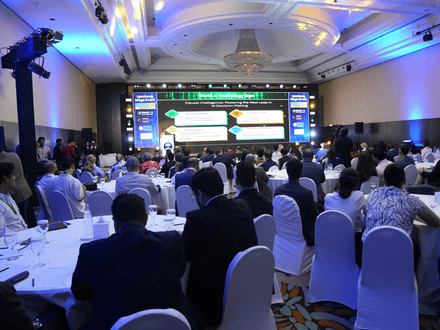
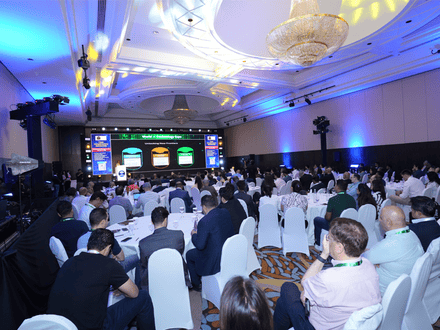
Inside the event
A glimpse of the atmosphere from previous editions — keynotes, the exhibition floor and the networking that defines World AI Technology Expo Dubai.




Key takeaways
- Inference, not training, dominates lifetime cost, so nearly all your savings live on the serving side; instrument cost per request before optimising anything.
- Right-sizing models to task difficulty and routing simple, high-volume traffic to smaller or distilled models is the single largest lever for reducing AI inference cost.
- Layered caching — exact-match, prefix, semantic and artefact caches — removes a large share of raw inference volume, because the cheapest request is the one you never run.
- Batching, quantisation and disciplined serving parameters routinely recover 20-30% of per-request cost with negligible quality impact when validated on your own data.
- Match serving architecture to real traffic: hybrid reserved-plus-elastic capacity avoids both over-provisioning waste and on-demand premiums, and revisit build-versus-buy as volume grows.
- Cost optimisation decays; treat cost as a monitored SLO with budgets and regression alerts so savings survive model swaps, new features and pricing changes.
Frequently asked questions
The fastest wins are usually caching and right-sizing. Add exact-match and prompt-prefix caching to eliminate redundant calls, then route simple, high-volume requests to a smaller model instead of your largest one. Both can be implemented in days and often cut spend by a third or more without measurable quality loss, provided you validate on a real evaluation set.
It can, but for many production tasks the impact is negligible while the cost and speed gains are substantial. The effect is highly task-dependent, so never rely on generic benchmarks; validate a quantised model on your own evaluation set built from real traffic. If quality holds on the tasks your users care about, the savings are effectively free.
Hosted APIs are typically cheaper at low and moderate volume because they remove fixed infrastructure and operational cost. Self-hosting becomes cheaper per request above a crossover point set by your traffic volume and utilisation. Model that crossover explicitly against projected demand rather than defaulting to your starting choice, and revisit the decision as you scale.
For most deployed products, serving costs dominate over time because a model is trained once but served continuously. This is exactly why inference deserves the majority of your optimisation effort. There is no universal ratio, but if training consistently outweighs inference in your bill, you are likely still pre-scale or under-serving your users.
Treat cost as a monitored objective, not a one-off project. Set per-feature budgets, alert on cost-per-request regressions the way you alert on latency, and measure the cost impact of every model or prompt change before it ships. Because cost regressions rarely break tests, this continuous instrumentation is the only reliable defence against silent creep.