
MLOps for small teams is a fundamentally different discipline from the platform engineering you read about in conference talks from hyperscale companies. When you have three or four engineers, no dedicated infrastructure hire, and a product that needs to ship, you cannot afford to reproduce a fifty-person platform org in miniature. What you can do is adopt a deliberately narrow set of machine learning operations practices that give you reproducibility, safe deployment, and a way to know when a model breaks in production, all without drowning in YAML or standing up a control plane you will spend more time maintaining than using.
This guide is written for engineers and technical leaders who are past the notebook stage and now have at least one model people depend on. The goal is not to be comprehensive; it is to be correct about priorities. We will walk through what actually matters first, which mlops best practices scale down gracefully to a small team, where automation pays for itself and where it does not, and how to choose mlops tools that you can operate rather than merely install. Throughout, the bias is toward boring, observable, reversible systems, because on a small team the person who deploys the model at 2pm is the same person carrying the pager at 2am.
Start with the failure modes, not the tooling
The most common mistake small teams make is choosing a stack before understanding what actually goes wrong in production. Machine learning operations has a specific set of failure modes, and most of them are not about training. Models degrade silently as the input distribution drifts away from what they were trained on. A feature that was computed one way in your training pipeline gets computed slightly differently at serving time, and accuracy quietly collapses. A dependency upgrade changes a preprocessing default. Someone retrains on a corrupted data snapshot and ships it because the offline metric looked fine. None of these are exotic; all of them are invisible without deliberate instrumentation.
Before you evaluate a single platform, write down the three or four ways your specific system is most likely to hurt users, and rank them by blast radius. For a recommendation model, stale features might be the top risk. For a fraud or moderation model, a silent recall drop that lets bad content through is far more dangerous than a latency blip. This ranking is the thing that tells you where to spend your limited engineering hours. A small team earns its reliability not by covering everything, but by instrumenting the two failure modes that would actually cause an incident and consciously accepting the rest for now.
This framing also protects you from cargo-culting. A feature store, a model registry, a drift-detection service, and a full CI/CD pipeline are all defensible in the abstract. But if your biggest real risk is a training-serving skew in one preprocessing step, the highest-leverage move is a shared transformation library used by both paths, not a six-month platform project. Let the failure ranking, not the vendor landscape, drive the roadmap.
Reproducibility is the foundation everything else stands on
If you can only invest in one thing, make it reproducibility: the ability to recreate any model you have ever shipped from versioned inputs. This is what turns a mysterious production regression into a debuggable diff. Concretely, three things need version identifiers that travel together: the code, the data snapshot, and the resulting model artifact plus its metrics. When a model misbehaves, you want to answer 'what changed since the last good version?' in minutes, not reconstruct it from memory and Slack history.
For data versioning, you do not need heavyweight infrastructure. Content-addressed storage of your training snapshots, or even immutable dated partitions in object storage with a manifest checked into git, is enough for most small teams. The non-negotiable property is immutability: once a snapshot is used to train a shipped model, it must never be overwritten. For code and configuration, keep training config in the repository rather than in notebook cells, so a git SHA fully determines the pipeline. For the model itself, store the binary artifact alongside a small metadata record: training data version, code SHA, hyperparameters, evaluation metrics, and the date. Experiment-tracking tools handle this metadata capture well and cost you almost nothing to adopt.
The test of whether your reproducibility is real is simple: pick a model from two months ago and try to rebuild it byte-for-byte, or at least metric-for-metric. If you cannot, you have a gap, and that gap will surface at the worst possible time. Fixing it while things are calm is one of the highest-return investments a small ML team can make.
Build the thinnest ML pipeline automation that removes human error
Ml pipeline automation on a small team should be judged by one question: does it remove a class of human mistake, or does it just move work around? Automate the steps where a tired human reliably makes errors: promoting a model without running the evaluation suite, forgetting to tag an artifact, deploying while skipping the smoke test. Do not automate things that are still changing shape every week, because you will spend more time maintaining the automation than you save.
A pragmatic sequence looks like this. First, make training a single reproducible command that reads versioned config and writes a versioned artifact plus metrics. Second, add an evaluation gate: a script that compares the candidate against the current production model on a frozen holdout set and refuses promotion if key metrics regress beyond a threshold. Third, wire deployment to a manual trigger that runs that gate automatically, so a human decides when to ship but the machine decides whether the model is allowed to. This gives you most of the safety of a full continuous-delivery system with a fraction of the moving parts.
Resist the temptation to build fully automated retraining early. Automated retraining is powerful but dangerous, because it closes a loop that can amplify data-quality problems without a human noticing. Until you have solid data validation and monitoring, keep a person in the loop on the promotion decision. The pipeline should make shipping a good model trivial and shipping a bad one hard; it does not need to make shipping happen without you.

Past Speakers
Previous editions of World AI Technology Expo Dubai have brought together senior AI practitioners and leaders. Speakers below are shown for reference from previous editions; the 2027 line-up will be announced ahead of the event.

Nitin Akarte

Akshay Singh Dalal

James Hunter

Abhinav Sharma
Deploy in a way you can undo in seconds
The single most valuable deployment property for a small team is reversibility. If rolling back a bad model is a one-command, thirty-second operation, then a mistake is an inconvenience rather than an incident, and you can move faster with less fear. This usually means treating the deployed model version as configuration: serving reads a pointer to the current artifact, and changing that pointer swaps the model without a full redeploy. Keep the previous version warm and reachable so rollback does not depend on a rebuild.
Match the deployment pattern to your traffic and risk. For many models a shadow deployment, where the new model scores real traffic but its outputs are logged rather than served, catches training-serving skew and latency surprises before any user is affected. When you are ready to serve, a small canary slice of traffic with automated metric comparison lets you detect a regression on a fraction of users. Full blue-green swaps are simplest to reason about and are often the right default when your request volume does not justify the complexity of gradual rollouts.
Be honest about the operational cost of real-time serving versus batch. If your predictions can be precomputed on a schedule and served from a store, you avoid an entire category of latency, scaling, and availability problems. Many teams reach for an always-on inference service out of habit when a nightly batch job would be cheaper, more reliable, and far easier for a small team to operate. Choose real-time only when the product genuinely needs fresh, on-demand predictions.
Monitoring is what separates hope from operations
A model you cannot observe in production is a liability you are pretending is an asset. Monitoring for machine learning has two layers, and small teams often build only the first. The operational layer, request rate, latency, error rate, and resource usage, is the same as any service and is table stakes. The model-quality layer is the one that actually protects users: are the inputs still shaped like the training data, and are the outputs still sensible?
Start with input monitoring because it gives early warning without needing ground-truth labels. Track the distribution of your key features over time and alert when they shift meaningfully from the training baseline; drift in the inputs almost always precedes drift in accuracy. Track the rate of missing or out-of-range values, because a broken upstream data source shows up here first. Then monitor the output distribution: a classifier whose positive rate suddenly doubles is telling you something changed, even before you can measure whether it was right. Where you can capture outcomes, even delayed or sampled, feed them back to measure real accuracy rather than proxies.
Set alert thresholds you will actually respect. A monitor that pages on every minor wobble gets muted within a week, and a muted monitor is worse than none because it creates false confidence. On a small team, prefer a small number of high-signal alerts wired to the same on-call channel you already watch. The goal is that the first person to learn a model has degraded is you, from a monitor, and not a customer from a support ticket.
Choose mlops tools you can actually operate
The market is crowded, and it is easy to assemble a stack of a dozen mlops tools that each solve a real problem and collectively become a full-time job to maintain. The right heuristic for a small team is operational surface area: every tool you run is something that can break, needs upgrades, and demands on-call knowledge. Favour managed services over self-hosted where budget allows, and favour tools that do several jobs adequately over best-in-class point solutions that must be integrated.
A defensible minimal stack for most teams is: version control and CI you already have for application code, object storage for data and model artifacts, a lightweight experiment-tracking and metadata tool, your existing observability platform extended with a handful of model-specific metrics, and whatever compute you already run for serving. Notice how much of this is infrastructure you operate anyway. The discipline is in the conventions, immutable snapshots, artifacts with metadata, an evaluation gate, more than in any specialised product. Standardise container images for training and serving so 'works on my machine' stops being a category of bug.
Be especially careful with tools that want to own your entire workflow. An all-in-one platform can be a genuine accelerant, but it can also become a lock-in you outgrow just as you gain the scale to need flexibility. For teams building on foundation models rather than training their own, the operational centre of gravity shifts toward prompt and configuration versioning, evaluation harnesses, retrieval components such as vector databases, and cost and latency monitoring; the reproducibility and observability principles are identical even though the tooling differs. Practitioners weighing these trade-offs will find candid peer comparisons and vendor conversations valuable, and gatherings such as World AI Technology Expo Dubai (07-09 April 2027, Millennium Plaza Downtown Hotel, Dubai) are a useful place to meet peers, vendors and investors and pressure-test decisions before committing.
Make process a shared habit, not a heroic individual
The quiet failure mode of small-team MLOps is that all the operational knowledge lives in one person's head. That person becomes the single point of failure for every deployment and every incident, and the team's velocity collapses whenever they are on leave. The antidote is to encode the important decisions as lightweight, shared artifacts rather than tribal knowledge. A short model card for each production model, recording what it does, what data it was trained on, its known limitations, and its owner, pays for itself the first time someone else has to touch it.
Two lightweight rituals do most of the work. First, a promotion checklist that any team member can follow: evaluation gate passed, artifact versioned and tagged, rollback path verified, monitoring dashboards checked. Second, a blameless post-incident note whenever a model causes a problem, capturing what happened and what monitor or gate would have caught it earlier. Over a few months these notes become your actual roadmap for reliability work, grounded in real pain rather than speculation.
Finally, budget explicitly for maintenance. Models are not ship-and-forget; data sources change, dependencies age, and drift accumulates. A recurring, protected slice of time, even a day every couple of weeks, for retraining reviews, dependency updates, and monitor tuning keeps small problems from compounding into a rewrite. On a small team, sustainable operations is not about doing more, it is about doing a disciplined few things every time, so that reliability becomes the default rather than a heroic effort.
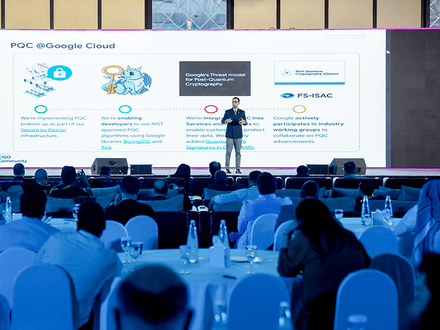
Inside the event
A glimpse of the atmosphere from previous editions — keynotes, the exhibition floor and the networking that defines World AI Technology Expo Dubai.





Key takeaways
- Rank your specific production failure modes by blast radius first, and let that ranking, not the vendor landscape, drive what you build.
- Reproducibility, versioning code, data snapshots, and model artifacts together, is the foundation that makes every production regression debuggable.
- Automate the steps where tired humans make mistakes, add an evaluation gate before promotion, but keep a person in the loop and avoid fully automated retraining early.
- Design deployments to be reversible in seconds; prefer batch or shadow deployment over always-on serving unless the product truly needs fresh predictions.
- Monitor input distributions and output behaviour, not just latency and errors, so you learn about model degradation before your customers do.
- Minimise operational surface area: fewer, managed, multi-purpose tools beat a sprawling best-in-class stack a small team cannot maintain.
Frequently asked questions
A minimum viable setup is version control for code and config, immutable versioned data snapshots, model artifacts stored with metadata (data version, code SHA, metrics), an evaluation gate that blocks regressions before promotion, and a rollback path you can trigger in seconds. Add input and output monitoring wired to your existing on-call channel. Almost all of this uses infrastructure you already run, so the discipline is in the conventions rather than new products.
Usually not on day one. A feature store solves training-serving skew and feature reuse at scale, but a shared transformation library used by both training and serving paths often addresses the core risk more cheaply. A registry is just a versioned artifact store with metadata, which you can approximate with object storage plus an experiment-tracking tool. Adopt the heavier tool only when the pain it solves is your actual top-ranked failure mode.
Not until you have solid data validation and production monitoring in place. Automated retraining closes a feedback loop that can silently amplify data-quality problems, and a small team may not notice until users are affected. Start with reproducible one-command training and a human-approved promotion gate, then automate retraining later once you trust your data checks and can detect a bad model before it ships.
The core principles are identical, but the operational centre of gravity shifts. Instead of managing training runs and data snapshots, you version prompts and configuration, maintain evaluation harnesses to catch quality regressions, operate retrieval components such as vector databases, and monitor cost and latency closely because inference is often the dominant expense. Reproducibility, reversible deployment, and output monitoring matter just as much.