
Most technical people treat reputation as a by-product of good work, something that quietly accumulates if they keep their heads down and ship. That model is broken in a field moving as fast as this one. A deliberate personal brand for AI professionals is not vanity or self-promotion; it is a distribution layer for your judgement. When a hiring manager, a conference committee, or a founder needs someone who genuinely understands retrieval pipelines, evaluation, or model deployment, they search, they ask their network, and they read. If nothing about you is legible from the outside, you are invisible to exactly the opportunities you have earned. Building authority in AI is the practice of making your real expertise findable, verifiable and memorable.
The good news for engineers is that a credible brand in this space is built from artefacts you can inspect, not from charisma. A clear write-up of how you cut inference latency, an honest post-mortem of an evaluation that misled you, a small open tool that solves an annoying problem, a talk that explains agent orchestration without hand-waving, these are the currency. This article treats tech personal branding the way you would treat any engineering system: with clear objectives, sensible trade-offs, feedback loops and a bias toward shipping. The aim is not to become an influencer. It is to become the person a serious room thinks of first when a specific hard problem comes up.
Start with positioning, not posting
The most common mistake is to open a blank social feed and start broadcasting. Before you write a single word publicly, decide what you want to be known for and to whom. Positioning is the constraint that makes everything else efficient. "AI" is not a position; it is a continent. "I help mid-sized data teams put retrieval systems into production without setting money on fire" is a position. The narrower and more concrete your claim, the easier it is for someone to remember you and refer you, which is the entire point.
A useful exercise is to write three sentences: the audience you serve, the specific problem you speak to, and the point of view you hold that not everyone shares. That third sentence matters most. AI thought leadership is not repeating consensus; it is having a defensible, experience-backed opinion, for example that most teams over-invest in bigger foundation models and under-invest in evaluation, or that agent frameworks are often premature for problems a well-structured pipeline would solve. You do not have to be contrarian for its own sake, but you do need a spine.
Positioning is not a cage. It will drift as your work and the field evolve, and it should. Treat it as a versioned artefact you revisit every few months rather than a tattoo. The trap is not choosing the wrong position; it is refusing to choose one at all and diluting yourself across every trend until nothing sticks.
Build in public with real artefacts
Talk is cheap and, in an era of generated text, cheaper than ever. What earns trust is verifiable output. The strongest branding move available to a technical person is to build in public: publish the small tool, share the notebook, open-source the evaluation harness, write the honest benchmark of vector databases you actually ran. Artefacts survive scrolling. They get bookmarked, forked and cited long after a hot take has scrolled away.
Prioritise artefacts with a long half-life. A thoughtful write-up on how you designed an evaluation set for a classification task, including what went wrong, will be relevant for years. A reaction to this week's model release will be stale in a fortnight. That does not mean ignore the news, but anchor your presence in durable work and use timely commentary as a way to bring people back to it. A good rule: for every reactive post, publish something that would still be useful to a reader eighteen months from now.
Lower your bar for shipping. Engineers routinely sit on a genuinely useful insight because it is not a polished essay or a full open-source project with tests and docs. It does not need to be. A tightly written thread explaining one non-obvious lesson about prompt evaluation, or a short repository with a clear README, does more for your visibility than a perfect artefact that never leaves your drafts. Done and public beats excellent and private.
Choose channels that match how you think
You do not need to be everywhere, and trying to be will burn you out fast. Pick a primary channel that matches your natural mode of expression and your audience's habits. If you think in prose and nuance, long-form writing on a personal site or a technical publication compounds beautifully and stays under your control. If you think in code, a well-maintained public repository and its documentation are your platform. If you are quick and conversational, short-form social posts can build reach faster, at the cost of a shorter shelf life.
A sustainable pattern is one core channel plus one distribution channel. Create the substantial thing where it lives best, for instance a detailed article or a repository, then distribute a distilled version where your audience already gathers. This hub-and-spoke approach means you write once and let the summary drive AI professional visibility across feeds without forcing you to produce genuinely new content five times a week. It also protects you: platforms change their rules and reach overnight, so own the hub, and treat rented audiences on social platforms as amplifiers rather than foundations.
Be honest about capacity. Two high-quality artefacts a month, distributed well, will out-perform a daily cadence of thin posts you resent making. Consistency matters more than volume, but only because it sustains trust; nobody is counting your streak.

Past Speakers
Previous editions of World AI Technology Expo Dubai have brought together senior AI practitioners and leaders. Speakers below are shown for reference from previous editions; the 2027 line-up will be announced ahead of the event.

Nitin Akarte

Akshay Singh Dalal

James Hunter

Abhinav Sharma
Let your work be the proof
The fastest way to build authority in AI is to show your reasoning, not just your conclusions. When you explain how you diagnosed a regression in a retrieval system, or why you rejected an agent-based approach in favour of a deterministic pipeline, readers get to watch you think. That is far more persuasive than a confident claim, because it is falsifiable and specific. Vague authority claims trigger scepticism in technical audiences; visible reasoning earns respect even from people who disagree with your conclusion.
Specificity is the tell of someone who has actually done the work. Numbers you measured yourself, the exact failure mode you hit, the trade-off you weighed between latency and cost on a cloud platform, the experiment-tracking discipline that saved you, these details are impossible to fake convincingly and instantly separate you from generic commentary. You do not need to disclose anything confidential; abstract the context and keep the concrete lesson.
Being wrong in public, gracefully, is an underrated brand asset. Publishing a follow-up that says "I claimed X three months ago and here is why I have changed my mind" signals intellectual honesty, which is scarce and valuable. It also demonstrates that you are still learning, which in a field that reinvents itself yearly is precisely the quality that makes people trust your future judgements.
Turn presence into a network
A brand that only broadcasts is half a brand. The compounding value comes from the relationships your visibility makes possible. Reply thoughtfully to other people's work, cite peers generously, and send a short note to someone whose write-up you learned from. Generosity is not a tactic; but it does have the side effect that people remember and reciprocate. The engineers whose reputations travel furthest are usually the ones who lift others rather than only promoting themselves.
Move some of this off the screen. Speaking at a meetup, running a workshop, or joining a panel converts a passive follower relationship into a real one in a way no feed can match. In-person contact remains the highest-bandwidth way to build trust, which is why practitioners serious about their profile still invest in showing up. Gatherings such as World AI Technology Expo Dubai (07 to 09 April 2027, Millennium Plaza Downtown Hotel, Dubai) are one place where the peers, vendors and investors you have been engaging online become people you actually know, and where a single hallway conversation can outweigh months of posting.
Nurture a small circle deliberately. A handful of trusted peers who read your drafts, challenge your thinking, and pass opportunities your way will do more for your career than ten thousand anonymous followers. Reach is a vanity metric; relationships are the asset. Optimise for the second and the first tends to follow anyway.
Use AI tools without becoming interchangeable
It would be strange for an AI professional not to use large language models in their own workflow, and you should. Foundation models are excellent for outlining, tightening prose, generating counter-arguments to pressure-test a claim, and turning a rough transcript of your thinking into a first draft. Used this way, they raise your output and lower the friction that keeps good ideas trapped in your head. The productivity gain is real and there is no purity in refusing it.
The danger is homogenisation. When everyone drafts with the same tools, the median piece of content converges on the same fluent, forgettable voice, and readers have grown adept at recognising it. Your differentiation is precisely what a model cannot generate: your specific measured results, your unusual opinion, your first-hand failure, your particular way of framing a problem. Let the model handle structure and polish; insist that the substance and the point of view are unmistakably yours.
A simple guardrail: never publish a claim you cannot personally defend if challenged in a hallway or a comment thread. If a generated draft asserts something you have not verified, either verify it or cut it. Your credibility is the whole product, and it takes one confidently-wrong, machine-generated statistic to spend trust you took years to build.
Measure what actually matters
Follower counts and likes are the easiest numbers to track and the least connected to outcomes. If your goal is career leverage, measure the things that move it: inbound messages from people you would want to work with, speaking or collaboration invitations, referrals, and conversations that start with "I read your piece on...". These lagging indicators are noisier and slower, but they tell you whether your brand is doing real work rather than merely accumulating vanity metrics.
Run tech personal branding like an experiment with a long feedback loop. Note which artefacts generated meaningful responses and which sank without trace, and look for the pattern, usually it is the specific, opinionated, hard-won pieces that land, not the safe summaries. Then deliberately make more of what worked. Expect the loop to take months, not days; reputation is a slow-moving system and reacting to weekly noise will only make you chase trends.
Finally, protect the source. Your brand is downstream of your actual competence, and a reputation that outruns your ability is a liability that eventually gets called in. Keep the majority of your energy on doing excellent work and continuing to learn; let the brand be the interface to that work, never a substitute for it. The professionals who last are the ones whose visibility is always a slightly conservative estimate of what they can really do.
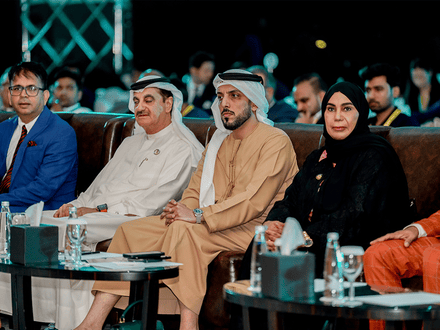
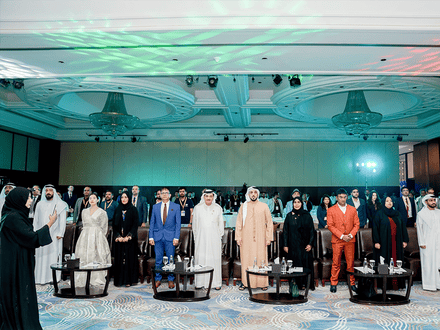
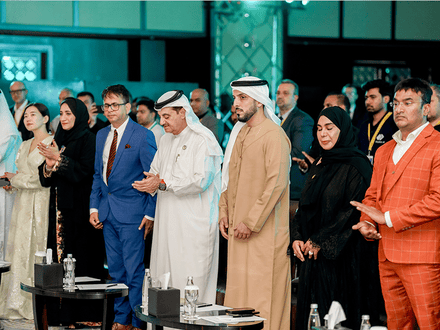
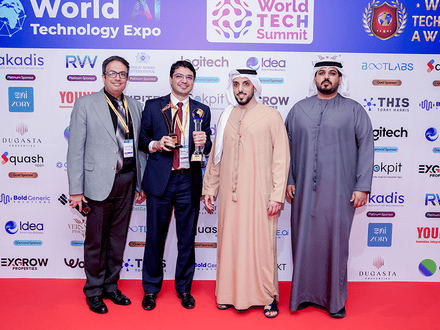
Inside the event
A glimpse of the atmosphere from previous editions — keynotes, the exhibition floor and the networking that defines World AI Technology Expo Dubai.


Key takeaways
- Positioning comes before posting: pick a specific audience, problem and point of view so people can remember and refer you.
- Anchor your brand in verifiable artefacts (write-ups, tools, benchmarks) with a long half-life rather than reactive commentary.
- Use a hub-and-spoke model: create substantial work on a channel you own, then distribute distilled versions where your audience already gathers.
- Show your reasoning and specific measured results; visible, falsifiable thinking earns trust that vague authority claims never will.
- Use AI tools for structure and polish, but keep the substance, opinions and first-hand lessons unmistakably your own.
- Measure inbound opportunities, invitations and referrals, not follower counts, and keep your real competence ahead of your reputation.
Frequently asked questions
Focus on sharing verifiable work and reasoning rather than claims about yourself. Publish write-ups of problems you solved, honest post-mortems, and small useful tools, and let the substance speak. Being genuinely helpful and specific reads as generosity, not promotion, and it earns far more trust with technical audiences.
Consistency matters more than volume, so a sustainable cadence of one to two substantial artefacts a month, distributed well, beats daily thin posts. Most professionals spend a few focused hours a week writing or building and distributing. The compounding returns come from durability and specificity, not from sheer frequency.
Yes, for outlining, drafting, tightening prose and pressure-testing arguments, they are a real productivity gain. The risk is a homogenised voice, so keep your specific results, opinions and first-hand lessons unmistakably your own. A good rule is to never publish a claim you cannot personally defend if challenged.
The best channel is the one that matches how you naturally think and where your target audience already gathers. Engineers who think in code should lean on public repositories and documentation; those who think in prose should favour long-form writing on a site they own. Pair one core channel with one distribution channel rather than trying to be everywhere.
Track outcomes rather than vanity metrics: inbound messages from people you want to work with, speaking and collaboration invitations, referrals, and conversations that reference your work. These lagging indicators are slower and noisier than likes but far more connected to real career leverage.