
Machine learning interview preparation is a different discipline from the studying you did to become an ML engineer in the first place. On the job you have weeks to iterate, colleagues to sanity-check your reasoning and dashboards to tell you when a model drifts. In an interview loop you have forty-five minutes, a whiteboard or a shared editor, and a stranger forming an opinion about how you think under pressure. The gap between knowing machine learning and demonstrating it live is where most strong candidates lose offers. The good news is that the interview surface is finite and well understood, so a deliberate few weeks of practice moves the needle far more than another course.
This guide lays out a concrete plan for the modern machine learning engineer interview as it looks in 2026, when loops increasingly probe how you build with foundation models and retrieval systems alongside classic coding and modelling. We will cover how to decode the loop before you start, how to structure your revision, and how to handle the four rounds you will almost always face: coding, ML system design, modelling depth, and behavioural. Whether you are moving from a data science role, levelling up from analyst work, or switching companies, the same principles for ai interview prep apply. Treat what follows as a checklist you adapt to the specific role rather than a script to memorise.
Decode the loop before you revise anything
The single highest-leverage step in machine learning interview preparation happens before you open a single practice problem: work out what the loop actually tests. A platform team hiring an ML engineer to serve models at scale will weight distributed systems, latency budgets and inference infrastructure. A team building a retrieval-augmented product will care about embeddings, vector databases, evaluation of generated output and prompt design. A research-adjacent team will push on maths, loss functions and the ability to read a paper and reproduce it. The same job title hides wildly different bars.
Get this signal from three sources. Read the job description twice and highlight every noun that names a skill or system, then map each to a round you expect. Ask your recruiter directly what each interview covers and how long it runs; most will tell you the round names and sometimes the rubric dimensions. And if you know anyone who has interviewed there, ask what surprised them. Twenty minutes of this reconnaissance routinely saves you from grinding the wrong material for a fortnight.
Once you know the shape, build a simple grid: rounds down one axis, your current confidence across from one to five. Your revision plan writes itself from the low-confidence cells. This is also where you decide how much time to spend on foundation-model topics versus classical machine learning. In 2026 most ml interview questions still include at least one round of tabular or classical modelling, but an increasing share of machine learning engineer interview loops now add a round on building with large language models, so budget for both rather than betting everything on the trend.
Rebuild your coding fundamentals for the timed setting
Almost every machine learning engineer interview includes a general coding round, and it is the one candidates most often underestimate because they write code daily. Daily work and timed interview coding are different sports. In the interview you must externalise your thinking, handle edge cases out loud, and produce clean, running code in one language without your usual tooling. Pick your strongest language, commit to it, and stop context-switching.
Focus your practice on the categories that recur: arrays and strings, hash maps, two pointers, recursion and trees, and basic dynamic programming. You rarely need exotic graph algorithms for an ML role, but you do need fluency with the common patterns and the discipline to state complexity before you code. Aim for a routine of clarify, propose approach, state time and space complexity, code, then test with a small example. Practising that ritual until it is automatic matters more than the raw number of problems solved.
There is often a second, ML-flavoured coding task: implement k-means, code gradient descent for linear regression, or write a function to compute precision and recall from raw predictions. These reward candidates who genuinely understand the mechanics rather than those who only call library functions. Spend an afternoon implementing three or four core algorithms from scratch in plain code with only a numerical array library. It cements the maths and doubles as coding practice, which is efficient use of scarce prep time.
Master ML system design, the round that separates levels
ML system design is where senior offers are won and lost, and it is the round least served by generic data science interview material. The prompt is deliberately open: design a system to recommend items, detect fraud, rank a feed, or build a question-answering assistant over internal documents. The interviewer is watching whether you can move from a vague business goal to a concrete, defensible machine learning system with sensible trade-offs at every step.
Use a consistent framework so you never freeze. Start by clarifying the problem and the business objective, then define what you are actually predicting and how you would measure success both offline and online. Walk through data sources and labelling, feature engineering, a baseline model before anything fancy, then training, evaluation, serving, monitoring and feedback loops. Explicitly separate offline metrics from the online metric the business cares about, and name the misalignment risks between them. The candidates who impress are the ones who volunteer trade-offs unprompted: latency versus accuracy, batch versus real-time features, a heavier model versus a cheaper distilled one, or the operational cost of retraining frequently.
For 2026 loops, be ready for a retrieval-oriented variant. If asked to design an assistant over a document corpus, talk through chunking strategy, embedding choice, a vector database for retrieval, how you would ground responses to reduce fabrication, and crucially how you would evaluate quality when there is no single correct answer. Discussing offline evaluation harnesses, human review and guardrails here signals that you have shipped these systems rather than only read about them. Practise two or three of these end to end out loud, ideally with a peer interrupting to poke holes.

Past Speakers
Previous editions of World AI Technology Expo Dubai have brought together senior AI practitioners and leaders. Speakers below are shown for reference from previous editions; the 2027 line-up will be announced ahead of the event.
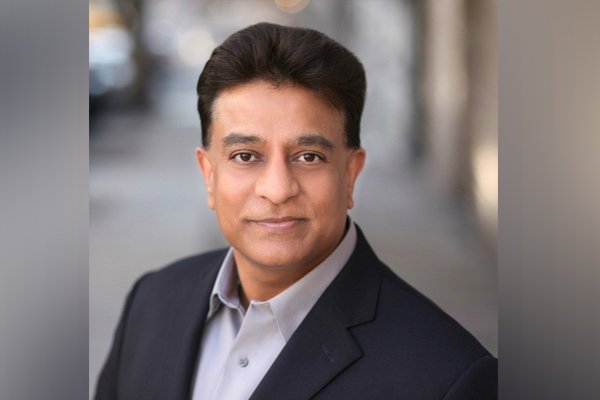
Nitin Akarte

Akshay Singh Dalal

James Hunter
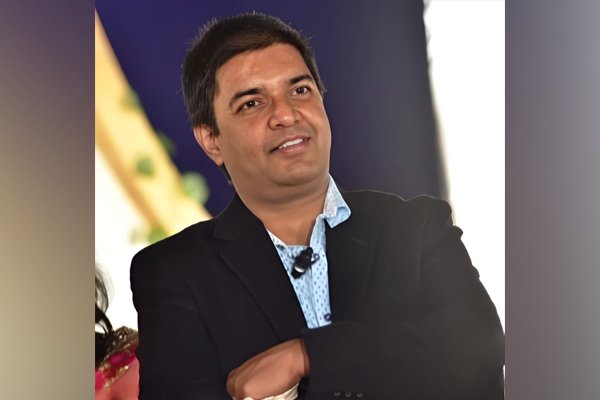
Abhinav Sharma
Sharpen your modelling and maths depth
The modelling round tests whether your understanding goes below the API surface. Expect questions like: why does this model overfit and what would you change; explain the bias-variance trade-off with a concrete example; how do you handle class imbalance; when would you choose a gradient-boosted tree over a neural network; what does regularisation actually do to the weights. These ml interview questions reward crisp mental models over memorised definitions, and interviewers usually follow up with 'why' three times to find the edge of your knowledge.
Do not neglect the maths that underpins the answers. You should be able to explain, without hand-waving, how gradient descent updates parameters, what a loss function is doing geometrically, the difference between L1 and L2 regularisation, and how evaluation metrics like precision, recall, ROC-AUC and log loss behave under class imbalance. You will not usually derive proofs, but you must reason numerically and catch your own errors. A reliable revision method is to write the answer to each core concept as if explaining it to a smart colleague from a different team, then compress it to three sentences.
Bring evaluation to the front of your thinking. Many candidates can build a model but stumble when asked how they would know it is good, or how they would detect that it has silently degraded in production. Have clear answers on train-validation-test discipline, cross-validation, data leakage, distribution shift and monitoring in production. If the role touches foundation models, add evaluation of generated text: why accuracy alone is meaningless there, and how you would combine automated scoring with sampled human review to track quality over time.
Prepare stories that show engineering judgement
The behavioural round is not a soft formality, and treating it as one is a common, costly mistake. For ML roles it is really an engineering-judgement round in disguise. Interviewers use it to test how you make decisions under ambiguity, how you handle a model that failed in production, how you disagreed with a stakeholder about whether a system was ready to ship, and how you balanced speed against rigour. Vague, rehearsed answers read as inexperience.
Prepare six to eight concrete stories from your own work and structure each as situation, task, action, result, with the metric or outcome made explicit. Cover a spread: a project you led, a serious failure and what you learned, a conflict you navigated, a time you cut scope deliberately, and a time you pushed back on a bad idea with data. The best stories show you reasoning about trade-offs, not just executing tasks. When you describe a decision, name the option you did not take and why, because that is where judgement shows.
Have sharp questions ready for your interviewers too, since they double as signal about your seniority. Asking how the team measures model success in production, how they handle retraining and drift, or where the current system's technical debt lives tells a strong interviewer that you think like an owner. These conversations are also where a genuine interest in the field shows; professionals serious about deepening their practice often widen their network at industry gatherings such as World AI Technology Expo Dubai (07-09 April 2027, Millennium Plaza Downtown Hotel, Dubai), where you can meet peers, vendors and investors and see how teams elsewhere are solving the same problems you will be asked about.
Build a realistic study schedule and simulate the real thing
Knowledge without rehearsal fails in the room, so structure your ai interview prep as a schedule rather than a reading list. A workable three-to-four week plan front-loads the weakest rounds from your confidence grid. Week one: coding fundamentals daily plus one core algorithm implemented from scratch. Week two: ML system design, one full design walked out loud every two days. Week three: modelling and maths depth, plus behavioural stories drafted and refined. The final days: full mock loops under time pressure, no notes.
Mock interviews are the highest-return activity and the one most people skip because they are uncomfortable. Speaking your reasoning aloud to another person exposes gaps that silent reading never will: the concept you thought you understood collapses the moment you have to narrate it while someone watches. Trade mocks with a peer, alternating interviewer and candidate roles, because interviewing someone else teaches you what a good answer looks like from the other side of the table. Record at least one session and watch it back, however painful.
Manage the practical logistics too, because they quietly sink prepared candidates. Test your setup for remote rounds, have a reliable editor you know well, and prepare a clean environment free of distractions. On the day, warm up with one easy problem so the first interview is not your cold start. And protect your energy across a full loop; the fourth interview deserves the same clarity as the first, which is a stamina problem you solve by simulating full loops beforehand rather than practising rounds in isolation.
Avoid the mistakes that sink prepared candidates
Certain failure modes recur across otherwise strong candidates, and knowing them lets you design them out. The most common is jumping straight to a complex solution without clarifying the problem: in system design especially, spending the first three minutes asking about scale, latency, data availability and success metrics prevents you from confidently solving the wrong problem. Interviewers read that clarifying instinct as seniority.
The second is failing to think aloud. Interviewers cannot award credit for reasoning they cannot see, so silent brilliance scores as a blank. Narrate your options, state why you are rejecting one, and flag your assumptions as you make them. Related is overclaiming: if you assert you know something and the interviewer probes, be honest at the edge of your knowledge rather than bluffing, because the bluff is almost always detected and it poisons trust for the rest of the round.
Finally, do not treat the machine learning engineer interview as a pure knowledge test. It is an assessment of how you will behave as a colleague solving real problems with incomplete information. Candidates who stay calm, engage the interviewer as a collaborator, respond well to hints, and reason transparently through uncertainty consistently outperform those who simply know more facts. Prepare the material thoroughly, then in the room focus less on being right and more on being someone the interviewer would want to build systems with.
Inside the event
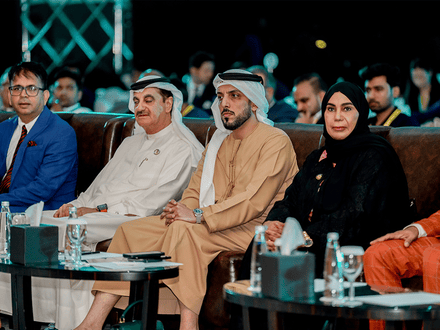
A glimpse of the atmosphere from previous editions — keynotes, the exhibition floor and the networking that defines World AI Technology Expo Dubai.





Key takeaways
- Decode each loop before revising: the same job title tests very different skills, so map rounds to your confidence and study the gaps.
- Timed coding is its own discipline; practise a clarify-approach-complexity-code-test ritual until it is automatic, and implement core ML algorithms from scratch.
- ML system design separates levels; use a fixed framework, always define offline versus online metrics, and volunteer trade-offs unprompted.
- In 2026, budget for both classical modelling and a retrieval or foundation-model round, including how you evaluate generated output.
- Treat the behavioural round as an engineering-judgement round: prepare six to eight concrete stories that show trade-offs and outcomes.
- Mock interviews under time pressure expose gaps that silent reading never will, and are the highest-return part of preparation.
Frequently asked questions
For someone already working in the field, three to four focused weeks is usually enough to prepare well. Front-load your weakest rounds, keep coding practice daily, and reserve the final days for full mock loops under time pressure. If you are switching from an adjacent role such as analytics, add a week or two for coding and ML system design depth.
Most loops include a general coding round, an ML system design round, a modelling and maths depth round, and a behavioural round. Increasingly in 2026 there is also a round on building with foundation models or retrieval systems. Always confirm the exact rounds with your recruiter, because the weighting varies enormously between platform, product and research-leaning teams.
A data science interview leans more on statistics, experimentation and analysis, while a machine learning engineer interview weights production engineering: serving models, latency, monitoring and system design. There is real overlap in modelling and coding questions, but ML roles expect you to reason about shipping and maintaining systems, not just building models offline.
Expect the bias-variance trade-off, handling class imbalance, why a model overfits and how to fix it, when to choose trees over neural networks, and how regularisation works. On the design side, prepare to design a recommender, a fraud detector or a document question-answering assistant end to end, always defining your success metrics first.
Be able to walk through a retrieval-augmented system: chunking, embeddings, a vector database, grounding responses to reduce fabrication, and evaluation. The hardest and most valued skill is explaining how you would measure quality when there is no single correct answer, typically by combining automated scoring with sampled human review to track quality over time.