
If you have spent any time browsing job boards lately, the data scientist vs ML engineer question has probably left you more confused than when you started. Add the newer AI engineer role to the mix and the boundaries blur further: three titles, overlapping skill sets, wildly inconsistent job descriptions, and salary bands that seem to depend more on the company than the work. The truth is that these roles are converging in some organisations and diverging in others, which is exactly why picking a lane deliberately matters more now than it did five years ago.
This article cuts through the title inflation and describes what each role actually does day to day, the skills that distinguish them, and the trade-offs of each of the three main AI career paths. Whether you are early in your career, pivoting from software or analytics, or a leader trying to hire the right person, the goal here is to give you a clear mental model rather than a marketing gloss. By the end you should be able to answer, honestly, which AI role fits the way you like to work and where the market is heading.
The three roles in one sentence each
Before drowning in nuance, it helps to anchor on a crisp distinction. A data scientist answers questions with data: they frame a business problem, run experiments, build statistical or predictive models, and communicate what the numbers mean to decision makers. An ML engineer takes models and makes them run reliably at scale: they own training pipelines, serving infrastructure, latency, monitoring and the software engineering rigour that turns a notebook into a production system. An AI engineer, the newest of the three, builds applications on top of existing foundation models: they work with large language models through APIs, design prompts and retrieval systems, wire up agent frameworks, and ship user-facing features without necessarily training a model from scratch.
The cleanest way to remember it: the data scientist asks what should we build and why, the ML engineer asks how do we run it robustly, and the AI engineer asks how do we compose existing intelligence into a product. In small teams one person may wear all three hats, and job titles frequently lie about which of these you will actually spend your time doing. Always read the responsibilities, not the header.
It is also worth noting that these are archetypes, not rigid castes. Plenty of excellent practitioners straddle two of them, and the most valuable people tend to be strong in one and literate in the neighbours. The point of the taxonomy is orientation, not a box to trap yourself in.
What a data scientist actually does
The core of data science is inference and decision support. A typical week might include scoping a churn-reduction question with a product manager, pulling and cleaning data from warehouses, exploring distributions, designing an A/B test, fitting a model, and then, crucially, translating the result into a recommendation a non-technical stakeholder can act on. The last step is where many underestimate the role: communication and framing are as central as the modelling, and a beautiful model that nobody trusts or understands delivers no value.
The technical toolkit leans on statistics, experimental design, SQL, a scripting language for analysis, and classical machine learning for tabular and time-series problems. Increasingly, data scientists also use foundation models as a tool for exploratory analysis, feature generation and quick prototyping, even if they never deploy them. The distinguishing mindset is scepticism about causality and rigour about whether a result is real or noise.
Choose this path if you enjoy ambiguous business questions, get satisfaction from a clean analysis that changes a decision, and are comfortable being the bridge between data and the rest of the organisation. The trade-off is that data scientists sometimes have less ownership over what ships to production, and in organisations without engineering support their work can stall at the proof-of-concept stage.
What an ML engineer actually does
ML engineering is software engineering with a machine learning specialisation. The daily reality is pipelines, reproducibility, versioning of data and models, automated retraining, feature stores, serving infrastructure, and the unglamorous but critical work of monitoring for drift and degradation once a model is live. If a data scientist proves a model can predict something, the ML engineer makes that prediction available at ten thousand requests per second, at acceptable cost, with alerts when it breaks.
The comparison of ml engineer vs data scientist really comes down to where the emphasis sits: engineers optimise for reliability, latency, scalability and maintainability, and they live in the same world as backend developers, using containers, orchestration, CI/CD and cloud platforms. Strong software fundamentals, testing discipline, and comfort with distributed systems matter far more here than the ability to derive a novel loss function. Many of the hardest problems are not modelling problems at all; they are data-freshness, cost and observability problems.
This is the right path if you like building durable systems, care about code quality, and feel more satisfaction from a pipeline that has run flawlessly for six months than from a one-off insight. The trade-off is that you are often downstream of the interesting modelling decisions, and you need to tolerate a lot of infrastructure and glue work. In return, ML engineers tend to be the hardest of the three to hire and are compensated accordingly.
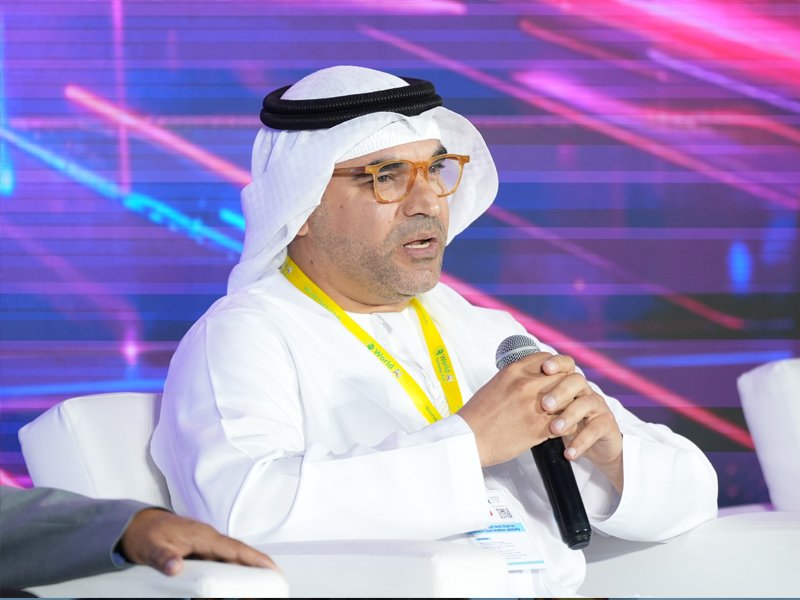
Past Speakers
Previous editions of World AI Technology Expo Dubai have brought together senior AI practitioners and leaders. Speakers below are shown for reference from previous editions; the 2027 line-up will be announced ahead of the event.

Nitin Akarte

Akshay Singh Dalal

James Hunter

Abhinav Sharma
What an AI engineer actually does
The AI engineer role emerged as foundation models became powerful enough that building useful products no longer required training your own. Instead of gathering a labelled dataset and fitting a model, an AI engineer composes capabilities: they call large language models through APIs, engineer prompts, build retrieval-augmented systems backed by vector databases, orchestrate multi-step workflows with an agent framework, and handle the messy realities of evaluation, guardrails, cost control and latency for probabilistic systems.
The skill set is a hybrid. You need enough software engineering to ship reliable applications, enough understanding of model behaviour to debug why an output went wrong, and a genuinely new discipline around evaluating non-deterministic systems, where the same input can produce different outputs and correctness is often a matter of degree. Writing good evaluation harnesses, designing fallbacks for when a model hallucinates, and managing token budgets are everyday concerns that barely existed a few years ago.
Pick this path if you want to build user-facing AI features quickly, enjoy the fast-moving frontier, and are comfortable with a stack that changes every few months. The caveat is precisely that volatility: much of the tooling is immature, best practices are still forming, and there is a real risk of becoming an expert in a specific abstraction that is obsolete within a year. The durable skills here are systems thinking and evaluation, not familiarity with any particular library.
Skills that overlap and skills that separate
All three roles share a common foundation: comfort with a programming language, solid data-handling skills, version control, and enough statistical literacy to reason about uncertainty. Nobody in this space escapes SQL, and everyone benefits from understanding how models can fail in subtle ways. If you are starting out, invest in these shared fundamentals first, because they transfer across all of the ai career paths and buy you time to specialise later.
The separating skills are where you should focus your differentiation. For data science, it is experimental design, causal reasoning and stakeholder communication. For ML engineering, it is production software engineering, distributed systems and observability. For AI engineering, it is prompt and context design, retrieval architecture, and evaluation of probabilistic outputs. A useful self-diagnostic: when a project succeeds, what part gave you the most satisfaction? The answer usually points at your natural role better than any job description can.
One under-discussed reality is that seniority changes the blend. A senior data scientist does more influencing and less coding; a staff ML engineer designs platforms rather than individual pipelines; a lead AI engineer sets evaluation standards for a whole product surface. As you progress, the label matters less than the scope of the systems and decisions you own.
How to choose the path that fits you
Start with a simple two-part question: what kind of problem energises you, and what kind of artefact do you want to leave behind? If you are drawn to open-ended questions and want to leave behind decisions and insight, lean data science. If you want to leave behind robust systems that run for years, lean ML engineering. If you want to leave behind products people use and enjoy shipping fast on the frontier, lean AI engineering. This is a more honest filter than chasing whichever title currently commands the highest salary, because you will be far better at, and happier in, the work that matches your temperament.
Then factor in your starting point. People coming from analytics, statistics or a scientific research background convert most naturally into data science. Those from a backend or platform engineering background convert most naturally into ML engineering. Software generalists and full-stack developers often find the AI engineer role the fastest on-ramp, because it rewards product sense and shipping speed over deep mathematical machinery. You do not have to reinvent yourself; usually the best move is to lean into an existing strength and add the one or two adjacent skills that unlock the role.
Finally, look at the organisation, not just the title. A data scientist at a company with a strong ML platform gets to focus on modelling; the same title at an early-stage company may mean building everything end to end. Ask in interviews who owns production, how models are monitored, and what the last three projects actually involved. The answers tell you which of the three jobs you would really be doing. For those weighing which ai role to commit to, conferences and industry gatherings are a practical way to pressure-test assumptions against reality; events such as the World AI Technology Expo Dubai (07-09 April 2027, Millennium Plaza Downtown Hotel, Dubai) bring together peers, vendors and investors where you can see first-hand what each role looks like across very different teams.
Where these roles are heading in 2026 and beyond
The clearest trend is that the boundaries are becoming more porous, not less. Tooling that automates infrastructure and pipeline plumbing is nudging ML engineers up the value chain toward system design and cost optimisation. Foundation models are letting data scientists prototype and even ship applications that once required a dedicated engineering team. And the AI engineer role, barely named a few years ago, has matured into a recognisable discipline with its own emerging best practices around evaluation and reliability.
Rather than betting on a single narrow specialism, the resilient strategy is to be a strong specialist with genuine literacy in the neighbouring roles. A data scientist who can deploy their own model, an ML engineer who understands the business question, and an AI engineer who can reason statistically about their evaluations are all far more valuable than pure specialists. The glue skills, communication, evaluation and systems thinking, are the ones least likely to be automated and most likely to compound over a career.
Whatever you choose, treat the decision as reversible. The shared foundation means moving between these paths is very achievable, especially within the first several years. Commit enough to get genuinely good at one, stay curious about the others, and let the market, and your own satisfaction, guide the next step.
Inside the event
A glimpse of the atmosphere from previous editions — keynotes, the exhibition floor and the networking that defines World AI Technology Expo Dubai.





Key takeaways
- Data scientists answer questions and drive decisions, ML engineers make models run reliably at scale, and AI engineers build products on top of existing foundation models.
- The three roles share a common foundation (programming, data handling, statistical literacy) but differ in their signature skills: experimental design, production engineering, and evaluation of probabilistic systems respectively.
- Choose based on what energises you and what artefact you want to leave behind, not on whichever title currently pays most.
- Your background matters: analysts drift toward data science, backend engineers toward ML engineering, and full-stack generalists toward the AI engineer role.
- The organisation shapes the job more than the title; ask who owns production and what recent projects actually involved.
- The durable, hardest-to-automate skills across all AI career paths are communication, evaluation and systems thinking.
Frequently asked questions
A data scientist focuses on framing business problems, running experiments and communicating insights that inform decisions. An ML engineer focuses on turning models into reliable production systems, owning pipelines, serving infrastructure, latency and monitoring. Put simply, the data scientist decides what to build and why, while the ML engineer makes it run robustly at scale.
No, though they overlap. An ML engineer typically trains and deploys custom models and lives close to infrastructure, while an AI engineer builds applications on top of existing foundation models using APIs, prompts, retrieval systems and agent frameworks. The AI engineer role emphasises composing existing intelligence and evaluating non-deterministic outputs rather than training models from scratch.
Compensation depends far more on company, location and seniority than on title alone, so any single ranking is misleading. That said, ML engineers with strong production and distributed-systems skills are often among the hardest to hire and command premium pay. The most reliable way to raise your value is to become genuinely strong in one role while staying literate in the adjacent ones.
Yes, and it is common. Because all three share a foundation of programming, data handling and statistical literacy, moving between them is very achievable, especially in your first several years. The practical approach is to get genuinely good at one path, then add the one or two adjacent skills needed to pivot when your interests or the market shift.
Software developers and full-stack generalists often find the AI engineer role the fastest on-ramp, because it rewards product sense, shipping speed and engineering fundamentals over deep mathematical machinery. If you prefer infrastructure and reliability work, ML engineering is a natural fit. Lean into your existing strength and add adjacent skills rather than trying to reinvent yourself from scratch.