Generative AI for developers has moved past the demo stage and into the daily mechanics of how software is written, reviewed and shipped. The honest picture in 2026 is neither the utopia of "AI writes all the code" nor the cynicism of "it just autocompletes boilerplate." What actually works is a set of concrete workflows: using large language models to scaffold unfamiliar code, to explain a legacy system before you touch it, to draft tests you would have skipped, and to compress the tedious middle of a task so you can spend your judgement where it matters. The teams getting real leverage treat these models as a fast, confident, occasionally wrong junior collaborator, and they build their process around that reality rather than pretending it away.
This article is aimed at practitioners who want to go deeper than tips and shortcuts. We will walk through where ai coding tools genuinely change the shape of the work, how to structure prompts and context so the output is usable, how to keep quality and security intact, and how to measure whether any of it is paying off. The through-line is simple: ai assisted development is a skill, not a feature you switch on. The engineers who compound the most value are the ones who learn what to delegate, what to verify, and what to keep firmly in their own hands.
Where generative AI actually earns its keep
Start by mapping tasks to how much verification they need, because that ratio decides whether a model saves you time or costs you time. Generative AI shines when the output is cheap to check and the input is tedious to produce: writing unit tests against a clear specification, converting data between formats, drafting a first pass of a config file, scaffolding a new component that follows an existing pattern, or explaining an unfamiliar block of code before you refactor it. In these cases you get a running start and the cost of a wrong answer is low because you will read and run it anyway.
The picture inverts for tasks where verification is expensive or the correct answer is subtle. Concurrency logic, security-sensitive code paths, non-obvious performance work, and anything touching money, permissions or data integrity are places where a plausible-looking wrong answer is genuinely dangerous. Here the model is still useful, but as a thinking partner rather than an author: ask it to enumerate edge cases, to critique your approach, or to explain a trade-off, and keep authorship of the actual logic.
A useful habit is to categorise each task before you reach for a model. If you can say out loud how you would verify the output in under a minute, delegate the draft. If you cannot, use the model to sharpen your own reasoning instead. This single distinction prevents most of the frustration developers report with ai for programmers, which usually comes from delegating exactly the tasks that need the most scrutiny.
Context engineering: the real skill behind good output
The quality of what you get back is dominated by what you put in. Foundation models have no memory of your codebase beyond what you supply in the prompt or through retrieval, so the practical skill is assembling the right context cheaply. That means pasting the actual function signatures, the type definitions, the failing test output and the relevant conventions, rather than describing them. A model given three concrete examples of your existing patterns will match them; a model given a vague English description will invent its own.
Be explicit about constraints that are obvious to you but invisible to the model: the language version, the libraries you are allowed to use, the error-handling style, whether you want the minimal change or a broader refactor. Ambiguity is expensive because the model resolves it confidently and silently. State the non-goals too — telling it what not to touch is often more valuable than telling it what to do.
For anything beyond a single file, retrieval matters. Pulling relevant snippets from your repository into the context window, whether through built-in editor features or a lightweight retrieval layer backed by a vector database, is what separates a toy suggestion from one that fits your architecture. The general principle: spend your effort curating a tight, high-signal context rather than writing an elaborate prompt around thin information. Good context beats clever wording almost every time.
Everyday workflows that compound
A handful of repeatable loops deliver most of the developer productivity ai has to offer. The first is test-first generation: describe the behaviour, have the model draft the tests, review them yourself because tests encode intent, then write or generate the implementation until they pass. This keeps a human in charge of what "correct" means while offloading the mechanical typing.
The second is the explain-then-change loop for unfamiliar code. Before modifying a module you did not write, ask the model to summarise what it does, list its inputs and outputs, and flag anything surprising. You verify the explanation against the code, which is fast, and you enter the edit with a mental model instead of guessing. The third is targeted refactoring: give the model a specific, mechanical transformation — extract this into a function, thread this parameter through, convert these callbacks to async — where the change is large in volume but small in judgement.
The fourth loop is drafting the artefacts developers routinely under-invest in: docstrings, README sections, migration notes, commit messages and pull-request descriptions. These are low-risk, high-toil outputs where a decent draft you edit beats a blank page. Notice the pattern across all four: the model does the volume, you own the intent and the verification. Workflows that keep that division hold up under real deadlines; ones that hand over intent quietly rot your codebase.
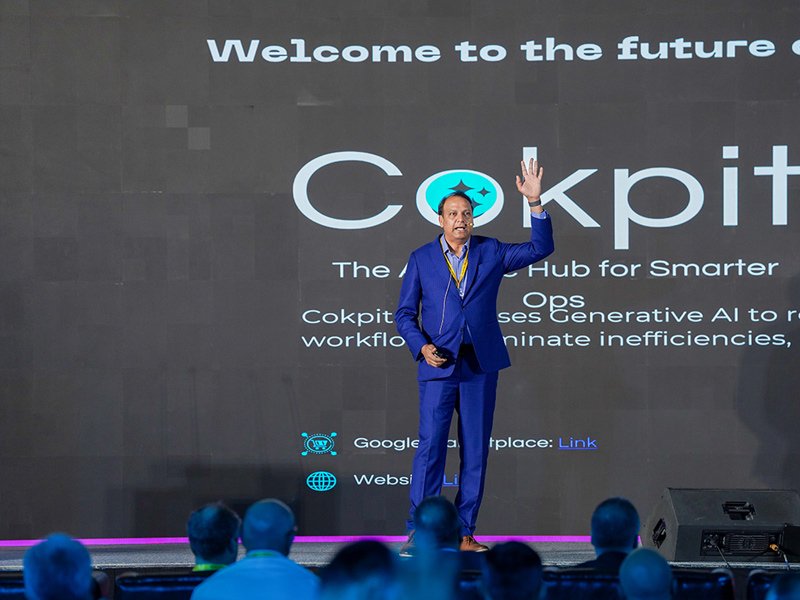
Past Speakers
Previous editions of World AI Technology Expo Dubai have brought together senior AI practitioners and leaders. Speakers below are shown for reference from previous editions; the 2027 line-up will be announced ahead of the event.

Nitin Akarte

Akshay Singh Dalal

James Hunter

Abhinav Sharma
Agentic development and where to draw the line
The frontier in 2026 is agentic workflows, where an agent framework lets a model plan a multi-step task, run commands, read files, execute tests and iterate toward a goal with limited supervision. Used well, this is genuinely powerful for bounded chores: upgrading a dependency across a repository, fixing a well-specified failing test suite, or migrating a consistent pattern through many files. The agent's ability to run the code and read the errors closes the loop that pure text generation leaves open.
The risk is proportional to the autonomy. An agent that can execute arbitrary commands can also delete the wrong thing, commit secrets, or spend a long time confidently going in the wrong direction. The practical controls are the same ones you would apply to any powerful automation: run it in an isolated environment with scoped permissions, require human approval before it touches anything irreversible, cap the number of steps, and make every action reviewable in a diff before it merges.
The judgement call is scope. Agents perform best when the goal is verifiable by a machine — the tests pass, the build is green, the types check — because that gives them a reliable signal to iterate against. When success is subjective or the specification is fuzzy, autonomy amplifies error rather than output. Give agents the tasks with a clear finish line, and keep the open-ended design work in a human-led conversation.
Guarding quality, security and licensing
Generated code needs the same scrutiny as code from any contributor, and arguably more, because it arrives fluent and confident regardless of correctness. The baseline is unchanged: everything goes through review, tests and your normal static analysis. The specific failure modes to watch for are subtle ones — a function that handles the happy path but silently drops an edge case, an off-by-one in a boundary condition, or an outdated API usage that reflects patterns common in training data rather than your current versions.
Security deserves particular attention because models will cheerfully produce insecure patterns if the prompt nudges that way: string-concatenated queries, missing input validation, over-broad permissions, or secrets handled carelessly. Never paste live credentials, customer data or proprietary code into a tool without knowing where that data goes and whether it is retained or used for training. For sensitive work, prefer deployments with clear data-handling guarantees, and treat any model output touching authentication, authorisation or user data as needing a deliberate security review.
There is also the question of provenance. Generated code can occasionally resemble existing copyrighted material, and the licensing status of model output is an unsettled area rather than a solved one. This is not legal guidance — it is an engineering flag: keep a human in the loop for anything you will redistribute, and align with whatever policy your organisation sets. Practically, run generated code through the same license-scanning and dependency-checking you already use, and do not let the convenience of a paste bypass controls you would never skip for hand-written code.
Measuring whether it is actually helping
It is easy to feel faster without being faster, so it is worth measuring rather than trusting the vibe. Resist vanity metrics like "percentage of code generated by a model" — a high number can mean the tool is producing verbose, low-quality output that inflates your review burden. The metrics that matter are the outcome ones you presumably already track: cycle time from first commit to merge, change-failure rate, time spent in review, and how often generated changes get reverted or hot-fixed.
The honest signal often shows up as a redistribution rather than a uniform speed-up. Teams frequently find the first draft arrives much faster while review and integration take a larger share of the total, because verifying someone else's plausible code is real work. That is not a failure; it is the cost moving to where it belongs. The question is whether the net cycle time and quality improve, and whether engineers are spending their reclaimed time on higher-value problems.
Run this as a lightweight experiment, not a mandate. Pick a team, keep a baseline, adopt a specific workflow for a few sprints, and compare. Pay attention to the qualitative side too — whether people feel less bogged down in toil, whether onboarding to unfamiliar code gets easier. These conversations, and the chance to compare notes with peers, vendors and investors wrestling with the same questions, are exactly what forums like World AI Technology Expo Dubai (07-09 April 2027, Millennium Plaza Downtown Hotel, Dubai) exist to surface.
Building team practice and keeping skills sharp
Individual productivity gains do not automatically become team gains; that requires shared practice. The highest-leverage move is to write down which workflows your team trusts and which it does not — a short internal guide covering what to delegate, what to always review, what never to paste into a tool, and how to handle agent-driven changes. This turns scattered individual experimentation into a repeatable capability and prevents the quiet erosion of standards when everyone improvises.
A real concern for engineering leaders is skill atrophy, especially for junior developers who might lean on generation before they have built the underlying judgement. The mitigation is not to ban the tools but to be deliberate: encourage juniors to attempt problems first, use the model to check and explain rather than to author, and treat reading and critiquing generated code as a core skill in its own right. The developers who thrive are the ones who can tell good output from confident nonsense, and that discrimination only comes from understanding the fundamentals.
Finally, keep the practice current. The capabilities of these tools shift on a scale of months, and a workflow that was clumsy last year may be reliable now, or vice versa. Build in a habit of periodically re-testing what you delegate, share findings openly across the team, and stay sceptical of both the hype and the backlash. The steady, unglamorous discipline of matching the right task to the right tool is what turns ai assisted development from a novelty into durable leverage.
Inside the event
A glimpse of the atmosphere from previous editions — keynotes, the exhibition floor and the networking that defines World AI Technology Expo Dubai.




Key takeaways
- Delegate tasks whose output is cheap to verify; keep authorship of logic that is expensive or subtle to check.
- Context quality dominates output quality — supply real signatures, examples and constraints rather than vague descriptions.
- Build repeatable loops (test-first generation, explain-then-change, targeted refactors) where the model does volume and you own intent.
- Give autonomous agents only tasks with a machine-verifiable finish line, run them with scoped permissions, and review every diff.
- Review generated code as rigorously as any contributor's, with extra attention to edge cases, security patterns and data handling.
- Measure outcome metrics like cycle time and change-failure rate, not the share of code a model produced.
Frequently asked questions
Not in any straightforward way. These tools automate portions of coding but shift effort toward specification, review, integration and judgement, which remain human work. The practical effect so far is a change in the mix of skills valued rather than wholesale replacement, with reading and verifying code becoming as important as writing it.
Treat every generation like a pull request from a fast but fallible contributor: run it through your normal tests, static analysis and review. Give explicit constraints in the prompt, watch for missed edge cases and outdated API patterns, and apply a deliberate security review to anything touching authentication, permissions or user data.
An assistant suggests or generates code in response to your prompts while you stay in control of each step. An agentic workflow lets a model plan and execute a multi-step task on its own — running commands, editing files and iterating against tests — with limited supervision. Agents suit bounded, verifiable chores; keep open-ended design human-led.
Look at outcome metrics you already track — cycle time to merge, change-failure rate, review time and revert rate — rather than the percentage of code a model wrote. Run a controlled trial with a baseline over a few sprints. Often the first draft comes faster while review grows, so the real question is net cycle time and quality.
Yes, but deliberately. Encourage juniors to attempt problems first and use the model to explain, check and critique rather than to author from scratch. This builds the underlying judgement needed to distinguish good output from confident nonsense, which is the skill that makes the tools genuinely useful.