
The decision to fine-tune a foundation model is one of the most consequential architectural choices an AI team makes, and it is also one of the most frequently made prematurely. A pre-trained large language model already encodes a staggering breadth of general knowledge, so before you invest engineering hours and compute budget into fine-tuning an LLM, you need a clear-eyed answer to a single question: what specific behaviour or knowledge does your application require that prompting and retrieval cannot reliably deliver? Fine-tuning is not a magic upgrade button. It is a targeted intervention that reshapes how a model responds, and it pays off when your need is about consistent behaviour, tone, structured output, or specialised domain adaptation that generic prompting keeps getting subtly wrong.
This guide walks through the full lifecycle from a practitioner's perspective: how to decide whether customisation is even the right tool, how to assemble and clean a dataset that actually teaches the behaviour you want, which parameter efficient fine tuning technique to reach for, how to run training without burning your budget, and how to evaluate and ship the result responsibly. The emphasis throughout is on trade-offs and engineering reality rather than idealised recipes, because the gap between a notebook experiment and a production system is where most model customisation efforts quietly fail.
Decide whether you actually need to fine-tune at all
Start by exhausting cheaper interventions, because each one you skip is technical debt you will pay back later. Well-structured prompting, few-shot examples, and retrieval-augmented generation solve a surprising share of problems that teams initially assume require training. If your issue is that the model lacks current or proprietary facts, retrieval from a vector database is almost always the better first move: facts change, and you do not want to retrain every time a policy document is updated. Fine-tuning bakes behaviour into weights, which is powerful precisely because it is sticky, and that stickiness is a liability for anything that changes frequently.
Reach for fine-tuning when the problem is about form rather than facts. Good candidates include enforcing a rigid output schema the model keeps deviating from, adopting a consistent house style or tone across thousands of generations, compressing a long system prompt into learned behaviour to cut latency and cost, teaching a narrow classification or extraction task where you have labelled data, or genuine domain adaptation where the vocabulary and reasoning patterns of a specialised field are underrepresented in the base model's training.
A useful litmus test in prose: if you can write a prompt that makes the model do the right thing maybe seven times out of ten, fine-tuning can often push that to consistent reliability. If you cannot get it to work even occasionally with careful prompting, the model probably lacks the underlying capability, and fine-tuning on a small dataset will not conjure it. In that case you need a more capable base model, better retrieval, or a rethink of the task decomposition.
Frame the use case and define success before touching data
Write down the task specification as if you were briefing a new engineer. What is the input, what is the desired output, what are the edge cases, and crucially, how will you know the model is doing well? Teams that skip this step end up with datasets that encode fuzzy, contradictory expectations, and the resulting model inherits that fuzziness. A sharp specification also tells you what kind of fine-tuning you need: instruction-style supervised fine-tuning for shaping responses, or preference-based tuning if the goal is to rank better outputs above merely acceptable ones.
Define your evaluation harness at this stage, not after training. Assemble a held-out test set of realistic inputs with known-good outputs, and where the task is subjective, define a rubric that a human or a strong model-as-judge can apply consistently. Establish the baseline: run your best prompt against the untuned foundation model and record the numbers. Without that baseline you cannot claim fine-tuning helped, and you will be tempted to ship based on vibes.
Be explicit about the non-negotiables, such as refusal behaviour on out-of-scope requests, latency budgets, and cost per thousand requests at expected volume. These constraints shape method selection. A team that must serve on modest hardware will make very different choices from one with generous GPU access, and knowing this upfront prevents a beautiful model that cannot be deployed.
Assemble and clean the training dataset
Data quality dominates outcomes far more than clever hyperparameters. A few hundred to a few thousand high-quality, consistent examples typically outperform tens of thousands of noisy ones for a focused task. The examples must reflect the exact input-output format you will use in production, including the system framing, because the model learns the mapping you show it, not the one you intended. Inconsistency is poison: if two near-identical inputs map to differently formatted outputs, you are teaching the model to be unpredictable.
Curate deliberately. Deduplicate aggressively, since repeated examples silently overweight certain patterns. Balance the distribution so rare-but-important cases are represented rather than drowned out by common ones. Include negative and edge cases explicitly, such as how the model should decline or ask for clarification, because a model trained only on happy-path examples becomes overconfident on inputs it should refuse. If you generate synthetic training data from a larger model, treat it as a draft that needs human review, and watch for the subtle stylistic tics and errors that synthetic data tends to propagate.
Split your data honestly into training, validation, and test sets with no leakage between them, and keep the test set genuinely untouched until final evaluation. Document provenance and any licensing or consent considerations around the data you use; getting this governance right early avoids painful rework, though the specifics of what you are permitted to use are a matter for your own organisation to determine.
Choose a fine-tuning method: full vs parameter efficient fine tuning
Full fine-tuning updates every weight in the model. It offers maximum expressiveness but demands substantial memory, produces a full-size checkpoint per task, and risks catastrophic forgetting, where the model loses general capabilities as it over-specialises. For most teams and most use cases in 2026, full fine-tuning is overkill.
Parameter efficient fine tuning is the pragmatic default. The most popular family freezes the base weights and trains a small number of additional parameters, most commonly low-rank adapter matrices injected into the attention and feed-forward layers. This slashes memory requirements, produces adapters measured in megabytes rather than gigabytes, trains far faster, and lets you host one base model while swapping lightweight adapters per task or per customer. Quantised variants push memory down further by loading the frozen base in reduced precision while training the adapters, making it feasible to adapt sizeable models on a single accessible GPU.
The trade-offs are real but usually favourable. Parameter efficient methods occasionally leave a small quality gap versus full fine-tuning on the hardest tasks, and adapter rank is a knob worth tuning: too low and the model cannot absorb the behaviour, too high and you lose the efficiency benefit while risking overfitting. Start with a modest rank, measure, and increase only if evaluation demands it. For preference alignment, lighter-weight direct optimisation approaches have largely displaced heavier reinforcement-learning pipelines for teams that want good results without standing up complex infrastructure.

Past Speakers
Previous editions of World AI Technology Expo Dubai have brought together senior AI practitioners and leaders. Speakers below are shown for reference from previous editions; the 2027 line-up will be announced ahead of the event.

Nitin Akarte

Akshay Singh Dalal

James Hunter

Abhinav Sharma
Run training without wasting compute
Treat the training run as an experiment, not a one-shot commit. Wire up an experiment-tracking tool from the first run so every configuration, dataset version, and metric is logged and comparable. The single most common mistake is over-training: for a fine-tuning LLM task with a modest dataset, a small number of epochs is usually right, and watching validation loss diverge from training loss tells you when you have started memorising rather than generalising. Early stopping on a validation metric is cheap insurance.
Learning rate is the hyperparameter that most often makes or breaks a run. Parameter efficient methods tolerate somewhat higher rates than full fine-tuning, but too high destabilises training and too low wastes epochs. Use a warmup and a decay schedule, start from published sensible defaults for your method, and change one variable at a time so you can attribute effects. Keep batch sizes as large as memory allows using gradient accumulation, since noisy small batches can make results hard to reproduce.
Budget realistically. A tight iteration loop on a small model to validate your data and pipeline is worth more than a single expensive run on a large one. Prove the approach works end to end at small scale, confirm the data is teaching the right behaviour, and only then scale up. Cloud platforms make it easy to spin up large instances and equally easy to leave them running, so instrument cost from day one.
Evaluate rigorously and guard against regressions
Automated metrics are necessary but rarely sufficient. For structured tasks, exact-match and schema-validity checks give you fast, objective signals. For open-ended generation, combine a model-as-judge scored against your rubric with a sample of genuine human review, because judges have blind spots and can be gamed by superficial fluency. Always compare against the baseline you recorded earlier, and report both aggregate scores and performance on the hard slices that matter most.
Test explicitly for what fine-tuning can quietly break. Run a battery of general-capability prompts to detect catastrophic forgetting, since a model that aced your narrow task but lost its broader reasoning is a poor trade. Probe refusal and safety behaviour on out-of-scope and adversarial inputs, because narrow fine-tuning can erode the base model's guardrails in ways that only surface in production. Check that output format holds across the full input distribution, not just the easy examples.
Keep a regression suite that you re-run on every future adapter version. Model customisation is iterative, and the second and third rounds are where subtle regressions creep in. A frozen, versioned test set plus a dashboard of the metrics that matter turns evaluation from a one-off event into a repeatable gate.
Deploy, monitor, and iterate in production
Serving an adapter-based model is operationally pleasant: you host one base model and load lightweight adapters on top, which keeps infrastructure lean and lets you route different tasks or customer segments to different adapters behind one endpoint. Version adapters explicitly, tie each version to the exact dataset and config that produced it, and make rollback a single configuration change rather than a redeployment. Quantise for inference where latency and cost demand it, but re-run your evaluation after quantisation because precision reduction can shift behaviour.
Instrument production from launch. Log inputs, outputs, latencies, and any user feedback signals, and sample real traffic for periodic human review. Watch for drift: the distribution of real-world inputs will diverge from your training data over time, and performance decays quietly long before anyone files a complaint. Set up alerts on format-validity rates and refusal rates so degradations surface as signals rather than support tickets.
The most valuable output of a first fine-tuning cycle is often the data flywheel it enables. Production interactions, especially the failures and the human corrections, become the next round's training examples. Teams that build this loop deliberately compound their advantage, and the conversations that accelerate this thinking frequently happen face to face; practitioners wrestling with these exact deployment and iteration questions can compare notes with peers, vendors and investors at events such as World AI Technology Expo Dubai (07-09 April 2027, Millennium Plaza Downtown Hotel, Dubai). Treat every deployment as the start of the next iteration, not the finish line.
A pragmatic decision checklist
Before committing, walk through a short mental checklist in order. Have you genuinely exhausted prompting and retrieval? Is your problem about form and behaviour rather than volatile facts? Do you have, or can you build, a few hundred consistent, high-quality examples that match production format exactly? Have you defined an evaluation harness and recorded a baseline? If any answer is no, resolve it before you train.
On method, default to a parameter efficient approach with a modest adapter rank and quantisation if hardware is constrained, and only escalate to full fine-tuning when evaluation proves the efficient method leaves unacceptable quality on the table. On process, iterate small and cheap first, log everything, stop early, and gate releases behind a versioned regression suite that includes general-capability and safety probes.
Finally, remember the economics. Fine-tuning has a maintenance cost: every base-model upgrade may require retraining, and every adapter is a thing to version, monitor and eventually retire. Choose it when the durable value of consistent, specialised behaviour clearly exceeds that ongoing cost, and be equally willing to conclude that a strong prompt over a capable foundation model is, for now, the more sensible engineering decision.
Inside the event
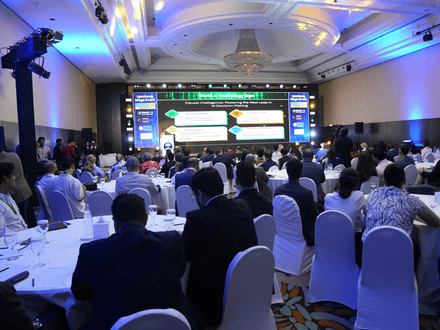
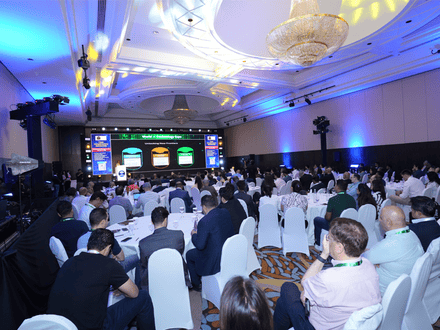
A glimpse of the atmosphere from previous editions — keynotes, the exhibition floor and the networking that defines World AI Technology Expo Dubai.




Key takeaways
- Fine-tune a foundation model when the problem is about consistent form, tone, structure or domain adaptation, not about volatile facts, which retrieval handles better.
- Data quality and consistency dominate results: a few hundred to a few thousand clean, production-format examples beat tens of thousands of noisy ones.
- Parameter efficient fine tuning with low-rank adapters, optionally quantised, is the pragmatic default for most teams over full fine-tuning.
- Define your evaluation harness and record an untuned baseline before training, and always probe for catastrophic forgetting and eroded safety behaviour afterwards.
- Iterate small and cheap first, log every run with an experiment-tracking tool, and stop early to avoid over-training on modest datasets.
- Treat deployment as the start of a data flywheel: production failures and human corrections become the next round's training data.
Frequently asked questions
Fine-tune when you need to change how the model behaves, such as enforcing a strict output format, adopting a consistent tone, or adapting to specialised domain language. Use retrieval when you need to inject current or proprietary facts, because facts change frequently and retrieval avoids retraining every time your knowledge base updates. Many production systems combine both: retrieval for knowledge and fine-tuning for behaviour.
For a focused task, a few hundred to a few thousand high-quality, consistent examples are usually enough, and they must match your production input-output format exactly. Data quality and consistency matter far more than raw volume; a small clean dataset routinely outperforms a large noisy one. Include edge cases and refusal examples so the model does not become overconfident on inputs it should decline.
Parameter efficient fine tuning freezes the base model weights and trains only a small set of added parameters, most commonly low-rank adapter matrices. This dramatically reduces memory and compute, produces adapters measured in megabytes, and lets you host one base model while swapping lightweight adapters per task. It is preferred because it delivers most of the quality of full fine-tuning at a fraction of the cost and operational overhead.
This risk, called catastrophic forgetting, is reduced by using parameter efficient methods that leave base weights frozen, training for fewer epochs, and using a modest learning rate. Always evaluate the tuned model against a battery of general-capability and safety prompts, not just your narrow task, so you catch regressions before deployment. If forgetting appears, lower the adapter rank or reduce training intensity.
Record a baseline by running your best prompt against the untuned model on a held-out test set before you train. After fine-tuning, evaluate on the same untouched test set using objective checks for structured tasks and a rubric-based judge plus human sampling for open-ended ones. Improvement is only credible when measured against that baseline on data the model never saw during training.