
The fastest way to stay current in a field that reinvents itself every few months is rarely a course or a certificate. It is people. The right AI communities give you a live feed of what is working, what is quietly broken, and what the documentation conveniently omits. When a new class of foundation models ships or an agent framework changes its abstractions overnight, the practitioners who adapt first are almost always the ones plugged into a good machine learning community, comparing notes with peers who hit the same wall an hour earlier. Formal learning tells you how things are supposed to work; a strong community tells you how they actually behave in production.
Yet most professionals join the wrong groups. They collect memberships the way they collect browser tabs, then wonder why their feeds are full of hype threads and recruiter spam. The problem is not a shortage of AI networking opportunities but a shortage of discernment about which ones repay your attention. This guide is about that discernment: how to locate the communities worth your time, how to evaluate them before you commit, how to contribute so that membership actually compounds, and how to avoid the common failure modes that turn a promising network into noise. Treat your attention as the scarce resource it is, and choose accordingly.
Get clear on why you are joining
Before you search for a single group, decide what you actually want from it, because the answer determines where you should look. The motivations tend to fall into four buckets: staying technically current, solving a specific problem you are stuck on right now, advancing your career through visibility and relationships, or finding collaborators and customers for something you are building. These goals pull in different directions. A deep research-oriented forum that dissects new architectures is excellent for the first and near-useless for the fourth.
Be honest about your stage, too. Someone six months into learning gradient descent needs a forgiving, question-friendly environment where basic questions are welcomed. A staff engineer shipping retrieval systems needs a room where people argue about chunking strategies, evaluation harnesses and latency budgets, and where a beginner question would feel out of place. Joining a community mismatched to your level wastes everyone's time and quietly erodes your confidence.
Write your goal down in one sentence before you start. 'I want to pressure-test my production RAG design decisions against people who have shipped them' is a filter you can apply to any group in about five minutes. 'I want to be part of the AI scene' is not a filter, and it will lead you to accumulate memberships you never open.
Map the landscape of AI communities
AI communities are not one thing, and the format shapes the value more than the topic does. Real-time chat platforms are where practitioners troubleshoot live and where the half-life of a message is measured in hours; they reward frequent, casual participation and punish lurkers who want to catch up. Forum-style and long-form platforms preserve knowledge, rank the good answers and reward depth, making them better for reference than for reaction. Open-source project spaces, organised around a specific tool such as an agent framework or a vector database, attract the people who genuinely understand that tool's internals.
Then there is the offline layer, which many technical people undervalue. Local AI meetups and tech communities create a density of relationships that online spaces struggle to match, because a two-minute hallway conversation carries signals that no thread does. Larger gatherings, from regional conferences to global industry events, compress a year of serendipitous encounters into a few days. If your goal includes commercial relationships, in-person is disproportionately effective; professionals working on applied AI can meet peers, vendors and investors and go deeper at gatherings like World AI Technology Expo Dubai (07-09 April 2027, Millennium Plaza Downtown Hotel, Dubai), where the hallway conversations often matter as much as the sessions.
A well-rounded practitioner usually maintains a small portfolio across these layers: one or two chat spaces for immediacy, one long-form space for depth, one project community tied to a tool they depend on, and a local or annual in-person anchor. You do not need all of them, but you do need to know which layer each of your memberships is serving.
Find them without relying on luck
Discovery is more systematic than it looks. Start from what you already use: nearly every serious open-source AI project links its community chat or forum from its repository, and those spaces are pre-filtered for people who care about the same tools you do. Follow the maintainers and prolific contributors of those projects; the communities they participate in are usually worth investigating, because competent people cluster.
For local groups, search event-listing platforms for AI meetups and machine learning community events in your city, but weight recency heavily. A group that last met eight months ago is effectively dead regardless of its member count. For broader discovery, the writers and researchers whose newsletters or long-form posts you genuinely learn from will often name the spaces where their own conversations happen. Working backwards from good content to its source community is one of the most reliable discovery methods there is.
Do not overlook the communities attached to structured programmes, cohort-based courses, fellowships, hackathons and open research collectives. These come with a shared context and a reason to keep talking after the event ends, which is exactly the ingredient that keeps a community alive. The shared experience does a lot of the relationship-building work that cold networking cannot.

Past Speakers
Previous editions of World AI Technology Expo Dubai have brought together senior AI practitioners and leaders. Speakers below are shown for reference from previous editions; the 2027 line-up will be announced ahead of the event.

Nitin Akarte

Akshay Singh Dalal

James Hunter

Abhinav Sharma
Vet a community before you commit
Membership has a cost even when it is free: notifications, context-switching and the low-grade guilt of unread channels. So vet before you join. Lurk for a week or two if the space allows it and watch a few concrete signals. What is the ratio of genuine technical discussion to self-promotion and job spam? When someone asks a hard question, does it get a substantive answer or a link and a shrug? Are the same three people doing all the talking, or is participation distributed?
Check the temporal pattern. Healthy communities have a steady pulse of activity across days and time zones rather than a burst followed by silence. Look at how disagreement is handled, because it is the truest test of culture: in a strong technical community, people disagree pointedly about approaches and stay respectful about each other, and moderators intervene on conduct without policing opinions. A place where everyone agrees is either dead or afraid.
Finally, weigh signal against size. Large communities offer reach but often drown in noise and shallow questions; small, curated ones offer higher-quality conversation but less serendipity. There is no universally correct answer, only a fit to your goal. If you want a fast answer to an obscure production issue, a focused two-hundred-person space usually beats a fifty-thousand-member one where your message scrolls away in minutes.
Contribute so membership compounds
The uncomfortable truth of AI networking is that you get out roughly what you put in, and lurking yields almost nothing. This does not mean you must be loud. It means being useful in small, consistent ways: answering a question you happen to know, sharing a concise write-up of a bug you fixed, posting a benchmark you ran rather than an opinion you hold. Specific, verifiable contributions build a reputation that generic enthusiasm never will.
Aim to give before you ask. When you do need help, ask well: state what you are trying to do, what you have already tried, the actual error and your environment. A precise question signals competence and respect for people's time, and it attracts far better answers than a vague plea. The people capable of helping you are busy, and a well-framed question is how you earn their attention.
Over months, this consistency turns weak ties into real relationships. The engineer you helped debug an evaluation pipeline remembers you when a role opens on their team. The maintainer whose issue you triaged vouches for your pull request. None of this happens from a single brilliant post; it accrues from showing up usefully and repeatedly. Think of it as compounding interest on attention rather than a transaction.
Balance online reach with in-person depth
Online and offline communities are complements, not substitutes, and the strongest practitioners deliberately run both. Online spaces give you scale, asynchronous access to global expertise and a searchable archive. In-person tech communities give you trust, which forms far faster face to face. A recurring pattern in AI networking is that a relationship starts as a username in a chat channel and only becomes durable after a first in-person meeting at a meetup or conference.
If you are early in building your network, prioritise local AI meetups over distant flagship events. They are cheaper, more repeatable and more likely to yield relationships you can actually maintain, because you will see the same faces month after month. Save the larger conferences for when you have a specific goal that benefits from their density, such as finding partners, hiring, evaluating vendors or raising money.
One practical habit closes the loop between the two layers: after any in-person conversation worth keeping, follow up within a day or two in whatever online channel you both use, referencing something specific you discussed. This is the single most neglected step in networking, and it is the one that converts a pleasant chat into an ongoing connection. Without the follow-up, most in-person contacts quietly evaporate.
Avoid the common failure modes
The first failure mode is over-joining. Every community you join taxes your attention, and past a handful of active memberships the marginal one degrades all the others by fragmenting your presence. It is better to be a known, contributing member of three communities than a ghost in fifteen. Prune aggressively; leaving a group you no longer use is a feature, not a failure.
The second is confusing consumption with participation. Scrolling a busy channel feels productive and teaches you a little, but it builds no relationships and no reputation. If a month passes and no one in a community would recognise your name, you are consuming, not participating, and you should either engage or leave. The third is chasing hype rooms where the volume of excitement about the latest model release vastly exceeds the volume of substance; these feel energising and leave you knowing less than you think.
The last is neglecting to reassess. Your goals change as your career moves, and a community that served you brilliantly a year ago may no longer fit. Schedule a quick review of your memberships a couple of times a year against the one-sentence goal you started with. Keep the ones that still serve it, leave the ones that do not, and stay alert for the new spaces forming around whatever the field is moving toward next.
Inside the event
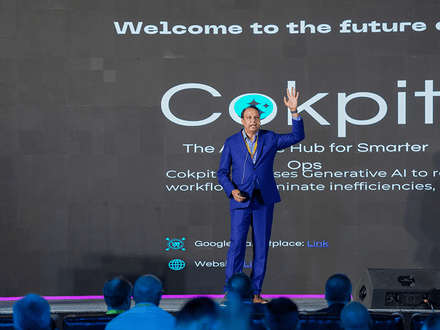
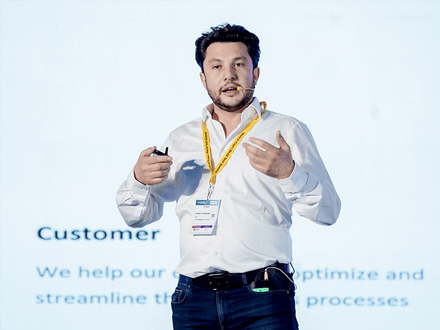
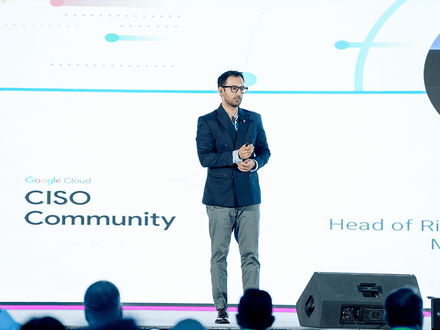
A glimpse of the atmosphere from previous editions — keynotes, the exhibition floor and the networking that defines World AI Technology Expo Dubai.



Key takeaways
- Define a single-sentence goal before joining any community; it becomes the filter you apply to every candidate space.
- Maintain a small portfolio across formats: real-time chat for immediacy, long-form platforms for depth, project spaces for tooling, and in-person meetups for trust.
- Vet before committing by lurking briefly and checking the ratio of substance to self-promotion, how disagreement is handled, and whether activity has a steady pulse.
- Contribute specific, verifiable value and ask precise questions; lurking builds neither reputation nor relationships.
- Treat online reach and in-person depth as complements, and always follow up within a day or two after meeting someone offline.
- Prune aggressively and reassess your memberships a couple of times a year against your original goal.
Frequently asked questions
The best type depends on your goal, not on popularity. For staying technically current, join long-form forums and open-source project spaces tied to tools you actually use. For real-time troubleshooting, use active chat communities, and for relationships and commercial opportunities, prioritise local AI meetups and in-person events. Most practitioners maintain a small mix across these formats rather than relying on one.
Lurk for a week or two and watch a few signals: the ratio of genuine technical discussion to self-promotion, whether hard questions get substantive answers, and whether activity has a steady pulse across days rather than sporadic bursts. Also observe how disagreement is handled, since respectful, pointed technical debate is a sign of a healthy culture. If a place is either silent or full of hype and job spam, move on.
They serve different purposes and work best together. Online communities give you global scale, asynchronous access to expertise and a searchable archive, while in-person meetups and conferences build trust far faster. A common pattern is that a relationship begins online and only becomes durable after a first face-to-face meeting, so use both and always follow up online after meeting someone in person.
Fewer than most people assume. Being a known, contributing member of three or four communities is far more valuable than being a passive ghost in fifteen, because each membership taxes your attention and fragments your presence. Prune aggressively and reassess a couple of times a year, keeping only the spaces that still match your current goals.
Choose a community that matches your level, where basic questions are genuinely welcomed rather than one aimed at senior practitioners. Contribute in small, consistent ways, such as sharing something you learned or a bug you fixed, and ask precise questions that state what you tried and the exact error. Value compounds over months of showing up usefully, not from any single post.