
Most organisations no longer struggle to build an impressive demo. They struggle to scale AI pilots into something the whole enterprise can depend on. A proof of concept that dazzles a steering committee in a controlled environment is a fundamentally different animal from a system that serves thousands of users, touches production data, respects compliance boundaries and holds up when a foundation model provider changes its API overnight. The gap between those two states is where the majority of corporate AI budgets quietly evaporate, and it is why so many teams report a portfolio of stalled experiments rather than a single deployed capability that moves a real business metric.
The reason the pilot-to-production transition is so hard is that it is not primarily a modelling problem. The hard parts are architecture, data pipelines, evaluation, cost control, governance and the human change management that determines whether anyone actually uses the thing. Scaling AI well means treating the pilot as the cheapest, fastest way to learn what you do not yet know, and then deliberately re-engineering almost everything around it for reliability and scale. This article lays out a practical path for enterprise AI deployment: how to choose which pilots deserve to graduate, how to harden them technically, and how to build the operational muscle that keeps AI at scale healthy long after launch day.
Why most pilots never make it to production
The uncomfortable truth is that a pilot is optimised for exactly the wrong things. It is built fast, on a curated slice of data, with a forgiving user base and no service-level expectations. Those shortcuts are sensible during discovery, but each one becomes a liability the moment you attempt the ai pilot to production leap. The curated dataset hid the messy long tail of real inputs. The friendly test users tolerated latency and mistakes that paying customers or internal staff will not. The absence of an SLA meant nobody had to answer for the 2am failure.
There is also an organisational failure mode. Pilots are frequently funded as innovation experiments, sitting outside the ownership of the team that would have to run them in production. When the demo succeeds, there is no engineering group with the mandate, headcount or on-call rota to adopt it. The project falls into a gap between a research or innovation function that has moved on to the next shiny thing and a platform team that was never consulted and has no capacity.
Avoiding this starts before you build. Define, at pilot kick-off, what a graduation decision looks like: which metric must move, what reliability bar must be cleared, who will own the production system, and what it will cost to run at full volume. A pilot without a named production owner and an explicit success threshold is a science project, and it should be labelled as one so nobody is surprised when it does not scale.
Pick the right pilots to scale
Not every successful pilot deserves promotion, and choosing badly is expensive. The strongest candidates for scaling AI share three properties: a clear and measurable business outcome, tolerance for the probabilistic nature of model outputs, and access to the data required to do the job well. A use case that needs perfect accuracy on every response, or that depends on data you cannot lawfully or technically assemble, will punish you no matter how good the demo looked.
Score your pilots along two axes: value and feasibility. Value is the honest, quantified impact if the system worked at full scale, net of the cost to run it. Feasibility folds in data readiness, integration complexity, latency and cost constraints, and the organisation's appetite for the change. High-value, high-feasibility candidates go first. High-value but low-feasibility ones are worth a deliberate investment to remove the blockers, usually in data infrastructure. Low-value work should be killed regardless of how technically elegant it is.
A useful discipline is to insist that every candidate names the human decision or workflow it improves and how you will measure that improvement in the live business, not in an offline benchmark. If the team cannot articulate the counterfactual, the pilot is not ready to scale, it is ready for another round of discovery.
Re-architect for reliability, not the demo
The prototype architecture that made the pilot fast to build is almost never the one that survives production. Enterprise ai deployment demands that you separate concerns the demo happily blurred. Retrieval, prompt assembly, model inference, business logic and post-processing should become distinct, independently testable components rather than a single script that calls a model and hopes for the best. This modularity is what later lets you swap a foundation model, upgrade a vector database or add a guardrail without rewriting everything.
Design for provider and model portability from the outset. Wrap external model calls behind an internal interface so that switching between foundation models, or running an open-weight model on your own infrastructure, is a configuration change rather than a migration. Build in retries, timeouts, circuit breakers and graceful degradation, because upstream model APIs will have latency spikes and outages. For anything user-facing, decide your fallback behaviour explicitly: a slower deterministic path, a cached response, or an honest message beats an infinite spinner.
Statefulness and orchestration matter more as ambitions grow. A single-shot prompt is easy; an agent framework coordinating multiple tool calls, retrieval steps and validations is a distributed system with all the failure modes that implies. Keep the orchestration observable, make each step idempotent where you can, and cap the blast radius of any autonomous action so a misbehaving chain cannot take costly or irreversible steps without a human check.
Build the data and MLOps backbone
AI at scale lives or dies on data plumbing. The pilot probably ran on a static export; production needs pipelines that refresh, validate and monitor data continuously. For retrieval-based systems this means an ingestion pipeline that chunks, embeds and indexes source content on a schedule, handles updates and deletions, and tracks which document version produced which answer. Stale or silently corrupted indexes are one of the most common causes of quality regressions that nobody notices until users complain.
Treat prompts, retrieval configurations and model versions as versioned artefacts under the same rigour as code. Use experiment-tracking tools to record what changed and what effect it had, so a quality drop can be traced to a specific change rather than debated in a meeting. Continuous integration should run your evaluation suite on every change to a prompt or pipeline, and a change that regresses key metrics should be blocked the same way a failing unit test blocks a merge.
Reproducibility is the connective tissue here. When someone asks why the system gave a particular answer three weeks ago, you should be able to reconstruct the model version, prompt template, retrieved context and configuration in play at that moment. Without that, debugging becomes archaeology and trust erodes fast.

Past Speakers
Previous editions of World AI Technology Expo Dubai have brought together senior AI practitioners and leaders. Speakers below are shown for reference from previous editions; the 2027 line-up will be announced ahead of the event.

Nitin Akarte

Akshay Singh Dalal

James Hunter

Abhinav Sharma
Evaluation and monitoring you can trust
Traditional software has deterministic tests; AI systems need layered, ongoing evaluation because the same input can produce different outputs and quality is often subjective. Start by building a representative evaluation set drawn from real usage, including the awkward edge cases the pilot avoided, and grow it every time production surfaces a new failure. This golden set becomes your regression harness and the single most valuable asset you own for maintaining quality over time.
Combine automated and human evaluation. Automated checks, including using a capable model as a judge against a rubric, give you cheap, fast signal at scale, but calibrate them against periodic human review so you know how far to trust them. For subjective or high-stakes outputs, keep humans firmly in the loop and sample outputs continuously rather than only at launch. The goal is to catch drift, where model or data changes quietly degrade performance, before your users do.
In production, instrument everything: latency, cost per request, token usage, retrieval hit rates, refusal and error rates, and user signals such as thumbs-down, edits or abandonment. Wire these into alerting so a regression pages someone rather than sitting in a dashboard nobody opens. Observability is not optional infrastructure for AI, it is how you convert a black box into an operable system.
Govern, secure and control cost at scale
Governance that felt like overkill for ten pilot users becomes essential when the system touches enterprise data and thousands of people. Establish who is accountable for each deployed model, what data it may access, how outputs are logged and how you would roll back or disable it in an incident. Access controls must respect the same permission boundaries as the underlying data, so a retrieval system never surfaces content a given user was not entitled to see. This is a common and serious leak when pilots are promoted without rethinking authorisation.
Security expands the threat surface in ways classic applications do not face. Prompt injection, data exfiltration through crafted inputs, and the risks of autonomous agents taking real actions all need explicit mitigation: input and output filtering, least-privilege tool access, and human confirmation for consequential operations. Treat any content the model ingests as potentially adversarial, especially when it comes from users or the open web.
Cost is the quiet killer of AI at scale. A price per request that is trivial in a pilot can become a six-figure monthly bill at enterprise volume. Instrument spend per feature and per user, and pull the obvious levers: cache repeated queries, route simple requests to smaller cheaper models and reserve the largest models for genuinely hard tasks, trim context length, and set budget alerts and rate limits so runaway usage is caught early. Model the unit economics before you scale, not after the invoice arrives.
Roll out gradually and manage the human change
Resist the big-bang launch. Progressive delivery, shipping to a small percentage of traffic or a single team first, lets you observe real behaviour and cost with a limited blast radius. Feature flags and the ability to instantly disable the AI path are non-negotiable safety mechanisms. Shadow deployments, where the system runs against live traffic without its outputs being used, are an excellent way to validate quality and cost at production scale before anyone depends on the results.
The deepest barrier to enterprise AI deployment is rarely technical. If the people whose work the system touches do not trust it or do not understand it, adoption stalls regardless of how good the model is. Involve those users early, be transparent about what the system can and cannot do, and design workflows that keep humans in control rather than replacing their judgement wholesale. Train people not just on how to use the tool but on how to recognise and report when it is wrong.
Communities of practice help enormously here. The organisations that scale AI well tend to share patterns, evaluation methods and failure stories across teams rather than letting each group relearn the same painful lessons. Practitioners tackling exactly these problems also gather to compare notes with peers, vendors and investors at events such as the World AI Technology Expo Dubai (07-09 April 2027, Millennium Plaza Downtown Hotel, Dubai), which can be a useful way to pressure-test your approach against how others are solving it.
Operate for the long haul
Shipping is the beginning, not the end. Models drift, data distributions shift, provider APIs evolve and user expectations rise, so a system that was excellent at launch will decay without active maintenance. Assign clear ownership with an on-call rotation, a runbook for common incidents and a regular cadence for reviewing evaluation metrics, cost trends and user feedback. Treat the retraining or reconfiguration of models as a scheduled operational activity, not an emergency response.
Build a feedback loop that turns production experience into improvement. Every user correction, escalation and failure is training data and evaluation material if you capture it deliberately. The teams that compound their advantage are the ones that route these signals back into their golden evaluation set and their fine-tuning or retrieval data, so the system measurably improves month over month rather than merely holding steady.
Finally, keep an eye on the platform, not just the product. Once you have taken two or three pilots to production, the reusable pieces, the model gateway, the evaluation harness, the retrieval infrastructure, the observability stack, become an internal platform that makes the next deployment dramatically cheaper. Investing in that shared foundation is what turns scaling AI from a series of heroic one-off projects into a repeatable organisational capability.
Inside the event
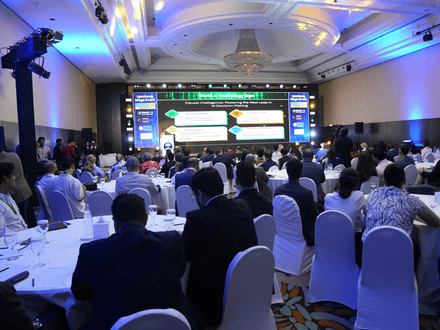
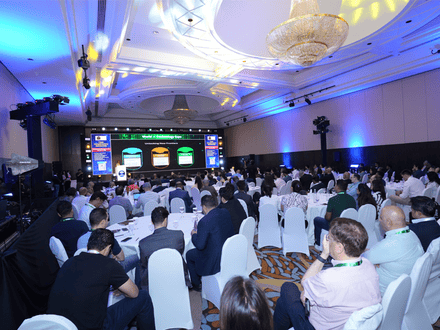
A glimpse of the atmosphere from previous editions — keynotes, the exhibition floor and the networking that defines World AI Technology Expo Dubai.




Key takeaways
- Pilots are optimised for speed and demos; production needs reliability, ownership and an explicit graduation bar defined before you build.
- Prioritise which pilots to scale using value and feasibility, and kill low-value work no matter how technically impressive it is.
- Re-architect for portability and resilience: modular components, model-agnostic interfaces, fallbacks and observable orchestration.
- Robust data pipelines, versioned prompts and layered evaluation are the real backbone of AI at scale, not the model itself.
- Govern access, secure against prompt injection and data leakage, and model unit economics before volume turns cost into a crisis.
- Roll out progressively with feature flags, invest in user trust and change management, and operate with ownership and feedback loops for the long haul.
Frequently asked questions
Most pilots are built for speed on curated data with forgiving users and no reliability requirements, so the shortcuts that made them fast become liabilities at scale. They also frequently lack a named production owner with the mandate and capacity to run them. Defining a graduation bar, an owner and full-volume cost estimates at kick-off prevents most of these failures.
Score each pilot on value and feasibility. Value is the honest quantified business impact net of running cost; feasibility covers data readiness, integration complexity, latency, cost and organisational appetite. Promote high-value, high-feasibility use cases first, invest to unblock high-value but hard ones, and stop low-value work regardless of technical elegance.
A pilot is usually a single script running on static data, while production requires modular, independently testable components, continuous and validated data pipelines, layered evaluation, monitoring and cost controls. The core shift is engineering for reliability, portability and observability rather than for an impressive one-off demonstration.
Instrument spend per feature and per user, then cache repeated queries, route simple requests to smaller cheaper models, reserve the largest models for genuinely hard tasks, and trim context length. Set budget alerts and rate limits, and model the unit economics before scaling so a per-request cost that is trivial in a pilot does not become an unmanageable enterprise bill.
Maintain a representative golden evaluation set drawn from real usage and edge cases, run it in continuous integration, and combine automated checks with periodic human review. In production, monitor latency, cost, error and refusal rates and user signals such as edits and thumbs-down, with alerting so quality drift is caught before users are affected.