
The AI build vs buy question has quietly become one of the most consequential architectural decisions an engineering organisation makes in 2026. A decade ago, "build vs buy" mostly meant weighing an in-house service against a SaaS subscription. Today the spectrum is far wider and far muddier: you can call a hosted foundation model over an API, fine-tune an open-weight model on your own hardware, wire together an agent framework from open-source parts, or subscribe to a fully managed vertical application that hides all of the above. Each path carries a different profile of cost, control, latency, risk and long-term differentiation, and the wrong default can quietly lock a company into a strategy that ages badly within a year.
What makes enterprise AI decisions harder than classic software procurement is that the underlying technology is moving faster than most procurement cycles. A capability that justified a six-month custom build in early 2026 may ship as a commodity API feature by the time your team finishes shipping. At the same time, the parts of the stack that genuinely differentiate you — your proprietary data, your domain workflows, your evaluation harness — are almost never things you can buy. This article gives you a concrete framework for deciding build or buy AI component by component, rather than as a single all-or-nothing bet, so you can move fast on the commodity layers and invest deliberately where it actually creates a moat.
Stop treating it as one decision
The first mistake teams make is framing this as a single verdict: "are we a build shop or a buy shop?" Modern AI systems are layered, and each layer has its own answer. A useful mental model is to decompose any AI feature into roughly five layers: the base model, the retrieval and data layer, the orchestration and agent logic, the evaluation and observability layer, and the application surface your users actually touch. You will almost certainly buy some layers and build others, and the interesting engineering work is deciding which.
In practice, most organisations should buy at the base-model layer, buy or assemble commodity infrastructure like vector databases and experiment-tracking tools, and build the layers that encode their specific data, domain rules and quality bar. The base model is a rapidly commoditising input; the way you connect it to your proprietary context and measure whether it is doing the right thing is where durable value accumulates. Framing the choice this way turns an intimidating strategic bet into a series of smaller, reversible decisions.
This decomposition also makes your architecture more defensible against change. If you keep clean seams between layers — a thin abstraction over model providers, a retrieval interface that does not leak vendor specifics into business logic — you preserve the option to swap a bought component for a built one, or one vendor for another, as the market shifts. Optionality is worth paying a small tax for in a field moving this quickly.
The five forces that should drive the choice
When you evaluate any single layer, five forces tend to dominate the decision. First, differentiation: does this capability make your product meaningfully better than competitors, or is it table stakes? You build where you differentiate and buy where you merely need parity. Second, total cost of ownership, which for custom AI is rarely the training bill — it is the ongoing burden of evaluation, monitoring, retraining, on-call and security patching that lands after launch.
The third force is time to value. A bought solution that gets a working experience in front of users in two weeks can be worth more than a superior custom system that ships in two quarters, because you learn faster and can always deepen later. Fourth is risk and control: data residency requirements, latency ceilings, availability guarantees and the need to explain a decision all push towards more control, which usually means more building. Fifth is talent: building and operating a fine-tuned model or a bespoke agent framework demands scarce ML engineering capacity that most teams should spend on their hardest, most differentiating problem rather than on reinventing infrastructure.
A simple exercise is to score each layer of your feature from one to five on these forces, then look at the pattern rather than a single total. High differentiation plus high control needs almost always argue for build; low differentiation plus fast time-to-value needs argue for buy. The genuinely hard cases are the ones where the forces conflict, and those deserve a written decision record so the reasoning survives the next reorganisation.
When buying off-the-shelf is the right call
Buying is the correct default for anything that is not core to your differentiation and where a mature market already exists. Hosted foundation models are the clearest example: the cost of training a competitive general-purpose model is enormous, the pace of improvement is relentless, and for the overwhelming majority of use cases an API call to a managed model gives you frontier capability with zero infrastructure to run. The custom AI vs off the shelf trade-off here is lopsided — building your own base model to save on per-token cost almost never pencils out once you include the engineering and opportunity cost.
Buying also wins when your requirements are common and well-served: transcription, document parsing, standard classification, generic chat assistants and common developer tooling all have credible off-the-shelf options that will beat a rushed internal build on quality and reliability. The right question is not "could we build this?" — a capable team can build almost anything — but "should we spend our scarcest engineers on this instead of the problem only we can solve?"
The caveat with buying is to keep your architecture from fusing to a single vendor. Wrap external services behind your own interfaces, keep your prompts, evaluation data and retrieval corpus in systems you control, and negotiate for data portability and clear terms on how your inputs are used. A good buy decision still leaves you able to leave.

Past Speakers
Previous editions of World AI Technology Expo Dubai have brought together senior AI practitioners and leaders. Speakers below are shown for reference from previous editions; the 2027 line-up will be announced ahead of the event.

Nitin Akarte

Akshay Singh Dalal

James Hunter

Abhinav Sharma
When building genuinely pays off
Building earns its keep when the capability is a durable differentiator, when your data or domain is unusual enough that generic tools underperform, or when control requirements make external dependencies untenable. If your proprietary data can lift model quality on a task that sits at the heart of your product, that lift is something competitors cannot simply buy, and it justifies the investment in fine-tuning, custom retrieval or a purpose-built pipeline.
Building is also the answer for the connective tissue that no vendor can supply: the orchestration that reflects how your business actually works, the evaluation harness encoding your specific definition of a good answer, and the guardrails matching your domain's tolerance for error. These are frequently underestimated. Teams happily buy a model but neglect to build a rigorous evaluation layer, then have no way to tell whether a new model version helps or hurts. In an AI system, the evaluation and monitoring you build is often more strategically important than the model you buy.
Be honest about the operating cost before you commit. A custom model is a living system: it drifts as the world changes, needs a retraining and release pipeline, requires monitoring for quality regressions and security issues, and demands on-call ownership. If you cannot staff that lifecycle indefinitely, building a bespoke model is a liability dressed as an asset — and buying, then revisiting later, is the more mature choice.
The hybrid middle: assemble, don't just build or buy
Most robust enterprise AI systems in 2026 are neither pure build nor pure buy but assembled from bought foundations and built differentiation. A common and effective pattern: call a hosted foundation model, ground it in your proprietary content through a retrieval layer over a vector database you operate, orchestrate the steps with an open-source agent framework you configure, and wrap the whole thing in an evaluation and observability layer you own. You buy the expensive commodity, build the differentiating glue, and assemble mature open-source parts for everything in between.
Retrieval-augmented generation is the canonical example of the hybrid approach beating both extremes. You do not build a base model, and you do not buy a black-box answer engine that cannot see your data. Instead you connect a bought model to your knowledge through infrastructure you control, which keeps your proprietary information as the moat while riding the improvement curve of external models for free every time they upgrade.
The engineering discipline that makes hybrid work is clean interfaces and honest abstractions. Keep a thin, swappable layer between your application and any external model so that changing providers is a configuration change, not a rewrite. Keep your data, prompts and evaluations in your own systems. Done well, this lets you renegotiate every bought component from a position of strength because none of them is load-bearing in a way you cannot replace.
How to run a disciplined AI vendor selection
When a layer lands on buy, treat AI vendor selection as an engineering evaluation, not a slide-deck comparison. Start by writing down the specific tasks and a representative dataset drawn from your real workload, then run every candidate against the same evaluation harness. Vendor benchmarks are marketing; your own held-out examples, scored the way your users would score them, are the only numbers that should move the decision. Insist on a time-boxed proof of concept on your data before any commitment.
Look past raw quality to the operational realities: latency at your percentiles, rate limits and how they behave under burst, pricing at your projected scale rather than at demo scale, and the vendor's track record on availability and on deprecating older interfaces. Ask directly how your inputs and outputs are stored and used, whether data is retained or used for training, where it is processed, and how you would export everything and leave. A vendor that cannot answer portability questions clearly is telling you something.
Finally, weigh maturity and momentum. In a fast-moving market, a vendor's rate of improvement and financial stability matter as much as today's feature set, because you are buying a relationship over several years, not a snapshot. Build a lightweight scorecard across quality, cost, latency, data handling, portability and vendor viability, and require a written rationale for the pick. Practitioners wrestling with exactly these trade-offs can pressure-test their approach with peers, vendors and investors in person at World AI Technology Expo Dubai on 07-09 April 2027 at the Millennium Plaza Downtown Hotel, Dubai, where these architecture debates tend to be far more candid than any sales call.
A decision checklist you can actually use
Before committing to build or buy on any given layer, walk a short checklist in prose. Is this capability a genuine differentiator, or parity that customers assume exists? Does a mature, credible off-the-shelf option already cover it, and how does it score on your own evaluation data? Do we have the ML talent not just to build this but to operate it on-call for years? What are the real control constraints — latency ceilings, data residency, explainability — and do they actually forbid an external dependency, or merely make us nervous? And crucially: how reversible is this decision if we are wrong?
That last question deserves more weight than teams give it. Prefer reversible, cheap-to-unwind decisions when uncertainty is high, and reserve the expensive, hard-to-reverse commitments for the few places where you have real conviction. Buying first to learn the shape of the problem, then building once you understand it and have proven the value, is often the lowest-regret path — the reverse, building speculatively and discovering the market commoditised it, is the expensive one.
Above all, write the decision down. A one-page record of what you chose, the forces that drove it, the assumptions behind it and the conditions that would make you revisit turns a fragile gut call into an asset your team can revisit as the technology and your business evolve. In a field this volatile, the ability to see why a past decision was made — and when it has expired — is itself a competitive advantage.
Inside the event
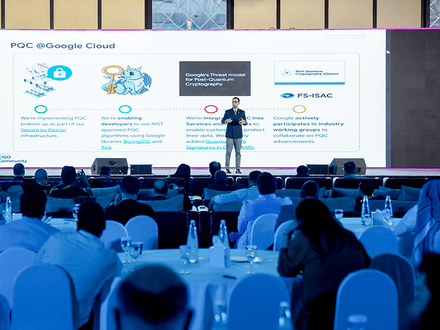
A glimpse of the atmosphere from previous editions — keynotes, the exhibition floor and the networking that defines World AI Technology Expo Dubai.





Key takeaways
- Decompose every AI feature into layers (base model, data/retrieval, orchestration, evaluation, application) and decide build or buy for each layer separately rather than as one bet.
- Buy commodity, rapidly improving layers like foundation models; build the layers that encode your proprietary data, domain workflows and quality bar, because those are the real moat.
- The true cost of custom AI is the ongoing lifecycle — evaluation, monitoring, retraining, on-call and security — not the initial build, so only build what you can operate indefinitely.
- The hybrid pattern (bought model, built retrieval and evaluation, assembled open-source glue) usually beats both pure-build and pure-buy extremes.
- Run vendor selection as an engineering evaluation on your own held-out data, and score candidates on latency, cost at scale, data handling, portability and viability — not vendor benchmarks.
- Favour reversible decisions under uncertainty, keep clean seams so components stay swappable, and write down the reasoning behind each choice.
Frequently asked questions
For general-purpose capability, almost every enterprise should buy access to hosted foundation models rather than build their own, because training costs and the pace of improvement make custom base models uneconomical for all but a handful of organisations. Reserve building for the layers that encode your proprietary data and domain, such as retrieval, fine-tuning on your own data, orchestration and evaluation. In practice the right answer is a hybrid: buy the commodity model and build the differentiating layers around it.
Score the capability on differentiation, total cost of ownership, time to value, control requirements and available talent. Build where the capability is a durable differentiator, your data is unusual, or control constraints forbid external dependencies; buy where a mature market exists and the capability is merely table stakes. If the forces conflict, prefer the reversible option and revisit once you understand the problem better.
The initial build is usually the smallest cost. The lasting burden is the operating lifecycle: evaluation harnesses, quality and drift monitoring, periodic retraining and release pipelines, security patching, and dedicated on-call ownership. If you cannot staff that lifecycle for the long term, a custom model becomes a liability, and buying while you validate the use case is the more mature choice.
Treat it as an engineering evaluation, not a procurement slide comparison. Build a held-out dataset from your real workload and run every candidate through the same evaluation harness on your data, then assess latency at your percentiles, pricing at projected scale, data handling and retention, portability, and vendor viability. Always require a time-boxed proof of concept on your own data before committing.