
Few questions make an engineering leader more uncomfortable than "what is the AI ROI on this?" After a year of pilots, model evaluations and enthusiastic demos, the finance team wants a number, and most teams struggle to produce one that survives scrutiny. The difficulty is not arithmetic. It is that AI systems create value in diffuse, probabilistic and often delayed ways: a support assistant that deflects a fraction of tickets, a retrieval system that shaves minutes off a knowledge worker's day, a forecasting model that quietly reduces write-offs. Measuring AI return on investment means attributing those scattered effects back to a specific investment, net of costs that are far larger and messier than the model API bill alone.
This article lays out a practical framework for measuring AI value that an ML engineer, data scientist or CTO can actually operationalise. We will treat ROI not as a single vanity figure produced at the end of a project, but as an instrumented discipline you design in from day one: a clear baseline, a defensible attribution model, fully loaded costs, and a small set of AI project metrics you track continuously. The goal is a number you can defend in a budget review, and, just as importantly, a process that tells you early when a project is not going to pay back so you can kill it before it consumes another two quarters.
Why AI ROI resists conventional measurement
Traditional software ROI is comparatively tractable because the deliverable is deterministic: you build a feature, it either works or it does not, and the cost curve flattens after launch. AI breaks both assumptions. Outputs are probabilistic, so value depends on an accuracy or acceptance rate that drifts over time. Costs do not flatten either; inference, monitoring, evaluation and periodic retraining make the running cost a permanent line item rather than a one-off capital expense. An honest AI business case therefore has to model an ongoing operating cost against a benefit stream that itself decays or improves depending on how well you maintain the system.
There is also a deep attribution problem. When revenue rises or handling time falls after you ship a model, dozens of other things changed too: seasonality, a pricing tweak, a reorganised team, a competitor's stumble. Without a deliberate measurement design, you cannot separate the model's contribution from the noise, and any ROI figure you quote is really a guess dressed up as a metric. The organisations that measure AI value credibly are the ones that decided, before writing code, exactly how they would isolate the effect.
Finally, much AI value is defensive or optional rather than immediately cash-generating. A model that flags anomalous transactions might prevent a loss that, by definition, never appears in the ledger. A retrieval assistant might not cut headcount but raise the ceiling on what a fixed team can handle. These are real returns, but they demand a valuation method, and pretending they are hard cash savings is the fastest way to lose credibility with a sceptical finance partner.
Establish the baseline before you build anything
ROI is a comparison, and a comparison needs a control. The single most common reason AI return on investment cannot be proven later is that nobody measured the world before the model arrived. Before development starts, quantify the current-state metric the project is supposed to move: average handle time per ticket, cost per document reviewed, forecast error, conversion rate, hours spent on a manual task. Capture it with enough granularity and history to understand its natural variance, because a benefit smaller than the week-to-week noise is not a benefit you can claim.
Wherever the design allows, preserve a genuine control group rather than relying on before-and-after comparison. A randomised holdout, where a slice of users, tickets or transactions continues without the AI system, is the gold standard because it neutralises seasonality and concurrent changes. Where randomisation is impossible, a staggered rollout across teams or regions gives you a difference-in-differences estimate that is far more defensible than a naked pre/post number. The engineering cost of maintaining a holdout is real, but it buys you the one thing finance trusts: a counterfactual.
Write the baseline and the target down as a hypothesis before you start: "we expect to reduce average handle time from X to Y within N months for this segment." This converts a vague aspiration into a testable claim, and it forces an early, honest conversation about whether the expected movement is even large enough to justify the build.
Count the full cost, not just the model bill
Most AI ROI calculations are wrong on the cost side long before they are wrong on the benefit side, because teams count the visible inference spend and ignore everything around it. The token or API cost of a large language model is frequently the smallest line in a fully loaded total cost of ownership. The larger costs are human and durable: data engineering to build and maintain pipelines, labelling and evaluation-set curation, the ML and platform engineers' time, security and compliance review, and the ongoing cost of monitoring and incident response once the system is in production.
Build the cost model in two buckets: one-off build costs and recurring run costs. Build costs include discovery, data preparation, model selection, prompt or fine-tuning work, integration and initial evaluation. Run costs include inference, vector database and storage, observability tooling, periodic re-evaluation, retraining or prompt maintenance as upstream data and foundation models change, and the fraction of an engineer's time permanently allocated to keeping the thing healthy. A useful discipline is to express run cost per unit of work, for example cost per resolved ticket, so it scales transparently with volume.
Do not forget the second-order costs that surface after launch. Handling model errors often requires a human review layer, and that review capacity is a cost that grows with usage. Retrieval systems need their knowledge base curated or they decay. Guardrails, red-teaming and re-validation recur every time you change a model version. A credible AI business case names these explicitly, because a reviewer who spots one obvious omitted cost will rightly distrust every other number in your model.
Past Speakers
Previous editions of World AI Technology Expo Dubai have brought together senior AI practitioners and leaders. Speakers below are shown for reference from previous editions; the 2027 line-up will be announced ahead of the event.

Nitin Akarte

Akshay Singh Dalal

James Hunter

Abhinav Sharma
Translate model metrics into business value
Engineers instinctively report accuracy, F1, latency or a win rate from an offline evaluation. None of those are ROI. The essential bridge is a defensible chain from a model metric to a business metric to money. That chain usually has three links: model quality (how often the system produces a usable output), adoption (how often humans actually use that output), and unit value (what one good outcome is worth in time, cost or revenue). Break the chain at any link and the ROI evaporates, which is why a 95% accurate model that nobody trusts enough to use returns nothing.
Work the chain with concrete numbers. Suppose a drafting assistant produces an acceptable first draft 70% of the time, is invoked on 60% of eligible tasks, and each accepted draft saves fifteen minutes of a role costing a known hourly rate. Multiply through and you get an hours-saved figure per period, which you then convert to money using a fully loaded labour rate. The multiplicative structure is the point: it shows exactly which lever, quality, adoption or coverage, most limits your return, and it usually reveals that adoption, not model accuracy, is the binding constraint.
Be conservative and explicit about how saved time becomes value. Time saved is only cash if it is either redeployed to revenue-generating work or removed from the cost base; ten minutes returned to a knowledge worker who simply absorbs it into their day is a soft benefit, not a hard saving. State that assumption openly and, where you can, show the downstream evidence, such as increased throughput per person or a reduction in overtime, rather than asserting the conversion by fiat.
Choose the right financial frame for the decision
A single ROI percentage hides more than it reveals, so pick the financial frame that matches the decision the number will inform. For a go/no-go on a discrete project, payback period, the time until cumulative benefits exceed cumulative costs, is intuitive and punishes projects with heavy ongoing run costs. For comparing competing investments over a multi-year horizon, net present value discounts future benefits appropriately and captures the fact that AI run costs continue indefinitely. A simple ROI ratio is fine for a quick screen but should never be the only figure you present.
Model at least three scenarios rather than a point estimate. A conservative case with low adoption and higher run costs, a base case, and an optimistic case give decision-makers a range and expose the assumptions that matter most. Sensitivity analysis, showing how ROI moves as adoption or model cost changes, is more persuasive than a single confident number, because it demonstrates you understand where the risk lives. It also protects you: if the project underperforms, you already flagged the scenario, rather than having promised the optimistic case as fact.
Match the horizon to the asset. AI systems carry a maintenance tail, so a one-year window often flatters a project by ignoring next year's retraining and re-validation costs, while a five-year window may be fantasy given how fast foundation models and tooling change. A two-to-three-year horizon is usually the honest middle ground, long enough to capture recurring costs and adoption ramp, short enough that the underlying technology assumptions remain plausible.
Instrument the system to measure value continuously
ROI should be a live dashboard, not a slide produced once to secure funding. Design the measurement into the system so that adoption, acceptance rate, unit cost and the target business metric are captured automatically in production. This is where experiment-tracking tools, standard observability stacks and event logging earn their keep: they let you tie a specific model version to its downstream business effect, and they surface regressions in value before they show up as an angry stakeholder. Treat the value metric with the same rigour you give latency or error rates.
Continuous instrumentation also lets you attribute value at the version level, which matters because AI systems change constantly. When you swap an underlying foundation model, adjust retrieval, or tighten a guardrail, the acceptance rate and unit economics shift, and you want to know immediately whether the change added or destroyed value. A logged link from model version to business outcome turns every deployment into a small experiment and makes the eventual ROI narrative auditable rather than anecdotal.
This is also the layer where a broader community helps: the practical patterns for value instrumentation, holdout design and cost attribution are still maturing, and comparing notes with peers who have shipped similar systems saves months. Practitioners wrestling with exactly these measurement questions can meet peers, vendors and investors and go deeper at World AI Technology Expo Dubai (07-09 April 2027, Millennium Plaza Downtown Hotel, Dubai), where the operational side of enterprise AI adoption tends to get more airtime than the demos.
Account for risk, second-order effects and value that is not cash
A complete AI ROI picture includes costs and benefits that never appear as an invoice. On the risk side, probabilistic systems can produce confidently wrong outputs, and the expected cost of those errors, weighted by their likelihood and the damage a bad output can do, belongs in your model. A system operating in a low-stakes internal workflow can tolerate a higher error rate cheaply; the same error rate in a customer-facing or decision-critical path carries a much larger expected cost that can erase the headline benefit.
On the upside, capture strategic and optionality value without inflating it into fantasy. Building an evaluation harness, a clean data pipeline and a deployment path for one project lowers the cost of the next ten, which is a real return even if it is hard to price. Improvements in speed, consistency and employee experience can raise capacity and retention. Name these benefits, quantify the ones you honestly can, and clearly label the rest as qualitative rather than smuggling them into the cash figure.
Guard against the failure modes that quietly destroy returns after launch: value decay as a knowledge base goes stale, adoption that spikes during a novelty period and then collapses, and scope creep that grows run costs faster than benefits. The discipline is to keep measuring after the funding is won. Many projects that looked positive at launch turn negative within a year not because the model degraded, but because usage never reached the level the business case assumed, and only continuous measurement catches that in time to act.
Inside the event
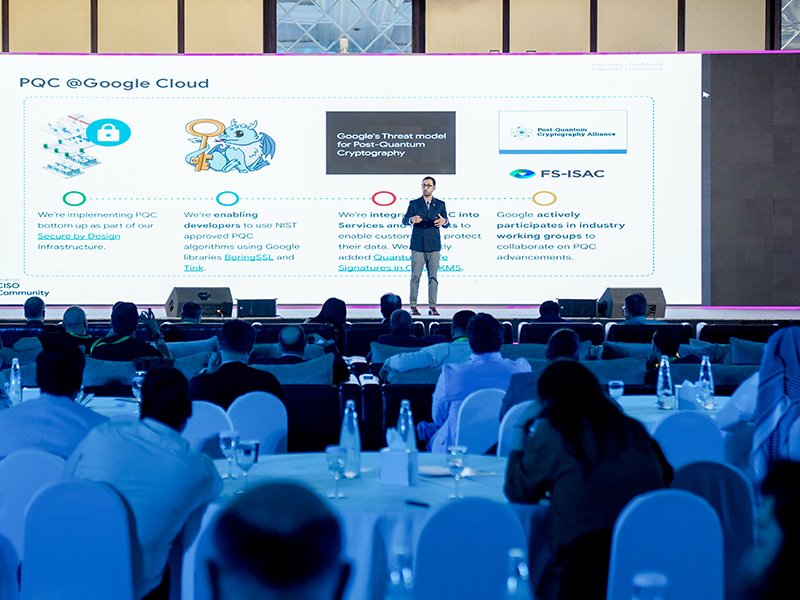
A glimpse of the atmosphere from previous editions — keynotes, the exhibition floor and the networking that defines World AI Technology Expo Dubai.






Key takeaways
- Design ROI measurement before you build: capture a baseline and, ideally, a randomised holdout, or you will never separate the model's effect from concurrent change.
- The model API bill is usually the smallest cost; fully loaded ROI must include data engineering, evaluation, monitoring, human review and ongoing retraining.
- Bridge model metrics to money through a three-link chain of quality, adoption and unit value; adoption is typically the binding constraint, not accuracy.
- Present a range, not a point estimate: use payback period or NPV over a two-to-three-year horizon with conservative, base and optimistic scenarios.
- Instrument value continuously and attribute it at the model-version level so every deployment becomes a measurable experiment.
- Include the expected cost of errors and clearly labelled qualitative benefits like reusable infrastructure and optionality, without inflating the cash figure.
Frequently asked questions
Estimate net benefit by comparing a business metric against a pre-established baseline or control group, then divide by the fully loaded cost of building and running the system. The benefit is derived by chaining model quality, adoption rate and the value of a single good outcome, while the cost includes data, engineering, evaluation, monitoring and ongoing retraining, not just inference spend. Express the result as payback period or net present value over a two-to-three-year horizon.
AI outputs are probabilistic and their value is diffuse, delayed and easily confounded by seasonality, pricing changes and other concurrent factors. Without a baseline and ideally a control group established before launch, you cannot isolate the model's contribution from that noise. Costs are also recurring rather than one-off, so a benefit that looked positive at launch can turn negative as run costs accumulate and adoption falls short.
Track a small set that spans the chain from model to money: acceptance or accuracy rate, adoption and coverage across eligible work, unit cost per outcome, and the target business metric such as handle time, forecast error or conversion. Instrument these in production and attribute them at the model-version level so you can see immediately when a change adds or destroys value.
It depends on the run-cost profile, but because AI systems carry a permanent maintenance tail, projects that cannot pay back within roughly twelve to twenty-four months deserve hard scrutiny. Use payback period to screen out projects with heavy ongoing costs, and net present value over a two-to-three-year window to compare competing investments fairly.
Only when that saved time is genuinely redeployed to revenue-generating work or removed from the cost base. Minutes returned to a worker who simply absorbs them into their day are a soft benefit, not a hard cash saving. State the conversion assumption explicitly and, where possible, evidence it with downstream measures like higher throughput per person or reduced overtime.