
Most enterprise AI programmes do not fail because the models are bad. They fail because the people who were supposed to use them quietly went back to their old workflows. You can stand up a capable internal assistant on top of foundation models, wire it into your knowledge base with a vector database, and still watch weekly active usage collapse within a month. This is why AI change management has become the decisive discipline for engineering leaders and founders in 2026: the hard part is no longer building the tool, it is getting a sceptical, busy, and sometimes anxious workforce to trust it, learn it, and rebuild their habits around it. The gap between a working demo and durable behaviour change is where most of the value leaks out.
Change management for AI is different from the classic software rollout you may have run before. The tools are probabilistic rather than deterministic, so users cannot rely on the same button always doing the same thing. The capabilities shift underneath you as models are upgraded, meaning training is never truly finished. And there is a genuine emotional layer: people worry, reasonably, about what automation means for their roles. Treating AI adoption in the workplace as a pure tooling or IT problem is the single most common mistake. It is a socio-technical problem, and it needs a plan that gives equal weight to the software, the incentives, and the culture around it.
Why AI adoption stalls even when the technology works
The most painful failure mode is the successful pilot that never scales. A motivated team builds something genuinely useful, a handful of enthusiasts love it, leadership celebrates the win, and then adoption plateaus at those same early enthusiasts. The tool works; the diffusion does not. This happens because pilots are run by self-selected volunteers who tolerate rough edges, while the broader organisation is full of people with no slack in their day and no reason to trade a familiar workflow for an uncertain one.
There are a few recurring culprits. Friction is the first: if invoking the tool takes more clicks, more context-switching, or more prompt-wrangling than the manual path, rational people will avoid it. Trust is the second: one confidently wrong answer early in someone's experience can poison their view for months, especially for probabilistic systems where users have no mental model for when to doubt the output. The third is the absence of a clear job to be done. 'We rolled out an AI assistant' is not a use case; 'draft the first response to inbound support tickets so agents can edit rather than write from scratch' is. Without that specificity, the tool becomes a solution looking for a problem, and usage never compounds.
A useful diagnostic is to separate reach from depth. Reach is how many people have tried the tool at least once; depth is how many have folded it into their weekly routine. Vanity metrics inflate reach. Real driving AI adoption shows up in depth, and depth only grows when friction is low, trust is earned incrementally, and the tool is aimed at a task people actually dread doing by hand.
Start with jobs to be done, not with the tool
The strongest adoption programmes invert the usual order. Instead of deploying a general-purpose assistant and hoping people find uses, they begin by mapping the specific, high-friction tasks where a large language model or an agent framework can measurably help, then shape the rollout around those. Interview a cross-section of the team and ask a blunt question: what is the most tedious, repetitive, or cognitively draining part of your week? The answers point you at the beachhead use cases where value is obvious and resistance is lowest.
Prioritise tasks with three properties. They should be frequent, so the habit has room to form. They should be tolerant of a human-in-the-loop review, so an occasional wrong answer is caught cheaply rather than causing damage. And they should have a clear before-and-after, so people can feel the time saved. Drafting, summarising, triaging, and first-pass code review tend to fit; irreversible decisions or anything requiring guaranteed correctness usually do not, at least not without strong guardrails.
Deliberately choose the shape of the interaction, too. A tool that drafts something for a human to approve is far easier to adopt than one that acts autonomously, because it preserves the user's sense of control and lets trust build through repeated small confirmations. Over time, as confidence grows and you have data on error rates, you can widen the autonomy. Trying to jump straight to full automation is the surest way to trigger the resistance that kills adoption.
Map the stakeholders and their real incentives
Every rollout has at least four constituencies, and each needs a different message. Executives care about measurable outcomes and risk exposure. Middle managers, who are often the true make-or-break layer, care about whether this makes their team's numbers better or worse and whether it creates work for them. Individual contributors care about whether it makes their day easier or threatens their standing. And a sceptical minority will actively look for reasons it fails; ignoring them is a mistake, because their objections are usually the ones that surface real problems.
Middle managers deserve special attention. In practice they are where AI change management most often dies, because a manager who is neutral or quietly hostile can starve a tool of adoption without ever saying no out loud. Give them something concrete: a dashboard that shows their team's time saved, permission to protect learning time, and recognition when their team leads on usage. Make the new behaviour good for their numbers, not a tax on them.
Be honest about the incentive that everyone is thinking about and few will voice: fear that the tool exists to reduce headcount. If that fear is founded, people will withhold the very process knowledge that makes the tool work, and you will get quiet sabotage. If it is not founded, say so clearly and repeatedly, and back it with actions, such as reinvesting freed-up time into higher-value work. You cannot build genuine AI culture on top of an unspoken threat.
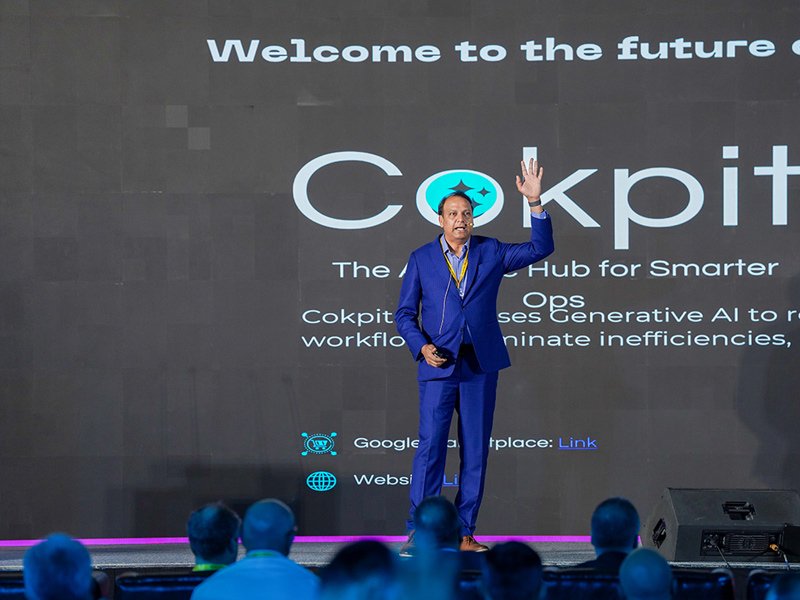
Past Speakers
Previous editions of World AI Technology Expo Dubai have brought together senior AI practitioners and leaders. Speakers below are shown for reference from previous editions; the 2027 line-up will be announced ahead of the event.

Nitin Akarte

Akshay Singh Dalal

James Hunter

Abhinav Sharma
Design employee AI training that changes behaviour, not attendance
Most employee AI training fails the moment it becomes a one-off webinar that people half-watch and forget. Adults learn tools by using them on their own real work, with fast feedback, not by watching a slide deck. Structure training around the actual tasks you identified, and have people bring a live piece of their own work into the session so they leave having already done something useful. The goal is a first win inside the first sitting.
Teach mental models, not button sequences. Because these systems are probabilistic and change over time, memorising exact steps is brittle. Instead, teach people how to frame a good request, how to give the tool the context it needs, how to recognise when an answer is likely to be unreliable, and how to verify before they rely on it. Calibrated scepticism, the habit of trusting the tool for some things and double-checking others, is the single most valuable skill you can instil, and it is what separates people who get lasting value from people who either over-trust and get burned or under-trust and give up.
Segment by need rather than running one generic course. A short literacy session for everyone, deeper role-specific workshops for heavy users, and an ongoing channel for questions and shared prompts will beat a single mandatory training every time. Appoint and support internal champions embedded in each team; peer-to-peer help, from someone who does the same job, spreads competence far faster than any central enablement function. Budget for this continuously, because the models and features will keep moving and a course written a year ago is already stale.
Lower friction and build trust into the tool itself
The best change management is often engineering. Every point of friction you remove is worth more than any amount of encouragement. Meet people inside the tools they already live in rather than forcing them to a new destination; an assistant that appears where the work already happens will always beat one that requires a separate tab and a context switch. Pre-load context so users are not forced to become expert prompt engineers just to get a decent result, and provide task-specific templates for the common jobs.
Trust is a product feature, not a training topic. Show sources and citations so people can verify claims quickly, especially for anything retrieved from your own knowledge base. Make the system's confidence and its limits visible, and make it easy to see and correct when it is wrong. Fast, visible correction loops turn errors from trust-destroying events into a normal, manageable part of the workflow. When a user can see why the tool said something and can fix it in one step, a wrong answer becomes far less damaging.
Close the loop with feedback that actually feeds back. Give users a frictionless way to flag bad outputs, and route those signals to whoever owns the tool through your experiment-tracking and evaluation setup. When people see their feedback lead to visible improvement, they shift from passive users to co-owners, and that sense of ownership is one of the strongest engines of sustained adoption you can build.
Measure adoption honestly and iterate in public
You cannot manage what you refuse to measure honestly. Move past registered users and licences activated, which tell you almost nothing, and track depth: weekly active users on real tasks, retention curves over the weeks after onboarding, and where in the funnel people drop off. A steep drop between first use and second week is the clearest signal that either friction or trust is failing, and it tells you where to dig.
Pair the quantitative picture with qualitative signal. Sit with a few users and watch them try to use the tool on real work; you will learn more in three such sessions than from a month of dashboards. The moments where someone hesitates, mutters, or reaches for the old way are pure gold, because they show you exactly where the experience breaks. Feed those observations straight back into the roadmap.
Iterate visibly, and tell people when their input changed something. 'You asked for this, we shipped it' is one of the most powerful phrases in the whole programme, because it proves the feedback loop is real. Publish a simple changelog, celebrate teams that are getting value, and share concrete examples of time saved. Making progress visible turns adoption from a top-down mandate into a shared story the organisation is telling about itself.
Govern without strangling, and build durable AI culture
Governance and adoption are usually framed as opposites, but they reinforce each other when done well. People adopt tools they trust, and clear guardrails are part of what makes a tool trustworthy. Give the organisation plain guidance on what data may go where, which tasks require a human to sign off, and how to handle sensitive information. Ambiguity is what actually slows people down; a well-understood boundary lets them move quickly inside it rather than freezing at every decision. Keep the rules proportionate, because guidance so heavy that people route around it is worse than none.
Durable AI culture is the goal state, and it is built from small, repeated signals more than from grand announcements. Leaders who visibly use the tools themselves, talk openly about where the tools helped and where they failed, and treat learning time as legitimate work send a stronger message than any policy document. Make it safe to experiment and safe to report when something did not work; a culture that punishes honest failure will get silence and stagnation instead of learning. This is exactly the kind of hard-won, practical experience that professionals compare notes on at events like the World AI Technology Expo Dubai (07-09 April 2027, Millennium Plaza Downtown Hotel, Dubai), where teams, vendors and investors trade what has actually worked rather than what looks good in a deck.
Finally, treat this as an ongoing capability rather than a project with an end date. The tools will keep changing, new use cases will keep appearing, and the people who were sceptical last year may become your strongest advocates once they have felt the value. Sustained adoption comes from a standing rhythm of finding the next high-value job to be done, training people on it, lowering the friction, measuring honestly, and improving in public. Do that consistently and adoption stops being something you push and becomes something the organisation pulls.
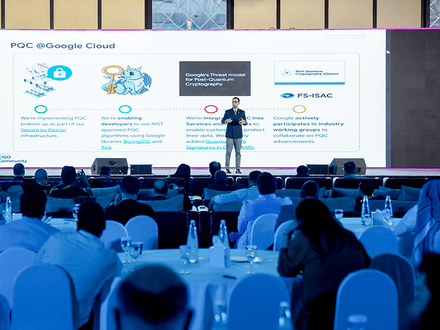
Inside the event
A glimpse of the atmosphere from previous editions — keynotes, the exhibition floor and the networking that defines World AI Technology Expo Dubai.





Key takeaways
- AI adoption stalls on friction, trust and unclear use cases, not on model quality; measure depth of weekly use, not headline reach.
- Start from the tedious, frequent, human-reviewable tasks people already dread, and shape rollout around those jobs to be done rather than deploying a generic assistant.
- Middle managers make or break adoption; align the new behaviour with their team's numbers and protect learning time.
- Train on people's real work and teach calibrated scepticism and good context-setting, not memorised button sequences, because the models keep changing.
- Build trust into the product with visible sources, easy correction loops and low friction; the best change management is often engineering.
- Govern with clear, proportionate guardrails and model the behaviour from the top to build a durable AI culture that pulls adoption rather than pushing it.
Frequently asked questions
AI change management is the practice of getting teams to trust, learn and durably adopt AI tools, treating rollout as a socio-technical problem rather than a purely technical one. It combines tooling, training, incentives and culture, and differs from classic software rollout because AI systems are probabilistic, evolve over time, and raise genuine concerns about people's roles.
Adoption usually stalls because of friction, broken trust, or unclear use cases rather than poor model quality. If the tool takes more effort than the manual path, gives an early confidently wrong answer, or is not aimed at a task people actually need help with, busy users rationally revert to their old workflows.
Begin with specific high-friction tasks people already dread, keep a human in the loop so errors are cheap, and remove friction by embedding the tool where work already happens. Then train on real work, measure weekly active use rather than sign-ups, and iterate visibly so people see their feedback change the product.
Effective training uses people's real tasks and teaches mental models rather than fixed steps: how to frame requests, supply context, spot unreliable answers and verify before relying on output. Because tools change constantly, treat training as an ongoing capability with role-specific workshops and internal champions, not a one-off webinar.
Track depth over reach: weekly active users on real tasks, retention in the weeks after onboarding, and where users drop off, backed by watching a few people use the tool on live work. A sharp fall between first use and the second week signals a friction or trust problem you need to fix.