
Every enterprise now runs AI in production somewhere, whether leadership has sanctioned it or not. Marketing teams draft copy with large language models, analysts pipe sensitive data into cloud platforms, and engineering groups wire foundation models into customer-facing products. What most organisations lack is not enthusiasm but structure: a coherent AI governance framework that defines who decides what, which risks matter, and how a model gets from a notebook to a customer without anyone quietly betting the company's reputation on an untested prompt. Governance is the connective tissue between ambition and accountability, and getting it right is now a core engineering competency rather than a compliance afterthought.
The instinct among many technical leaders is to treat governance as bureaucracy that slows delivery. In practice, the opposite is true when it is designed well. A good framework removes ambiguity, so teams stop relitigating the same questions on every project, and it creates fast lanes for low-risk work while reserving scrutiny for the genuinely consequential. This article walks through the frameworks and building blocks that matter for enterprise AI adoption, from risk tiering and model documentation to human oversight and incident response, with an emphasis on decisions you can actually implement rather than principles you can only nod along to.
What an AI governance framework actually covers
An AI governance framework is the set of policies, roles, processes and technical controls that determine how your organisation builds, buys, deploys and retires AI systems. It is broader than model risk management alone, because it has to account for data provenance, third-party dependencies, human oversight, monitoring, and the organisational question of who is accountable when something goes wrong. Think of it as an operating system: individual projects are applications, and the framework is the scheduler, permissions model and logging layer they all run on.
The most useful frameworks share a common spine even when the vocabulary differs. They map AI systems to risk categories, they require documentation proportional to that risk, they define human accountability at each stage of the lifecycle, and they mandate ongoing monitoring rather than one-time sign-off. Around this spine, several widely referenced reference models have emerged, notably a risk-management-function approach organised around governing, mapping, measuring and managing risk, and a management-system standard that treats AI oversight the way quality or information-security management systems are treated: as an auditable, continuously improving process.
You do not need to adopt one of these wholesale to benefit. The pragmatic move is to borrow their structure, translate it into your own engineering reality, and resist the temptation to write a fifty-page policy nobody reads. A framework that fits on a few pages and is genuinely enforced beats an exhaustive document that lives in a wiki no one opens.
Start with risk tiering, not principles
The single highest-leverage decision in AI governance is how you classify risk, because everything else scales from it. A blanket policy that treats an internal meeting-summary tool the same as an automated system influencing customer credit or safety will either strangle harmless work or wave through dangerous work. Effective ai risk management starts by sorting systems into tiers based on the consequence of failure and the degree of autonomy the system holds.
A workable three-tier scheme covers most enterprises. Minimal-risk systems assist a human who reviews every output, such as drafting tools or code assistants; these need light-touch controls and fast approval. Elevated-risk systems make or materially shape decisions about people, money or physical operations but keep a human in the loop; these warrant documented testing, bias evaluation and named ownership. High-risk systems act autonomously or affect rights, safety or significant financial exposure; these demand formal review, rollback plans and sign-off from someone senior enough to feel the consequences.
The trap to avoid is tiering by technology rather than by impact. Whether a system uses a foundation model, a classical gradient-boosted model or a rules engine is far less relevant than what happens when it is wrong. Tie the tier to the decision the system influences, document why each system sits where it does, and revisit the classification whenever its scope expands, because a tool that quietly graduates from drafting to deciding has changed its risk profile even if not a line of its code has changed.
Build responsible AI controls into the lifecycle, not around it
Governance fails when it lives in a separate approval process bolted onto the end of development. By then the architecture is fixed, the data pipelines are built, and any objection reads as an obstruction. Responsible AI works when its controls are embedded in the existing software lifecycle, expressed as gates in the same pipelines engineers already use rather than as a parallel paperwork exercise.
Concretely, this means treating governance artefacts as code-adjacent deliverables. Data-sourcing decisions, evaluation results, known limitations and intended-use statements should live in version control alongside the model, updated through pull requests and reviewed like any other change. Evaluation suites for accuracy, robustness and bias should run in continuous integration, with thresholds that block promotion when a model regresses. Access to sensitive training data should be governed by the same identity and permissions controls as the rest of your infrastructure, not by a spreadsheet of who was granted what.
This lifecycle framing also clarifies ownership. Each AI system should have a named technical owner responsible for its behaviour and a named business owner accountable for its use, and both names should be attached before the system reaches production. When an incident occurs at 2am, the value of governance is measured entirely by how quickly the right person can be found, not by how elegant the policy document reads.
Human oversight and meaningful accountability
Ai oversight is easy to claim and hard to make real. Many organisations write human-in-the-loop into their policies and then design workflows where the human rubber-stamps hundreds of outputs an hour, which is oversight in name only. Meaningful oversight requires that the reviewer has the context, the time and the authority to actually intervene, and that the system is designed to make intervention easy rather than performative.
There are three broad oversight postures, and choosing the right one is a design decision. Human-in-the-loop means a person approves each consequential output before it takes effect, appropriate for high-stakes, lower-volume decisions. Human-on-the-loop means the system acts autonomously but a person monitors aggregate behaviour and can halt it, suited to high-volume operations where per-item review is impractical. Human-in-command means people retain the authority to switch the system off entirely and are structurally positioned to do so. The failure mode is picking a posture for compliance optics rather than for the actual decision volume and stakes.
Accountability also has to survive the arrival of agentic systems, which increasingly chain tool calls, query vector databases and take actions with limited step-by-step supervision. Here oversight shifts from reviewing individual outputs to constraining what the agent is permitted to do: scoping its tool access, capping the spend or actions it can take autonomously, and logging every step so a human can reconstruct and, if necessary, reverse what happened. An agent framework without hard limits on its authority is not governed, however good its prompt.

Past Speakers
Previous editions of World AI Technology Expo Dubai have brought together senior AI practitioners and leaders. Speakers below are shown for reference from previous editions; the 2027 line-up will be announced ahead of the event.

Nitin Akarte

Akshay Singh Dalal

James Hunter

Abhinav Sharma
Documentation, transparency and the audit trail
Trustworthy AI is inseparable from being able to explain, after the fact, what a system did and why it was allowed to do it. This does not require exposing model internals; it requires a disciplined paper trail. For each system, capture its intended purpose and explicitly out-of-scope uses, the provenance and known limitations of its data, the evaluations it passed and the ones it failed, and the human owners accountable for it. These artefacts are what let you answer a regulator, a customer or your own board without a frantic archaeology exercise.
The overhead is real, so calibrate it to risk. A minimal-risk drafting assistant might need a single-page intended-use note; a high-risk decisioning system needs a living record updated at every material change. The goal is proportionality: enough documentation that a competent engineer who has never seen the system can understand its risks and boundaries, and no more. Templates help enormously here, because they turn documentation from a blank-page chore into a fill-in-the-structure task that engineers will actually complete.
Logging deserves special mention because it is the difference between an incident you can investigate and one you can only apologise for. Capture inputs, outputs, model versions, prompt versions and the human decisions around them, subject to your data-retention and privacy obligations. When something goes wrong, the questions will be what the system was told, what it produced, which version was live and who approved it, and if you cannot answer those from logs, no framework on paper will save you.
Governing third-party and foundation models
Most enterprises consume far more AI than they build, calling hosted large language models and foundation models through APIs and embedding third-party components throughout their stack. This shifts a large part of governance from model development to vendor and dependency management, because you cannot inspect the training data or internals of a model you did not build. Your controls have to operate at the boundary instead.
Practically, treat every external model as an untrusted dependency with a defined contract. Pin versions so a silent upstream update cannot change behaviour beneath you, and maintain a fallback plan for when a provider deprecates a model or changes its terms, because model lifecycles are short and provider decisions are outside your control. Scrutinise data-handling commitments before sending anything sensitive to a hosted endpoint, and where the risk warrants it, keep sensitive workloads on models you can run within your own boundary. Maintain an inventory of every external AI service in use, because you cannot govern dependencies you have not catalogued, and shadow AI usage is the norm rather than the exception in most large organisations.
The same discipline applies to the components around the model. Retrieval pipelines built on vector databases can leak or surface data the model was never meant to expose, and orchestration layers can introduce failure modes no single model exhibits. Govern the system, not just the model at its centre.
Operationalise monitoring and incident response
A model that passed every test at launch will drift, because the world it was trained on keeps moving. Governance that ends at deployment is governance that expires the moment reality diverges from the training distribution. Continuous monitoring closes this gap: track input distributions for drift, output quality against sampled ground truth, and operational signals such as latency, cost and refusal rates that often reveal problems before accuracy metrics do.
Set thresholds that trigger action rather than merely populate a dashboard nobody watches. Define, in advance, what degradation forces a rollback, who is authorised to pull the trigger, and how quickly they must act. The most valuable single artefact here is a rehearsed rollback path, because the ability to revert a misbehaving model to a known-good version in minutes is worth more than any amount of pre-launch analysis. Teams that have never practised a rollback discover under pressure that they cannot actually perform one.
Finally, treat AI incidents as first-class events with the same seriousness as security incidents. Maintain a defined response process, a way for both staff and users to report harmful or anomalous behaviour, and a blameless post-incident review that feeds lessons back into your risk tiering and controls. The organisations that navigate AI adoption well are not the ones that never have incidents; they are the ones that detect, contain and learn from them fastest. Practitioners wrestling with exactly these operational questions will find rich ground to compare notes with peers, vendors and investors at the World AI Technology Expo Dubai (07-09 April 2027, Millennium Plaza Downtown Hotel, Dubai), where enterprise governance has moved firmly onto the main agenda.
Making governance stick without slowing delivery
The hardest part of AI governance is not designing the framework but sustaining it once the launch enthusiasm fades. Frameworks decay when they impose friction disproportionate to risk, so the design principle that keeps them alive is proportionality: minimal-risk work should clear governance in hours through self-service checklists and automated gates, freeing scarce human review for the high-risk systems that genuinely need it. If your lightest-touch tier still requires a committee, engineers will route around governance entirely, and shadow AI will flourish.
Ownership structure matters as much as process. A small, cross-functional group spanning engineering, data, security and the business tends to work better than either a single centralised gatekeeper, which becomes a bottleneck, or fully distributed ownership, which becomes inconsistent. This group should own the framework itself, curate the templates and evaluation suites teams reuse, and adjudicate the genuinely hard cases, while day-to-day decisions stay with the teams building the systems.
Treat the framework as a product with its own version history and feedback loop. Measure whether it is working by tracking how long approvals take, how many systems are properly inventoried and documented, and how quickly incidents are resolved, then tune it against those signals. A living AI governance framework that engineers trust and use beats a pristine one that exists only to be shown to auditors, and the difference between the two is almost entirely a matter of whether it makes doing the right thing the easy thing.
Inside the event
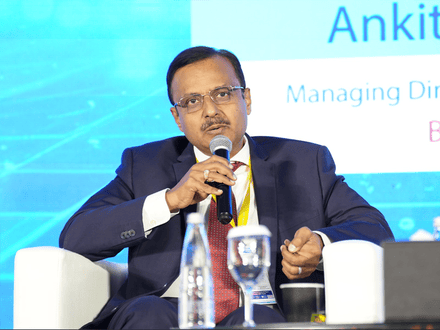
A glimpse of the atmosphere from previous editions — keynotes, the exhibition floor and the networking that defines World AI Technology Expo Dubai.





Key takeaways
- An AI governance framework is an operating system for AI work: it defines roles, risk tiers, documentation, oversight and monitoring, not just principles.
- Risk tiering by impact and autonomy is the highest-leverage decision; classify systems by the consequence of failure, not the technology they use.
- Embed responsible AI controls as gates in existing pipelines and version control rather than a parallel approval process bolted on at the end.
- Meaningful human oversight requires context, time and authority to intervene, plus hard limits on what agentic systems are permitted to do autonomously.
- Treat every external foundation model as an untrusted dependency: pin versions, catalogue usage, plan fallbacks and scrutinise data handling.
- Governance does not end at deployment; continuous monitoring, rehearsed rollbacks and blameless incident review are what keep it real.
Frequently asked questions
An AI governance framework is the set of policies, roles, processes and technical controls that determine how an organisation builds, buys, deploys, monitors and retires AI systems. It maps systems to risk tiers, requires documentation proportional to that risk, assigns human accountability across the lifecycle, and mandates ongoing monitoring. In practice it functions as the operating layer that all individual AI projects run on.
AI risk management is one component of governance, focused on identifying, measuring and mitigating the risks a specific system poses. AI governance is broader: it also covers organisational roles and accountability, data provenance, third-party dependencies, human oversight design, monitoring and incident response. Risk management answers what could go wrong with a model; governance answers how the whole organisation decides, builds and stays accountable.
Start by inventorying the AI systems already in use, including unofficial shadow usage, then classify each into risk tiers based on the consequence of failure and degree of autonomy. From there, define named technical and business owners, embed lightweight documentation and evaluation gates into existing pipelines, and reserve heavier review for high-risk systems. Beginning with tiering rather than a long principles document keeps the effort proportionate and enforceable.
Treat each external model as an untrusted dependency with a defined contract. Pin versions to avoid silent behavioural changes, maintain a fallback plan for deprecations, scrutinise data-handling commitments before sending sensitive data, and keep a live inventory of every external AI service in use. Because you cannot inspect the model's internals, your controls must operate at the boundary and across the surrounding pipeline.
Well-designed governance speeds delivery for most work by removing ambiguity and creating fast, self-service lanes for low-risk systems, while concentrating scrutiny where failure is costly. It slows teams only when controls are disproportionate to risk, which pushes engineers to bypass the process entirely. The measure of a healthy framework is that doing the right thing is also the easy thing.