
The question we are asked most often about AI in banking in the Middle East is short. What did it cost, and what came back? Vendors answer with capability. Boards want arithmetic. Very few banks in the Gulf publish both halves, which makes the handful of deployments with real published figures worth reading closely. We have put three of them side by side below. Each one sits at a different bank, in a different part of the business, with a number someone was willing to attach their name to.
None of this is an endorsement of a platform. The pattern across the three matters more than any single tool. Gains cluster in the same places: document-heavy work, repetitive assessment, and decisions that were already waiting in a queue. The gaps cluster too, and they are always on the cost side. Read the figures first, then read the questions at the end.
The short answer on AI in banking in the Middle East
Published returns from AI in banking in the Middle East are concentrated in time, not revenue. What banks disclose is hours removed, days cut from a cycle, and staff moved onto other work. Almost nobody publishes the cost side. Of the three deployments below, not one states what the licence, the integration and the change management came to.
So treat every published return as half a ratio. You supply the other half. A deployment that removes eight thousand hours is a good trade at one price and a poor one at another. Only your own finance team can settle which.
One more thing worth saying plainly. Two of the three figures come from the technology supplier's own case study, with the bank named in it. That is better than an anonymous claim and weaker than an audited one. We have flagged which is which.
Recruitment screening: 8,000 hours and USD 400,000
Emirates NBD moved high-volume recruitment to asynchronous video assessment with structured skills scoring. Some call-centre openings at the bank draw up to eight thousand applications. The bank reports 8,000 recruiter hours and USD 400,000 saved. Time to offer fell by 80 per cent. Candidate net promoter score rose by more than 100 per cent, and quality of hire by more than 20 per cent, in under a year from launch (source: HireVue case study naming Emirates NBD, 2025 — https://www.hirevue.com/resources/video/emirates-nbd-uses-ai-and-skills-to-transform-volume-hiring).
What makes this one credible is the baseline. We know roughly how many applications the old process had to absorb, so the saved hours are checkable arithmetic rather than a round number. The cost of the platform was not disclosed.
The lesson travels badly if you hire in tens rather than thousands. The return here comes from volume, not from the model being clever.
Credit risk: three days down to under an hour
Kuwait Finance House built an in-house risk engine on commercial cloud and analytics services. Credit case evaluation that took three to five days now takes less than an hour. Risk processing time fell by 96 per cent. Reporting that needed two weeks of aggregation and reconciliation is now available as soon as the data lands (source: Microsoft customer story naming Kuwait Finance House, 2024 — https://www.microsoft.com/en/customers/story/20191-kuwait-finance-house-azure-ai-services).
Two details matter more than the headline percentage. The bank built the engine with its own research unit, so part of the cost is salaries rather than licences. And the engine encodes the bank's existing credit policy, with a person still approving each case.
Cost was not disclosed here either. Nor was any figure for decision quality, which is the number a credit committee should want most. A faster wrong answer is not a return.
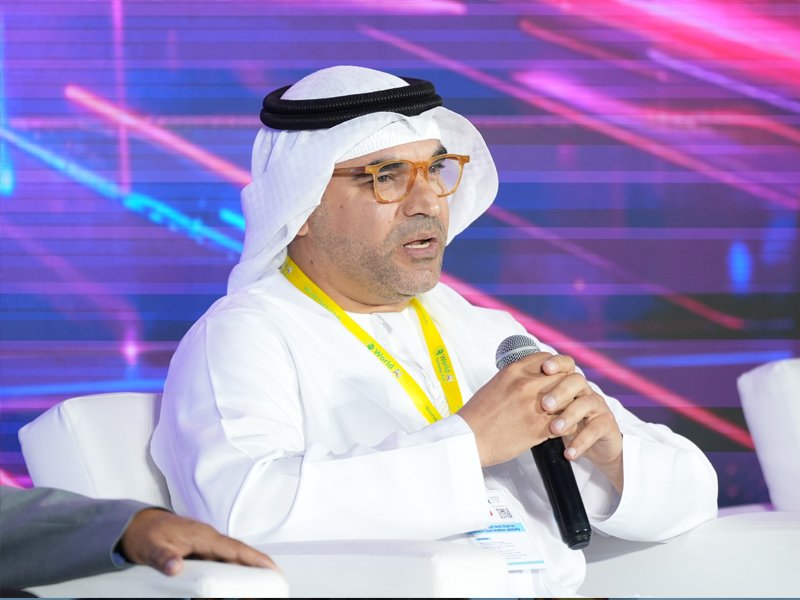
Past Speakers
Previous editions of World AI Technology Expo Dubai have brought together senior AI practitioners and leaders. Speakers below are shown for reference from previous editions; the 2027 line-up will be announced ahead of the event.

Nitin Akarte

Akshay Singh Dalal

James Hunter

Abhinav Sharma
Back office: 1.3 million hours and AED 210 million
First Abu Dhabi Bank has run an automation centre since 2019, pairing software robots with machine learning, language processing and document understanding. It reports 110 robots across more than 285 projects and 9.2 million completed transactions. Work saved comes to 1.3 million hours. Average handling times are down 56 per cent and turnaround times down 25 per cent, with more than AED 210 million in staffing and other cost savings (source: UiPath case study naming First Abu Dhabi Bank — https://www.uipath.com/resources/automation-case-studies/first-abu-dhabi-bank-fab).
The case study does not say over what period those figures accumulated, and the programme started in 2019. Read them as cumulative, not annual. That one missing detail changes the annualised return by a factor of six.
This is also the most honest of the three about what the work actually was. Most of it is not generative AI. It is rules, queues and documents, with models attached at the points where the documents stopped being predictable.
What the cost side looks like
The largest programmes publish ambition instead of arithmetic. Abu Dhabi Commercial Bank announced an AI-led transformation in 2025, covering more than 150 use cases. The stated target is over AED 4 billion in financial value over the following few years (source: ADCB press release carried by Reuters, 2025 — https://www.tradingview.com/news/reuters.com,2025-10-27:newsml_Zaw3DKVy9:0-pressr-adcb-announces-ai-led-transformation-to-reinforce-its-strategic-competitiveness/). That is a target. No realised figure has been published, though the bank says several platforms are already live.
We point at it because it is the shape of most board-level AI announcements in the Gulf. A use-case count, a value target, no baseline, and no timeline you can audit. Treat the count as a measure of appetite rather than of return.
We see the same gap in the speaker abstracts submitted for our banking sessions. The architecture arrives in detail. The baseline it improved on is usually missing, and it is the first thing our programme committee asks for before a session is accepted.
What a buyer should ask
Governance is now part of the purchase, not a step after it. The Central Bank of the UAE issued a guidance note on responsible AI adoption in 2026. Every licensed financial institution must run a documented governance framework, with board accountability, bias testing, explainability, human oversight and third-party risk management (source: Central Bank of the UAE guidance note, reported by Gulf Today, 2026 — https://www.gulftoday.ae/business/2026/02/23/cbuae-issues-guidance-note-to-protect-consumers-and-ensure-responsible-use-of-ai-in-financial-sector). Saudi institutions sit under SAMA supervision alongside the national AI risk framework.
Five questions get the most out of a vendor meeting. What was the baseline, measured how, and by whom? What is the total first-year cost, including integration and the people who run the thing? Who signs off a wrong output, and how is that logged for the regulator? What happens when the hosted model changes underneath you? And which named bank will take our call?
If a supplier cannot answer the first and the last, you are buying a capability, not a return. That is a legitimate purchase. It is just not the one most boards think they approved.
What to do next
Pick one process with a queue, a measurable baseline and a team that is bored by it. Instrument it for a month before you buy anything. The baseline is the asset, because the model is replaceable and the measurement is not.
The people running these programmes are easier to question in person than in a sales meeting. The enterprise AI sessions at World AI Expo Dubai run on 7 and 8 April 2027 at the Millennium Plaza Downtown Hotel. They are built around deployment detail rather than demos. Book a delegate pass and bring your own baseline numbers.
Inside the event
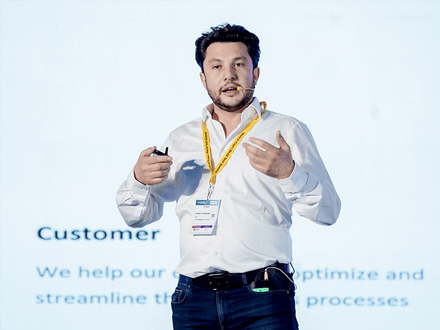
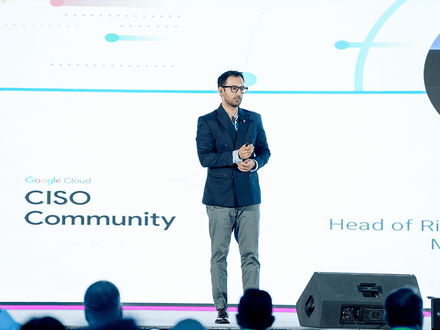
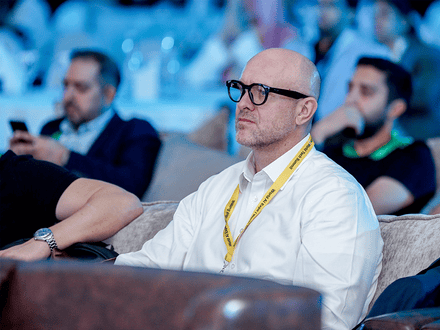
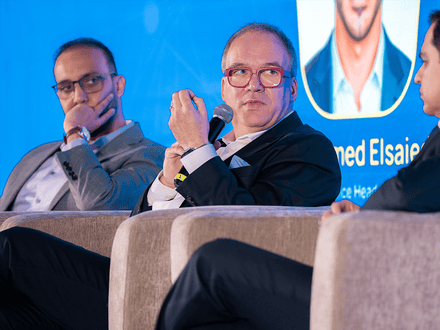
A glimpse of the atmosphere from previous editions — keynotes, the exhibition floor and the networking that defines World AI Technology Expo Dubai.


Key takeaways
- Published returns from GCC bank AI deployments are measured in time, not money: hours removed, days cut from a cycle, queues cleared.
- Emirates NBD reports 8,000 recruiter hours and USD 400,000 saved on volume hiring, with time to offer down 80 per cent.
- Kuwait Finance House cut credit case evaluation from three to five days to under an hour with an in-house risk engine.
- First Abu Dhabi Bank reports 1.3 million hours of work saved and more than AED 210 million in savings, cumulative since 2019.
- None of the three disclosed what the deployment cost, so every published return is half a ratio until you supply the denominator.
Frequently asked questions
Most GCC bank deployments sit in three places: document-heavy back-office work, repetitive assessment such as candidate or credit screening, and decisions already queued for a human. Published results are stated as hours saved or cycle time cut. Costs are rarely disclosed, and regulators now require documented governance for any model touching a consumer.
Every figure here comes from a public source: two technology suppliers' case studies that name the bank, one bank press release carried by Reuters, and one central bank guidance note. Each source is linked in the text beside its number. Where a bank has not disclosed a figure, we say so rather than estimating it.
Choose one queued process, measure its baseline for a month, then price a pilot against that baseline rather than against a vendor benchmark. For the deployment detail behind figures like these, the enterprise AI sessions at World AI Expo Dubai on 7 and 8 April 2027 are the shortest route to the practitioners.